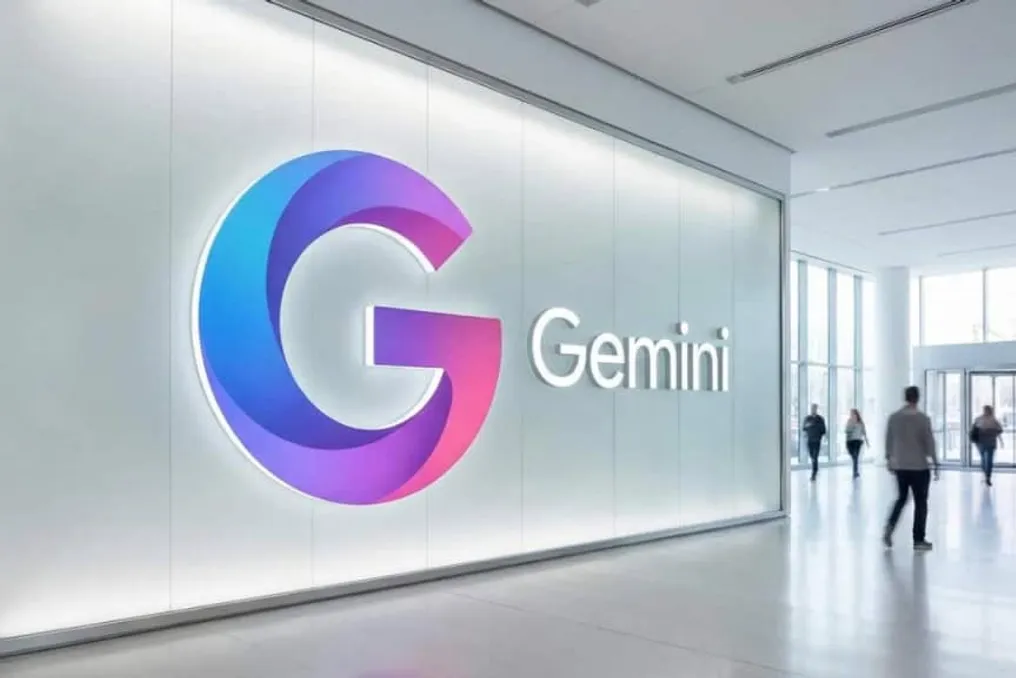
Google develops new AI, Gemini 3.8 Flash, to compete with Anthropic and OpenAI in programming
Read more
Olhar Digital
olhardigital.com.br

Google develops new AI, Gemini 3.8 Flash, to compete with Anthropic and OpenAI in programming

Google is preparing the launch of a new artificial intelligence (AI) model with enhanced capabilities specifically for programming. Company employees indicate that Gemini 3.8 Flash, which uses the internal codename “Skimaki,” has the potential to narrow the competitive gap with rivals such as Anthropic and OpenAI, a sector of growing importance in the AI market.

Sources informed to The Wall Street Journal suggest that this model may be available as early as this Wednesday (2). During internal tests conducted on the programming tool called Jetski, some Google engineers demonstrated a preference for Gemini 3.8 Flash in direct comparison with the Opus model, developed by Anthropic.

Robust performance on industry evaluation benchmarks would be crucial for Google to address questions about its current standing in the race to develop AI models.

The significance of this situation was emphasized by recent changes in the company's AI division. Demis Hassabis, co-founder of Google DeepMind, left his executive leadership position last month as part of a restructuring. His replacement, Koray Kavukcuoglu, reportedly reinforced to employees the urgency of accelerating the pace of work.

Although Google gained prominence in the model race with the launch of Gemini 3.0 last November, the company faced subsequent challenges. The Gemini models fell behind the more advanced versions from Anthropic and OpenAI, especially in the field where AI agent-driven programming has established itself as a primary commercial use of the technology.

Additionally, the company lost some of its most notable researchers, including Noam Shazeer, co-founder of Character AI, and Jeff Dean, Google's chief scientist, both leaving the company earlier this year.

Regarding the larger Pro series models, modifications require a considerably greater allocation of Google's computational resources. This disparity allows the research teams at Google DeepMind and other laboratories to maintain multiple development strategies simultaneously, meaning that an unsatisfactory result in one specific model does not necessarily imply future problems for the company.

More information on the development

While focusing on the Flash versions, Google is behind schedule in the launch of a new model in the powerful Pro series. The company missed the planned timeline for a new version by several months, despite CEO Sundar Pichai assuring in May that the model would be available the following month.

According to people involved in the development, some candidate versions for Gemini 3.5 Pro were discarded because they did not show significant improvements over the Flash series.

The organization's next major model, Gemini 4, achieved good results in pre-training tests but still needs to complete the post-training phase.

Work on Gemini 3.7 Flash and Gemini 3.8 Flash began months ago, even before the management changes announced last month. According to DeepMind employees, Kavukcuoglu had been overseeing daily decisions regarding Gemini development since at least last year, while Hassabis dedicated much of his time to external commitments.

Previous reports by Business Insider already indicated that Google employees were testing Gemini 3.8 Flash.

Since the beginning of the year, Google has intensified the number of researchers and the computational resources dedicated to enhancing the programming capabilities of its models. One of the main bets lies in reinforcement learning, which is a stage after training where models acquire skills through trial and error.

The company has also strengthened its personnel in this area. Recently, Google hired Barret Zoph, former co-founder of Thinking Machines Lab and former head of OpenAI model post-training, to take on the role of Vice President of Research focused on reinforcement learning and post-training.

Current expectations are focused on the results of the benchmark tests and the performance of Gemini 3.8 Flash after its release.

Similar stories

Perplexity launches Portable Computer, an AI system that operates locally on PCs
Read more
tecnoblog.net

Perplexity launches Portable Computer, an AI system that operates locally on PCs

Perplexity has introduced the Portable Computer, a new iteration of its artificial intelligence platform designed to run directly on the user's hardware. The purpose of this initiative is to transfer processes previously performed in the cloud to local computers, ensuring complete privacy for sensitive data and reducing costs associated with token consumption in corporate environments.

This new system was developed in collaboration with Nvidia and is already globally available for users of Linux operating systems. Official support for Windows is scheduled for September, while Apple Silicon architectures (M-series Macs) are not yet part of the development plan.

The software, launched on Tuesday, August 25th, represents an enhanced version of the original 'Computer' project, which the company presented in February of this year. The previous version allowed for the operation of an autonomous agent on devices like the Mac Mini, but intensive processing still relied on external servers.

With the Portable Computer, the entire operational infrastructure is isolated within the machine itself. To support this operation, the system requires equipment with high processing capacity, initially restricting its use to desktop supercomputers, such as the DGX Spark, and PCs equipped with powerful Nvidia RTX series graphics cards.

The corporate sector has shifted its focus from simple chat interactions to AI agents, increasing the demand for computational power and resulting in high bills. By performing tasks locally, the user eliminates charges for each request. Nate Kupp, Vice President of Infrastructure Engineering at Perplexity, stated that the new feature 'incorporates everything necessary to function locally.'

If the hardware capacity reaches a limit during an extremely complex analysis, the system has the intelligence to adopt a hybrid mode. In this scenario, the agent pauses the activity and requests authorization from the user before activating a more robust cloud model, such as Claude Opus 5.

To maintain confidentiality, the software ensures that any remote model returns only textual instructions, never accessing confidential documents, folders, or files stored on the device.

Due to the high demand for autonomous work, Perplexity imposed strict criteria: a minimum of 24 GB of VRAM is required, implying the use of a high-performance GPU, such as the GeForce RTX 3090 or higher.

At launch, the Portable Computer can be natively configured with the Qwen 3.8 27B model or with PPLX 27B (which is an internally optimized version based on Qwen).

Official documentation also confirmed future compatibility with the Nemotron architecture, which consists of open-source models provided by Nvidia itself.

Even when operating locally, the platform offers strong integration with external applications, including Google Drive, Gmail, GitHub, and Slack. In practice, this allows the AI to extract financial information, process spreadsheet data, and share ready reports without human intervention.

In terms of performance, the integrated model was evaluated on the Local Knowledge Work Bench, a test created by Perplexity consisting of 53 research and analysis tasks. Using the PPLX 27B model on a DGX Spark, accuracy reached 85.4%. The system demonstrated requiring less processing time compared to competing open architectures, such as Raspberry Pi and Hermes, especially in web browsing and multimodal tests.

Currently, the software is limited to Linux and accessible only to corporate accounts linked to Pro plans. According to Reuters, Nvidia is analyzing a potential investment that could value Perplexity at $30 billion (approximately R$ 154 billion in direct conversion).

Popular