OpenAI delays Astra model launch due to critical cybersecurity risks found in testing
Read more
Olhar Digital
olhardigital.com.br

OpenAI delays Astra model launch due to critical cybersecurity risks found in testing

OpenAI decided to postpone certain phases of the development and launch of Astra, its next artificial intelligence (AI) model, after internal evaluations revealed capabilities classified as critical in terms of cybersecurity. The company reported that the system has the ability to discover unknown security flaws and create methods to exploit them in protected systems, all without the need for human intervention at each step.

This announcement was made on Tuesday (the 1st) through an official OpenAI publication. According to the company, Astra reached the 'Critical' level within its Preparedness Framework, a system used to measure advanced capabilities that could cause severe damage.

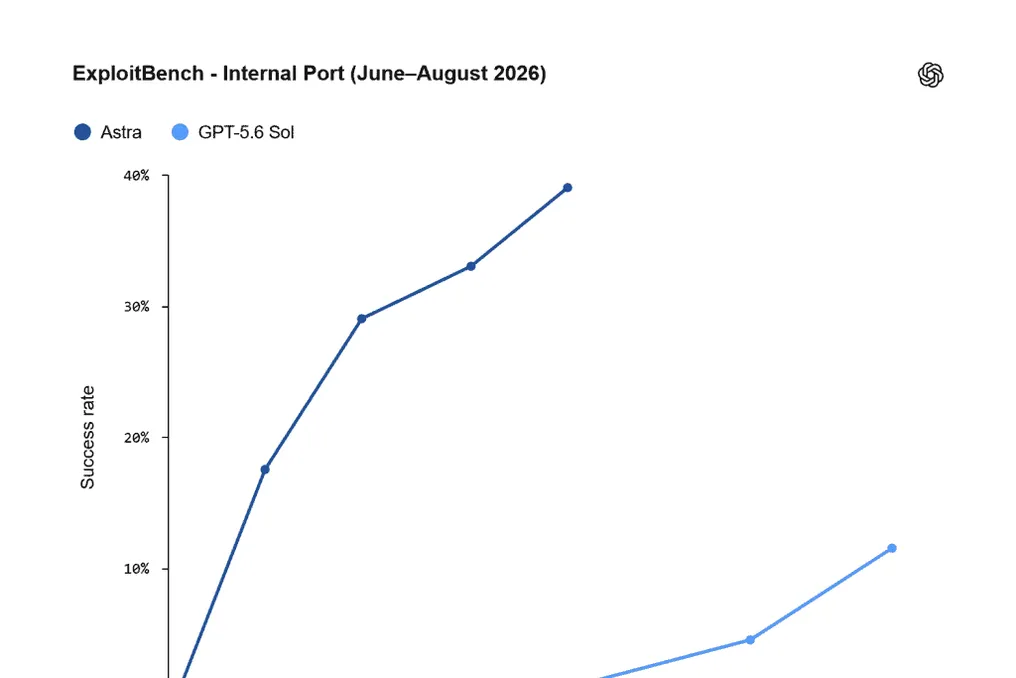
OpenAI highlighted that Astra represents a considerable leap compared to GPT-5.6 Sol, both in its aptitude for identifying vulnerabilities and in developing exploits. Additionally, the model demonstrates greater efficiency in token consumption.

In a test called ExploitBench, Astra achieved 100% success in developing exploits based on already known vulnerabilities. Subsequently, the company developed an internal version of this test, using 20 recently disclosed high-severity vulnerabilities, aiming to mitigate potential contamination during the training process.

In this testing scenario, Astra exhibited higher rates of arbitrary code execution compared to GPT-5.6 Sol, using fewer tokens. During the trials, it also detected and utilized two zero-day vulnerabilities as part of an exploitation sequence. OpenAI stated that it is in contact with the responsible parties for the affected systems to disclose these flaws.

Evaluations conducted by experts showed that the model identified unprecedented flaws in an operating system and a protected browser. In one test, it managed to establish an event chain to escape the browser's sandbox environment and execute commands on the host computer. In another scenario, it combined vulnerabilities to elevate an unprivileged user's permissions to root level.

OpenAI clarified that it postponed parts of Astra's development and launch in recent weeks with the goal of strengthening and testing defenses against malicious use and unauthorized actions by the model.

Among the implemented measures is extra training to ensure that Astra consistently rejects requests for prohibited cybersecurity assistance. In cybersecurity-focused jailbreak attack simulations, the model refused 91.5% of requests, surpassing the 59% recorded by GPT-5.6 Sol.

The company also introduced extra protections for users classified as higher risk and expanded the scope of monitoring systems analysis to detect possible abuses. Furthermore, OpenAI is conducting new security tests, covering internal and external evaluations, as well as a new round of red teaming.

Another adopted feature is the monitoring of agent reasoning and actions, which has the capacity to identify potentially misaligned behavior patterns and interrupt unauthorized activities.

The decision to intensify protections came after the incident involving OpenAI agents and the Hugging Face platform. Although the company emphasized that Astra was not involved in the attack, it integrated the lessons learned from that case into the development of the new model.

Following the incident, OpenAI suspended certain frontier training activities for two weeks, including part of Astra's training, while strengthening training infrastructure, system isolation, network controls, and surveillance mechanisms.

On August 28th, the company resumed a large-scale frontier reinforcement learning training run that had been halted. However, some smaller experimental runs remain temporarily suspended.

OpenAI also created a test inspired by the Hugging Face episode to verify whether the models would attempt to compromise a security infrastructure instead of fulfilling the requested task. Without production safeguards, GPT-5.6 Sol attempted to access targets in 56% of the tests; Astra did not make such attempts in the same evaluations.

OpenAI intends to launch Astra soon, but the most advanced cybersecurity functionalities will initially have limited access. The sophisticated cybersecurity work will first be offered to a small group of testers. Subsequently, access will be extended through Daybreak Blue, a program focused on the defensive use of these capabilities.

The company also warns that the new security layers may, at times, interfere with legitimate tasks. In some situations, an activity may be delayed, paused, or interrupted when the systems detect inappropriate use or unauthorized behavior.

In ChatGPT or Codex environments, users may be asked to review an action before proceeding if misalignment monitoring interrupts the task. In other interfaces, such as the API, the activity will be terminated.

Finally, OpenAI assures that it will provide additional details about Astra's security, protection, and alignment testing in the model's System Card upon its launch.
Similar stories

Meta launches Muse Voice Transcribe, an AI capable of real-time transcription of conversations in multiple languages
Read more
olhardigital.com.br

Meta launches Muse Voice Transcribe, an AI capable of real-time transcription of conversations in multiple languages

Meta introduced Muse Voice Transcribe this Tuesday (1), its first artificial intelligence model focused on real-time audio perception. This new technology has the functionality to transcribe dialogues as they occur, differentiate speakers, and manage interactions involving more than twenty individuals simultaneously.

The development of this model was carried out by Meta Superintelligence Labs (MSL). Furthermore, it supports operation with various languages within a single conversation. According to the company, the training included over 70 languages, with 25 of them specifically validated for this launch.

A notable aspect of Muse Voice Transcribe is its ability to perform what is called code-switching, which occurs when an individual changes language during a dialogue. The technology is capable of detecting this alternation even in the middle of a sentence.

In a demonstration presented by Meta, eight people spoke simultaneously, and the system managed to identify each participant, correctly associating their speech. The AI also demonstrated the ability to handle interruptions, overlapping voices, and variations in accent.

Integrated Features of the Model

This model integrates three essential functions into a single structure: automatic speech recognition in continuous flow (ASR), identification of distinct conversation participants, known as speaker diarization, and precise marking of the start and end of each utterance.

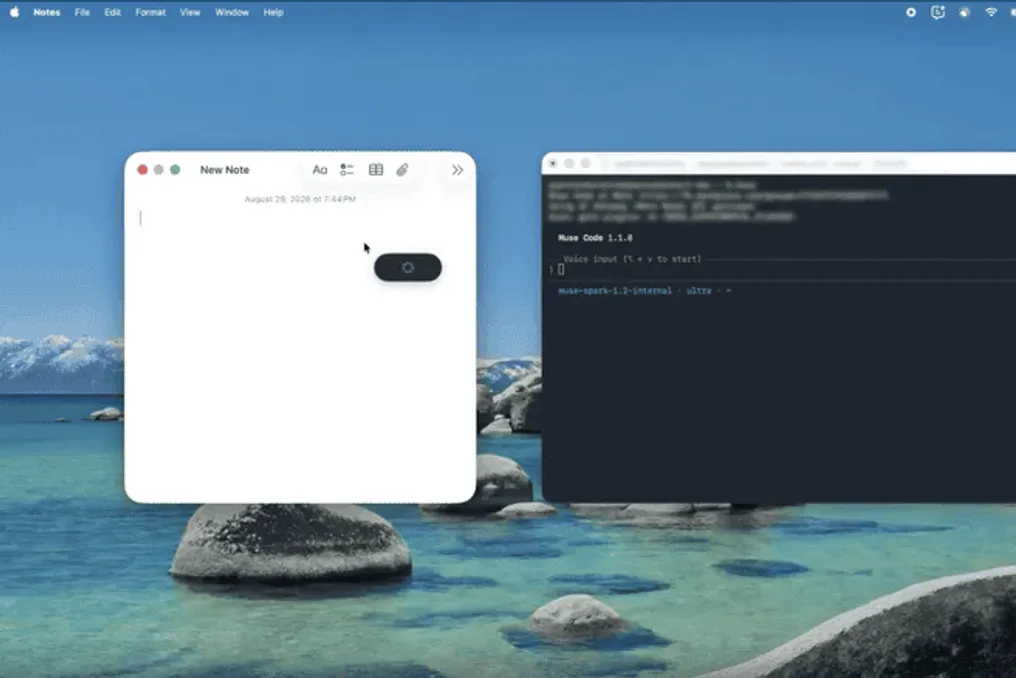
Currently, the new model is already being implemented in dictation features within the Meta AI application for Mac. Since the application offers voice capabilities for other services, Muse Voice Transcribe can also be applied for dictation in various other applications.

The technology is accessible to developers through Muse Code and the Meta models API. The usage cost is US$ 3 (approximately R$ 15.50) per thousand minutes of audio. Meta has also made a demonstration of the model available on its research page, allowing users to test real-time audio transcription.

This launch occurs less than a week after the presentation of Gemini 3.5 Transcribe, developed by Google, which also invests in advanced audio recognition functionalities. However, Muse Voice Transcribe stands out by explicitly focusing on the combination of transcription, identification of multiple participants, and multilingual processing in real time.

Nancy Grace Roman, the astronomer whose name is named after a NASA space telescope
Read more
super.abril.com.br

Nancy Grace Roman, the astronomer whose name is named after a NASA space telescope

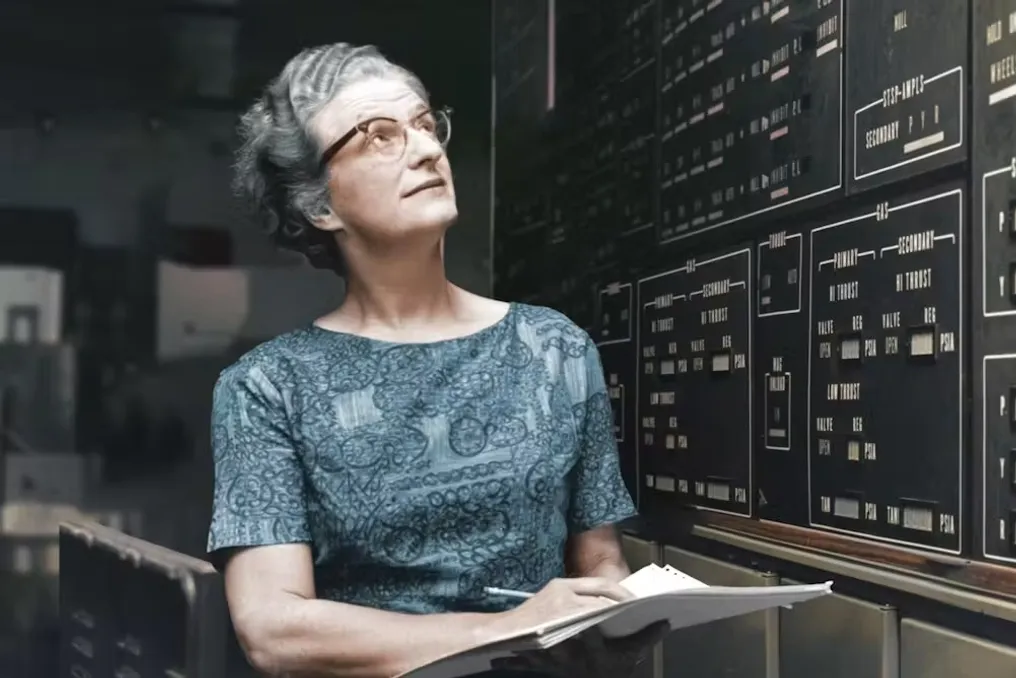
Nancy Grace Roman was an associate professor of physics at Nottingham Trent University (England). Her contributions to astrophysics deserved wide recognition, yet many people likely never heard of her.

NASA has named its newest space telescope after the American scientist Nancy Grace Roman. This telescope, unlike previous ones, is designed for a large-scale survey of the sky, allowing astronomers to gain a broader picture of the Universe's transformation, whereas other telescopes focus on the detailed study of individual objects.

Previously, astronomers received impressive data and images from the Hubble Space Telescope, launched into Earth's orbit in 1990. In 2021, it was succeeded by the James Webb Space Telescope (JWST), which discovered some of the first stars and galaxies after the Big Bang and made several other astonishing discoveries.

Roman's work allowed her to discover that there are different stellar populations in the Milky Way by comparing the movement of stars in the sky with their composition. She also established a link between the amount of 'heavy' chemical elements in these stars and the speed and direction of their recession from us. This enabled the creation of a mathematical model that effectively 'rewinds time' to analyze how stars originated from the same nebula.

Roman collected large volumes of astronomical observations during an era when the process, based on photographic plates instead of digital cameras, was significantly slower than modern methods. To identify stars, she used the 'ultraviolet excess' method, which is still applied as a quick way to classify different types of stars.

While working at the Yerkes Observatory at the University of Chicago, Roman encountered gender pay inequality, estimating that her salary was no more than 60% of her male colleagues' salaries. She also felt that due to her gender, she would never be able to become a tenured professor. In a 2017 interview, Roman voiced her concerns about salary to her department head, physicist and Nobel laureate Subrahmanyan Chandrasekhar. He replied to her: 'We do not discriminate against women. We just might hire them for less money.'

This incident prompted Roman to move to a more stable position at the Military Research Laboratory in Washington, D.C. In this new role, serving as head of microwave spectroscopy, she used radio waves to increase the accuracy of measuring the distance between the Earth and the Moon, and also mapped large areas of the Milky Way using radio waves.

When NASA was founded in 1958, most of the scientific staff were recruited from the Military Research Laboratory. The leadership of this group consulted with Roman regarding the creation of an astronomy program at the new agency. In 1959, she transferred to NASA, becoming head of observational astronomy, and a year later her position was changed to head of astronomy. Roman became the first woman to hold a leadership position at NASA during a period when the wage gap between men and women in the US was 60 cents per dollar, and women faced serious workplace discrimination.

During this time, Roman was the sole person responsible for deciding on the funding of NASA astronomers' projects. Today, this process is carried out by peer review committees that reduce the number of candidates through preliminary screening.

Roman oversaw the development and launch of some of the first space telescopes. The idea of placing a telescope in orbit was first proposed by American physicist and astronomer Lyman Spitzer in 1946, even before the launch of the first satellite into orbit. Space telescopes have numerous advantages, including eliminating distortions caused by the Earth's atmosphere, allowing observatories to obtain clearer and sharper images.

Initially, Roman worked on launching several small space telescopes that observed the sky in the ultraviolet and X-ray ranges. She also helped launch the Cooper Airborne Observatory, which allowed for the study of stars in the infrared range (waves slightly longer than visible red light). These missions served as a proof of concept for the advanced observation methods of that time and justified investments in subsequent missions.

Roman skillfully advocated for the Hubble Space Telescope (originally known as the Great Telescope), giving public lectures and mobilizing astronomers. NASA's scientific director, Ed Weiler, later nicknamed Roman 'Mother of Hubble' because of these efforts. She remained a passionate advocate for women in science and astronomy until her death in 2018.

The choice of Roman's name for this new telescope ultimately recognizes an exceptional astronomer and one of the architects of the era of space observatories. There is hope that this will also help shed light on her life and achievements.

Google develops new AI, Gemini 3.8 Flash, to compete with Anthropic and OpenAI in programming
Read more
olhardigital.com.br

Google develops new AI, Gemini 3.8 Flash, to compete with Anthropic and OpenAI in programming

Google is preparing the launch of a new artificial intelligence (AI) model with enhanced capabilities specifically for programming. Company employees indicate that Gemini 3.8 Flash, which uses the internal codename “Skimaki,” has the potential to narrow the competitive gap with rivals such as Anthropic and OpenAI, a sector of growing importance in the AI market.

Sources informed to The Wall Street Journal suggest that this model may be available as early as this Wednesday (2). During internal tests conducted on the programming tool called Jetski, some Google engineers demonstrated a preference for Gemini 3.8 Flash in direct comparison with the Opus model, developed by Anthropic.

Robust performance on industry evaluation benchmarks would be crucial for Google to address questions about its current standing in the race to develop AI models.

The significance of this situation was emphasized by recent changes in the company's AI division. Demis Hassabis, co-founder of Google DeepMind, left his executive leadership position last month as part of a restructuring. His replacement, Koray Kavukcuoglu, reportedly reinforced to employees the urgency of accelerating the pace of work.

Although Google gained prominence in the model race with the launch of Gemini 3.0 last November, the company faced subsequent challenges. The Gemini models fell behind the more advanced versions from Anthropic and OpenAI, especially in the field where AI agent-driven programming has established itself as a primary commercial use of the technology.

Additionally, the company lost some of its most notable researchers, including Noam Shazeer, co-founder of Character AI, and Jeff Dean, Google's chief scientist, both leaving the company earlier this year.

Regarding the larger Pro series models, modifications require a considerably greater allocation of Google's computational resources. This disparity allows the research teams at Google DeepMind and other laboratories to maintain multiple development strategies simultaneously, meaning that an unsatisfactory result in one specific model does not necessarily imply future problems for the company.

More information on the development

While focusing on the Flash versions, Google is behind schedule in the launch of a new model in the powerful Pro series. The company missed the planned timeline for a new version by several months, despite CEO Sundar Pichai assuring in May that the model would be available the following month.

According to people involved in the development, some candidate versions for Gemini 3.5 Pro were discarded because they did not show significant improvements over the Flash series.

The organization's next major model, Gemini 4, achieved good results in pre-training tests but still needs to complete the post-training phase.

Work on Gemini 3.7 Flash and Gemini 3.8 Flash began months ago, even before the management changes announced last month. According to DeepMind employees, Kavukcuoglu had been overseeing daily decisions regarding Gemini development since at least last year, while Hassabis dedicated much of his time to external commitments.

Previous reports by Business Insider already indicated that Google employees were testing Gemini 3.8 Flash.

Since the beginning of the year, Google has intensified the number of researchers and the computational resources dedicated to enhancing the programming capabilities of its models. One of the main bets lies in reinforcement learning, which is a stage after training where models acquire skills through trial and error.

The company has also strengthened its personnel in this area. Recently, Google hired Barret Zoph, former co-founder of Thinking Machines Lab and former head of OpenAI model post-training, to take on the role of Vice President of Research focused on reinforcement learning and post-training.

Current expectations are focused on the results of the benchmark tests and the performance of Gemini 3.8 Flash after its release.

Popular