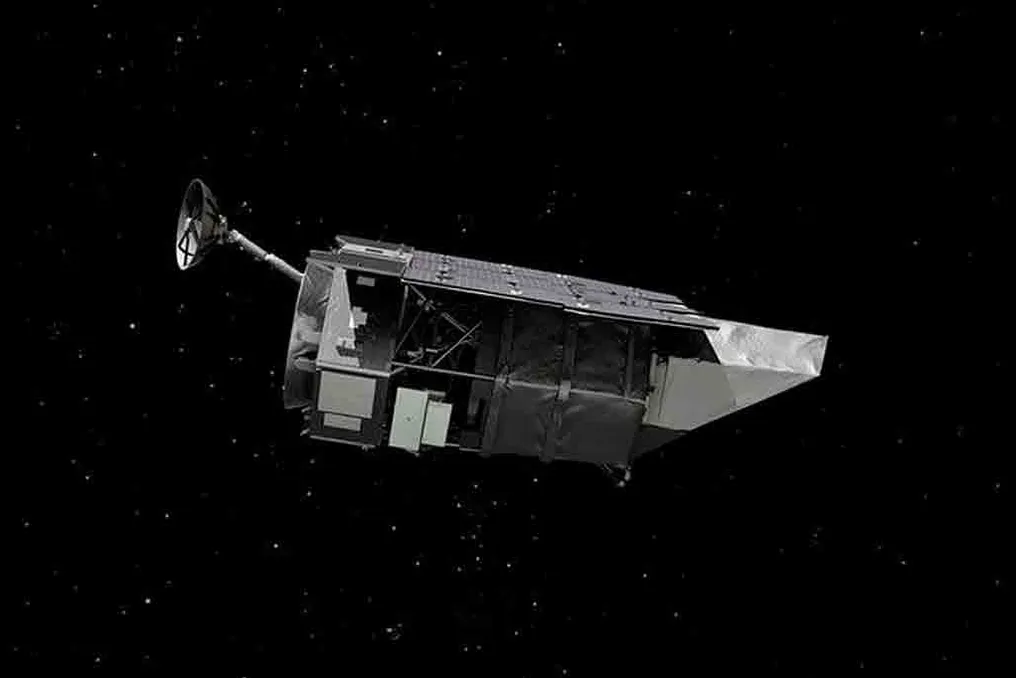
Last Sunday, August 30th, NASA placed the Nancy Grace Roman telescope, known simply as Roman, into orbit, which represents the agency's latest space observatory. This launch took place at the Kennedy Space Center in the United States, using a SpaceX Falcon Heavy rocket equipped with 27 engines.
Currently, Roman is heading towards Lagrange Point 2, located 1.6 million kilometers from Earth, and is expected to reach this location in a few weeks. Once there, it will undergo phases of testing and adjustments before officially beginning its observations.
Space telescopes play a crucial role in monitoring the Universe for various elements, including planets, stars, galaxies, black holes, dark energy, and other distant celestial entities. These instruments operate continuously, 24 hours a day, being vital for scientific progress and the acquisition of space data.
Historically, the first such equipment from NASA was the Hubble telescope, sent into space in the 1990s. More recently, in 2021, the agency launched the James Webb Space Telescope, specialized in observing great distances, capable of analyzing small areas of the sky with high precision and also positioned at Lagrange Point 2.
However, since 2016, NASA has been dedicating efforts to developing Roman, a space telescope whose differentiator lies in the area it can observe. The purpose of Roman is to collect data from a much larger extent of Space simultaneously. Although it can study millions of objects at once, its precision will be lower than that of Webb.
After years of development and an investment exceeding R$ 22 billion, the instrument was finally placed into orbit. Its main function is to identify areas of interest that can subsequently be examined in greater detail and accuracy by other space observatories. Thus, Roman will work in collaboration with other instruments, without replacing any of them.
In a statement, NASA affirmed that the Roman telescope will observe billions of stars and galaxies with a significantly wider field of view than Hubble, assisting scientists in studying dark energy, exoplanets, and cosmic evolution.
Roman's camera, called the Wide Field Instrument, features a field of view approximately one hundred times larger than Hubble's and has 300 megapixels. Additionally, it incorporates technology that allows it to block starlight, facilitating the visualization of exoplanets and galaxies with less interference. The telescope weighs over 10 tons and measures about 13 meters in height. It is estimated to remain in space for approximately ten years, with its initial mission having a projected duration of about five years, during which it will map an area fifty times larger than that observed by Hubble in three decades.
The name Nancy Grace Roman is a tribute to the first chief astronomer at NASA, known as the 'mother of Hubble.' In addition to its name, the spacecraft carries a memory card containing the names of over one million people who signed up online.