John Ternus, new Apple CEO, announces major launch and future plans in memo to employees
Read more
Olhar Digital
olhardigital.com.br

John Ternus, new Apple CEO, announces major launch and future plans in memo to employees

John Ternus, who recently took the helm at Apple, released his first memo to employees. In this communication, he expressed gratitude to Tim Cook for the transition, highlighted the predecessor's legacy, and revealed that the company is preparing a significant launch for the following week.

The new CEO also addressed products currently under development, mentioning projects that, according to him, had not yet been conceived. Ternus expressed great enthusiasm about collaborating with Apple teams to shape the company's future.

As he began his journey, Ternus thanked the messages received from employees. He then addressed Cook, acknowledging the sharing of knowledge and experience during the management change. The new leader also valued how his predecessor led Apple over the years.

He stated: 'We are very lucky to have had a CEO who led with their values and with such decency and humanity.' For Ternus, this leadership was beneficial to the organization. Furthermore, he thanked Cook for his work and expressed satisfaction with his continued role as executive chairman of the board.

One of the first important events under the new administration is scheduled for next week. Ternus declared: 'We have a big launch next week that will be phenomenal.' This statement refers to the special event called 'Surprise and shine,' and he thanked the teams involved in preparing this launch.

The executive did not limit himself to what is to come; he also showed great interest in current projects and nascent ideas. Ternus emphasized that these new products will be the result of a collaborative effort by Apple teams, concluding the message by stating that he would not want to build the future with any other team.

Similar stories

John Ternus takes over Apple leadership, succeeding Tim Cook in the age of artificial intelligence
Read more
techcentral.co.za

John Ternus takes over Apple leadership, succeeding Tim Cook in the age of artificial intelligence

After fifteen years leading the company, which grew from a $350 billion enterprise to a giant with a market capitalization exceeding $4.5 trillion, Tim Cook will hand over the reins to Apple's hardware chief, John Ternus. Ternus will lead the company in the era of artificial intelligence.

Cook will become Executive Chairman on September 1st, where he will oversee Apple's interaction with politicians amid strained relations between its home market in the US and China, where a significant portion of the company's products is manufactured. This transition marks the end of one of the most significant periods of leadership.

Unlike the design genius inherent in Steve Jobs, Cook succeeded by making Apple's supply chain a model for all manufacturers. As CEO, he used this operations-focused approach to make Apple's advanced products accessible to the general public.

An example of his business acumen is understanding that Apple can generate revenue from customers long after an iPhone sale, turning a base of 2.5 billion iPhone users into a source of recurring income. This business has outpaced the growth of the hardware division in recent years.

Apple's annual revenue increased from $108 billion at the start of Cook's tenure to $416 billion in the last fiscal year, and profit grew more than fourfold, reaching $112 billion.

The "Dependency Flywheel"

The wearables business, including Cook-era iPhone accessories such as Apple Watch and AirPods, generated $35 billion in revenue in the 2025 fiscal year. Christopher Brown, a financial advisor at the wealth management firm Synovus Securities, which holds shares in the iPhone manufacturer, noted: "Cook not only forged his own path of operational and supply chain success but also created a culture based on values at Apple. This was followed by consumer loyalty and a dependency flywheel that brought in trillions of dollars in revenue."

Critics have long accused Apple of losing its innovative edge during Cook's tenure. They argue that Cook failed to answer the question of what comes after the iPhone, while hardware competitors strive to replace the smartphone as the primary consumer device.

During Cook's leadership, there were other shortcomings: the electric vehicle project, which Apple canceled in 2024 just as it was gaining momentum in China. The company also famously botched the launch of Apple Maps in 2012, months after Cook took office, which led to the departure of close associate of Jobs and software head Scott Forstall.

Apple's bet on the Vision Pro augmented reality headset, debuting at a price of $3,499 in 2023, did not yield strong sales, and its products lag in AI features, including delays in Siri updates.

Brian Malberry, Chief Market Strategist at Zacks Investment Management, which holds Apple stock, stated: "Artificial intelligence is the biggest challenge for Ternus. Apple must demonstrate that AI will be more than just an app on the iPhone, more than Siri."

He added that "besides AI, the task of continuously moving production out of China without reducing margins is complex, but part of this process is already underway." Apple's reliance on China provided decades of manufacturing efficiency, but growing tensions between China and the US, tariffs, and supply chain disruptions exposed the risks of concentrating production in one country, prompting the iPhone manufacturer to expand production in India and other countries.

Reimagining Apple

These steps, including placing a larger portion of iPhones destined for the US in India by the end of 2026 and assembling certain devices like AirPods and iPads in Vietnam, have helped Apple better cope with the tariff storm that disrupted businesses across the US. Bill Birmingham, Managing Director at REX Financial, noted that Cook expanded the leadership team and reframed Apple into an institution, allowing him to focus on strategy and resource allocation while maintaining a lower public profile. Aditya Soni added: "This gave Cook space to make unpopular decisions and even be ruthless out of sight."

John Ternus assumes Apple presidency and faces challenges related to AI and market
Read more
olhardigital.com.br

John Ternus assumes Apple presidency and faces challenges related to AI and market

Engineer John Ternus assumed the role of CEO of Apple this Tuesday (the 1st), succeeding Tim Cook. During his 25 years at the corporation, Ternus dedicated himself to product design and hardware engineering, where he held the position of vice president for 13 years.

Arthur Igreja, a technology and innovation specialist, commented that while Tim Cook had a greater inclination towards processes, Ternus is more connected to technology and the product. Although this difference might have generated distrust in the past, the success achieved by Tim Cook established a climate of trust within the company.

Known for his pragmatism, focus on results, and consistency, the 50-year-old engineer graduated from the University of Pennsylvania. Before joining Apple in 2001, he worked at Virtual Research Systems. Initially, Ternus worked in the product design team, progressing to Vice President of Hardware Engineering in 2013 and subsequently to Senior Vice President in 2021, becoming the youngest member of the main executive board and reporting directly to Tim Cook.

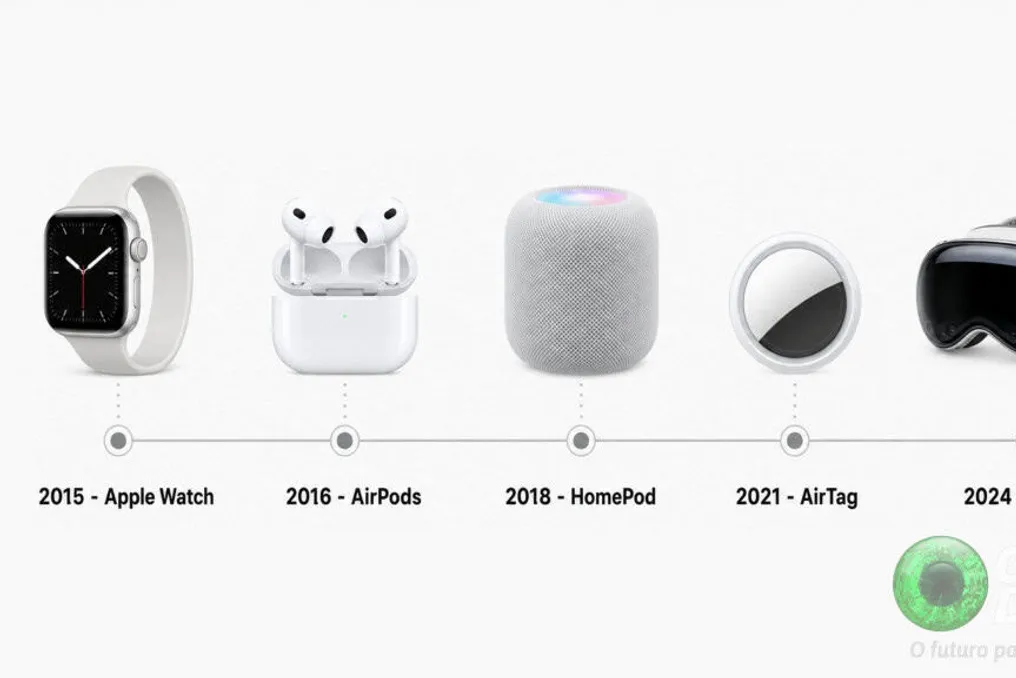
Under Ternus's leadership, Apple's hardware engineering developed notable products, such as the Apple Watch and AirPods, but it also faced setbacks, exemplified by the Apple Vision Pro, a mixed reality headset that did not meet the company's sales expectations. Furthermore, it was under his command that the migration from Intel processors to proprietary Apple Silicon occurred. A recent success cited by the specialist was the launch of the MacBook Neo in March 2026.

Igreja emphasized that the launch of the MacBook Neo may have been the decisive factor in Ternus's appointment as CEO, given his strong connection to hardware. Ternus consolidated himself at Apple as a practical manager focused on execution and cost control. In 2018, for example, he proposed limiting the inclusion of laser mapping technology in iPhones only to Pro models, which helped balance profit margins without displeasing the average consumer.

This pragmatic mindset was also applied to Apple's sustainability agenda. Under his management, the company's engineering prioritized increasing device durability and ease of repair, alongside reducing the carbon footprint in manufacturing. He supervised the expansion of recycled aluminum use in chassis and the introduction of 3D-printed titanium in devices like the Apple Watch Ultra.

Tim Cook, in a farewell letter sent to employees in April, expressed gratitude to the team and highlighted the collectively built work. He mentioned that few people understand what it takes to create transformative products and showed enthusiasm for John Ternus's leadership.

For Igreja, part of Cook's legacy lies in proving that a CEO profile does not need to be excessively iconic, like Steve Jobs'; someone more technical or discreet can also be effective, which reassures the transition to John Ternus.

According to The New York Times, Ternus's rise was planned behind the scenes in recent months, with Tim Cook already informally delegating the supervision of hardware prototyping and software design teams to the engineer. Now, Ternus takes command of a giant valued at nearly US$ 5 trillion (about R$ 26 trillion), which implies a restructuring of Apple's executive leadership. Tom Marieb, Ternus's former right-hand man, will take over hardware engineering and will report to Johny Srouji, who will lead a unified division of hardware and technologies.

One of Ternus's biggest challenges will be meeting market and consumer demands regarding the company's delay in the field of generative artificial intelligence (AI). His first major test will be the announcement of the iPhone 18 line on September 9th, which is expected to include a foldable model, a historic feat for Apple, although Igreja observes that Samsung is significantly ahead in this regard.

The specialist points out that the central challenge is managing the advance of generative AI, given that Apple adopts a distinct strategy from other major technology companies. Igreja states that Apple has formed a partnership with Alphabet to utilize Gemini and concentrate efforts on its strengths, such as operating system and hardware. The company will need to select its battles and avoid failures like the one experienced with the Apple Vision Pro, while dealing with growing competition.

Questioning how Apple will capitalize on the AI era without owning its own infrastructure or models, Igreja raises concerns about the absence of a service cloud, unlike other giants. To compensate for this lag, Ternus reformed Apple's hardware engineering, aiming to integrate this area into an internal AI platform dedicated to quality control and product development. Under his direction, projects for new lines of wearables and smart home devices were initiated, including smart glasses, AirPods with cameras, wearable pendants, home viewers with facial recognition, and desktop robots.

Igreja also mentioned the enormous geopolitical challenges and recent pressures for the company to resume manufacturing in the United States. While Tim Cook will continue to mediate dialogues with global regulators, Apple's dependence on China remains a point of tension in the context of the trade war between the US and the Asian country.

Another significant obstacle for Ternus is preserving historical profit margins. The lucrative services ecosystem, built in the Cook era, faces unprecedented regulatory scrutiny. In California, for example, recent court decisions allowed developers to charge outside the App Store, resulting in a 6% drop in Apple's commission revenue in the US. Additionally, global demand for AI is causing component shortages, raising manufacturing costs and creating waiting lists for essential products, such as Mac computers.
Popular