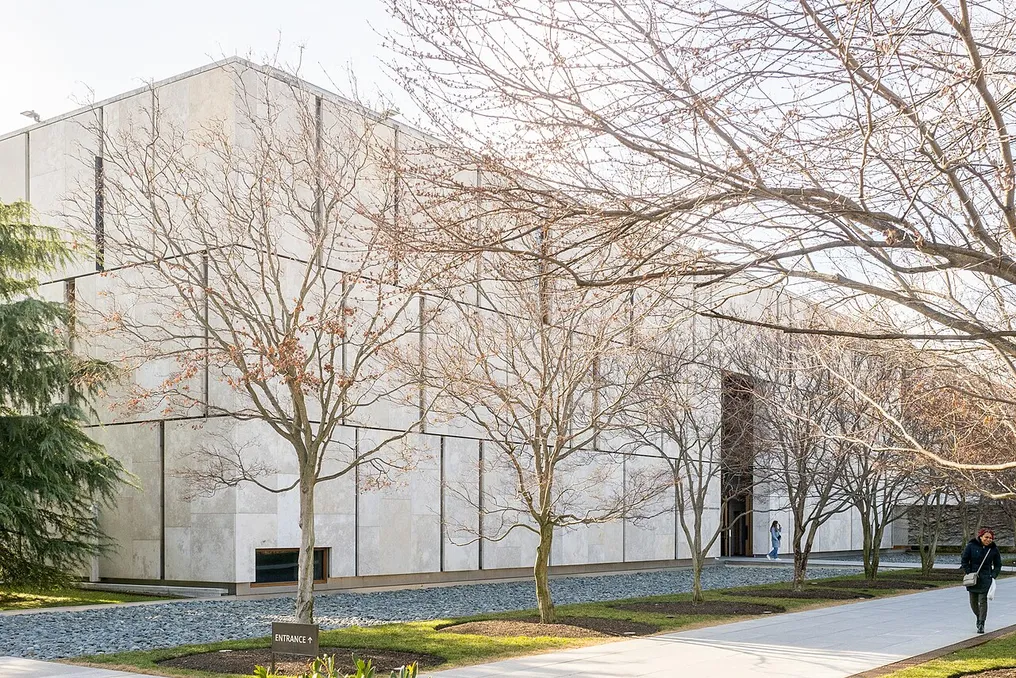
The Barnes Foundation, established in Philadelphia in 1922, is a notable art institution that preserves one of the world's most significant collections. This foundation concentrates a vast collection of works belonging to the Impressionist, Post-Impressionist styles, and the early European modernism.
The museum is located on Benjamin Franklin Parkway, in an area known as Museum Row, in the city center, approximately 150 kilometers south of New York. Near this location are other important cultural entities, such as the Philadelphia Museum of Art and the Rodin Museum, facilitating their inclusion in a tourist itinerary.
The origin of the gallery dates back to a curious episode involving the creation of Argirol, a silver-based antiseptic widely used in the early 20th century. Dr. Albert Coombs Barnes, one of the inventors of this compound, began his art collection after achieving financial success with the copyrights of the invention.
In 1912, he sent his former schoolmate and painter, William Glackens, to Europe with twenty thousand dollars with the purpose of acquiring modern artworks. Glackens returned with thirty-three paintings, which constitute the original core of the collection to this day. These works include pieces by great masters who, at the time, did not yet receive the recognition deserved by collectors, such as Cézanne, Renoir, Van Gogh, and Picasso.
Currently, the Barnes Foundation has over four thousand items in its collection, about nine hundred of which are paintings. The numbers are substantial: there are 181 works by Renoir (the largest collection of the artist in the world), 69 by Cézanne, 59 by Matisse, 46 by Picasso, and 7 by Van Gogh.
An aspect that attracts great interest at the museum is the way the works are displayed. Instead of following a conventional chronological order, the institution groups the pieces into thematic sets. These sets often unite masterpieces with domestic objects, aiming to highlight visual similarities related to light, lines, colors, and space.
Among the most famous paintings in the collection are 'The Card Players' by Cézanne, and 'The Postman (Joseph-Étienne Roulin)' by Van Gogh, which was one of the first important acquisitions made by Barnes. Other notable pieces include 'The Dance' and 'Le Bonheur de vivre', both painted by Matisse. The latter work is considered a milestone of the Fauvist movement and served as inspiration for Picasso in creating the canvas 'Les Demoiselles d’Avignon' in 1907.
Among the temporary exhibitions on display, 'Just Us' is gaining increasing prominence due to its boldness. This exhibition features original artworks produced by artists from the State Correctional Institution (SCI) Phoenix, a maximum-security male prison located in southeastern Pennsylvania. The works address the effects of the American judicial system and can be viewed until August 24.
The museum also offers daily guided tours of the highlights of the collection, in addition to talks held in the galleries by specialists. The address is 2025 Benjamin Franklin Pkwy – Philadelphia. Operating hours are Thursday to Monday, from 11 am to 5 pm. Tickets cost US$ 30 for adults, US$ 28 for seniors, and US$ 5 for students. Photography is prohibited in the galleries, and large bags must be deposited free of charge at the cloakroom.