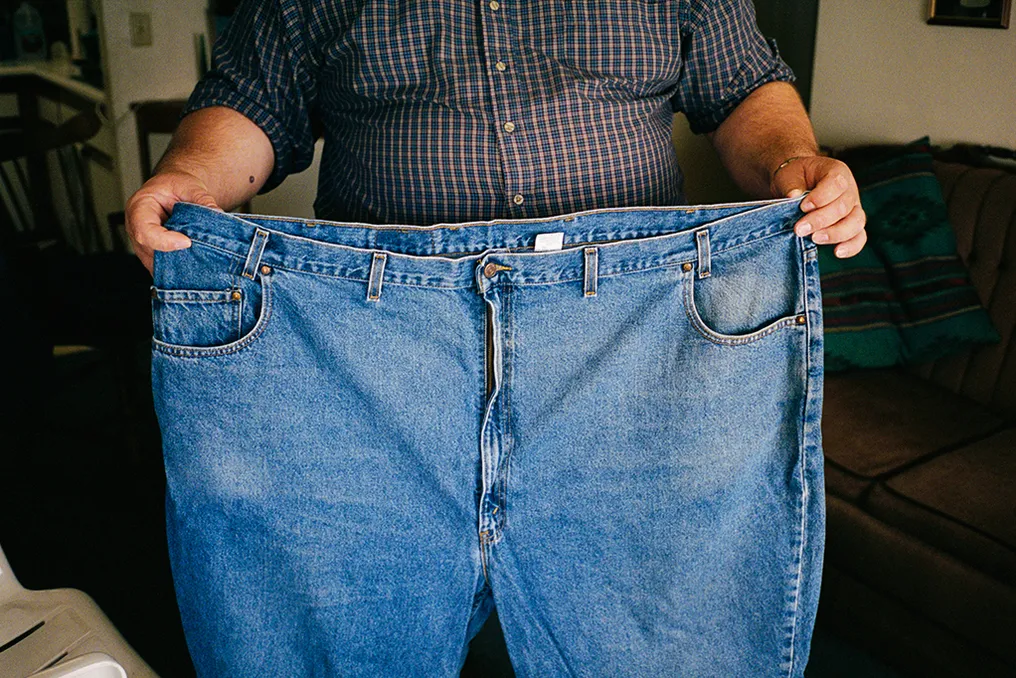
Most people know that to lose weight, they need to consume less food and engage in physical activity. When the body is in a state of calorie deficit, it burns more calories than it consumes, leading to weight loss.
However, while most understand how weight loss occurs, few consider exactly where this lost mass goes, beyond disappearing from the scale and waistline. Even dietitians and doctors sometimes struggle to answer this question.
When losing weight, the body primarily loses adipose tissue. This fat initially comes from food and accumulates in the body. Any consumed fat is broken down by the digestive system into smaller components called fatty acids.
These fatty acids are then transported throughout the body to maintain normal functions, including supporting cell structure, hormonal regulation, organ protection, and serving as a vital energy reserve.
Excess fatty acids are stored as triglycerides. These triglycerides accumulate in adipocytes (fat cells) for later use, such as when additional energy is needed or when food availability is limited.
There are two main types of stored fat: subcutaneous fat, which is located under the skin (for example, on the abdomen and legs), and visceral fat, which is located deeper in the body, including the area around the organs. Most of the lost fat is subcutaneous, as this is where the main mass of fat is stored in the body.
When the body undergoes metabolic stress, such as a calorie deficit, it begins to use its energy reserves. Fat cells that stored this energy receive signals from specific neurotransmitters and hormones in the body, initiating the process of lipolysis.
During lipolysis, the triglycerides stored in the fat cells are broken down again into fatty acids. These fatty acids are then absorbed by the cell's mitochondria (the energy production center), where they are used to generate energy through a process of fat burning known as beta-oxidation.
The process of beta-oxidation essentially separates carbon dioxide molecules from fatty acids, leaving behind a compound called acetyl-CoA (acetyl-CoA). Acetyl-CoA is then converted into adenosine triphosphate (ATP)—a crucial molecule that powers almost all processes in the body.
As a result of the beta-oxidation process and the subsequent formation of carbon dioxide, we effectively exhale most of the fat we lose during weight loss. A smaller portion of the lost weight is water, which is excreted through sweat.
Some researchers suggest that about 84% of the lost fat is exhaled as carbon dioxide, and 16% is excreted as water through sweat. However, precise proportions are difficult to estimate directly due to the logistical challenges of measuring possible human body losses over the time required to observe fat loss.
Thus, overall, metabolic stress caused by diet (calorie intake), physical exercise (calorie expenditure), or a combination of both, can enhance beta-oxidation (fat burning) to produce energy. When fat is lost, it leaves the body either through exhaled air or through sweat.
Therefore, if you want to activate the fat-burning process and lose weight, the simple and traditional advice remains relevant: eat a little less and favor healthy food. Physical exercise can also contribute to fat loss and improve muscle mass.