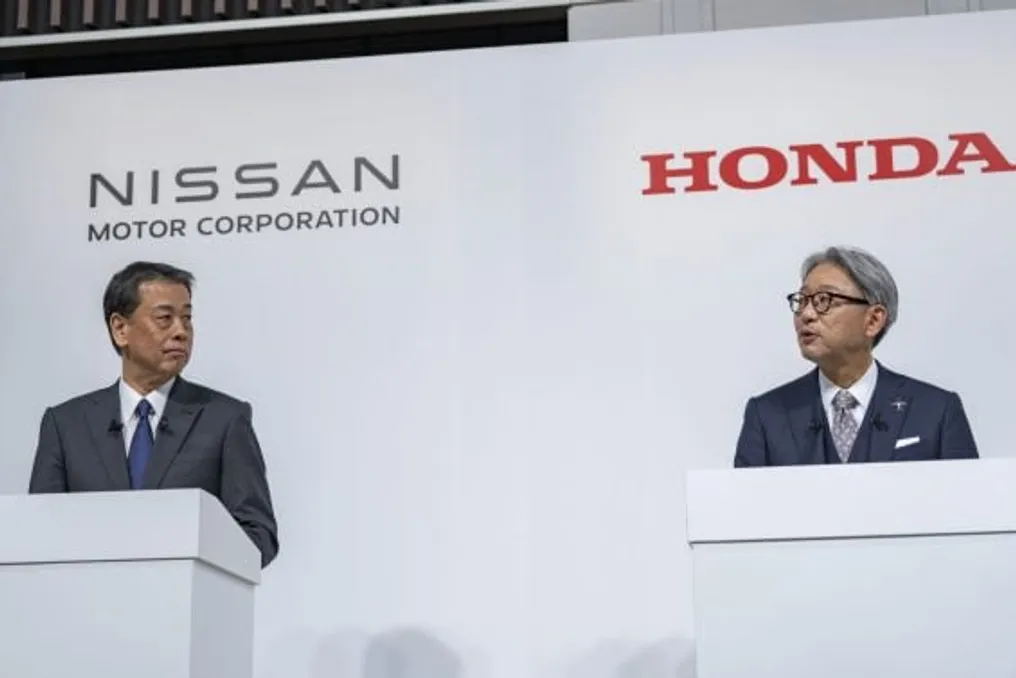
Honda and Nissan announced on Monday, the 31st, a new agreement focused on the collaborative development of electronic control units and software for their automobiles, scheduled to begin in the 2029 fiscal year. This arrangement represents a much smaller version of what the two companies were negotiating twenty months ago when they debated a merger aimed at creating the third-largest vehicle manufacturer in the world.
The time difference between the plans is notable: the original agreement, signed at the end of 2024, stipulated that the combined holding company would be listed on the Tokyo Stock Exchange in August 2026. However, August 2026 was marked by the signing of an electronic components standardization contract.
On December 23, 2024, Honda and Nissan formalized a memorandum of understanding to unify their operations under a common controlling entity. This operation was valued at over $60 billion and would position the resulting group just below Toyota and Volkswagen in terms of global sales. Additionally, a second memorandum, signed on the same date, included Mitsubishi's participation.
During the negotiations, Honda suggested altering the proposed structure: instead of a holding company with a shared board, Honda would act as the parent company, and Nissan would become a subsidiary through a share swap. Nissan rejected this proposal, claiming it would imply a loss of its autonomy. At that time, Honda's market value was more than five times that of its partner on the stock exchange. Other factors involved in the negotiations included pressure for Nissan to repurchase its stake in Renault and Mitsubishi's refusal to accept the role of third partner. Negotiations between the three parties concluded on February 13, 2025.
The subsequent period of eighteen months was dedicated to Nissan's restructuring. Under the leadership of Ivan Espinosa, who took over in April 2025, the automaker is implementing the Re:Nissan plan, which aims to reduce the number of factories from 17 to 10 and foresees the layoff of 20,000 jobs by the 2027 fiscal year. In the quarter ended in March, the company reported a net loss of 533.1 billion yen, marking the second consecutive year of negative results, while its global sales fell by 5.8%, totaling 3.15 million vehicles.
The new partnership will focus on standardizing electronic control units (ECUs), in addition to the embedded operating system, parts of the middleware, and the software that governs the vehicle. This set constitutes the electrical and electronic architecture of so-called SDVs, or software-defined vehicles, where the car's functionalities are centralized in a few computers capable of receiving remote updates.
In practice, this model mirrors platform sharing: there is a common base, but each brand preserves its own interface, features, and design. The companies have not yet disclosed how responsibilities will be distributed or which models will adopt this technology. Meanwhile, Mitsubishi may return to discussions; according to Reuters, the automaker stated that it remains in dialogue with Honda and Nissan regarding the possibility of joining the agreement.
>