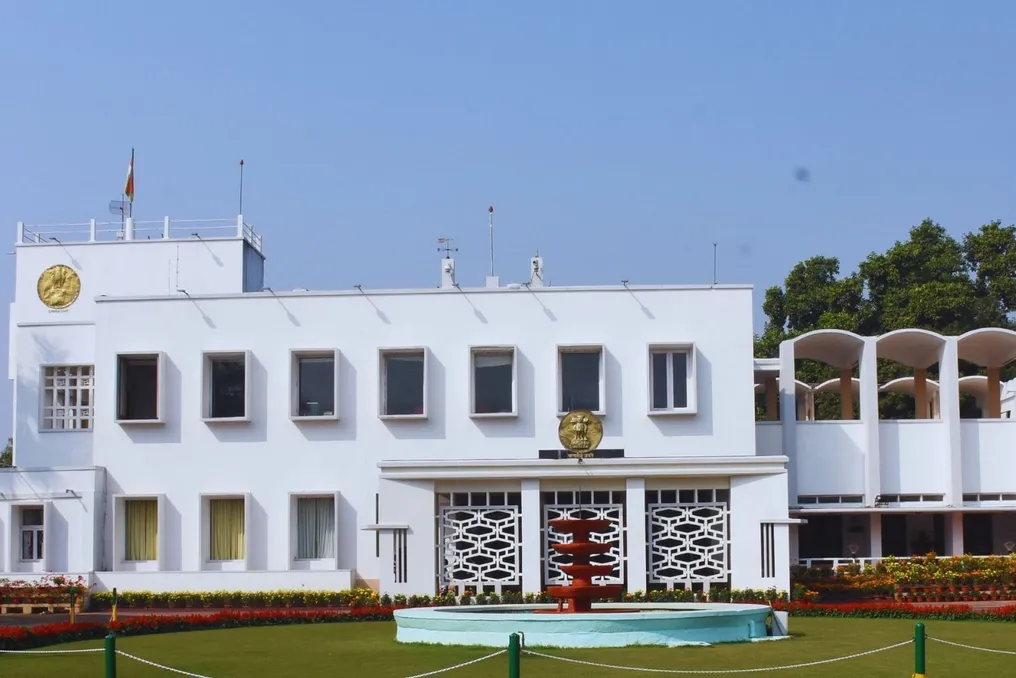
The Lok Bhavan Institute in the center of Bhubaneswar, which has hosted the Governor of Odisha since 1960, has received unique recognition unavailable to other campuses in India. After being renamed from Raj Bhavan in December 2025, Lok Bhavan became the first object in the country to receive IGBC Platinum Green certification, and also the first campus in India to achieve Platinum level under the stricter Green Campus v1 rating introduced in July 2024.
The final score was 88 out of 100, placing it in the platinum range of 80 to 100 and ranking it among the highest-rated green campuses in the country.
Achieving this status was a complex task because certification is easier to obtain when constructing new facilities, where efficiency can be designed before laying the foundation. However, Lok Bhavan is an operational government campus with decades of existing infrastructure, daily operations, and active public engagement.
Under the guidance of Governor Dr. Hari Babu Kambhampati, the campus was assessed across all systems. Civil engineering works were carried out, electrical systems were modernized, water resource management was strengthened, energy monitoring was implemented, landscaping and irrigation were revamped, and waste processing was reorganized. Staff, engineers, consultants, and stakeholders worked according to a roadmap covering eight environmental and operational categories, with every achieved score documented.
Category details showed the following results: site planning and management — 23/25, sustainable transport — 7/7, water conservation — 13/18, energy efficiency — 17/18, material and resource management — 8/8, health and well-being — 6/7, sustainable operation and maintenance — 7/8, and design innovation — 7/9.
Over 80% of the campus area is covered with greenery. Biological surveys recorded 2374 trees of 72 species, and fauna records covered 27 species, with a Shannon-Wiener diversity index of 3.59. The premises include a deer park and the Atal Van eco-park, dedicated to the late Prime Minister Atal Bihari Vajpayee, which features a collection of defense and naval artifacts, including a T-55 tank and a Rafale model.
In the energy sector, the campus installed a solar photovoltaic capacity of 635 kWp, with main consumers tracked and measured. The energy efficiency index is 50.57 kWh per square meter per year, making the campus a candidate for achieving net-zero consumption.
The most significant operational improvement was achieved in water usage: consumption reduction exceeded 35%. This was made possible by an integrated rainwater harvesting and groundwater recharge system built around drainage trenches, filtration chambers, ponds, and well recharge structures, combined with drip irrigation, controlled sprinklers, and separate monitoring of municipal supplies, building systems, kitchen, and irrigation lines.
Waste is separated at the source. Organic waste from the kitchen and landscape is processed on-site through vermicomposting, ensuring 100% recycling and reuse, while final checks confirmed 100% diversion of dry waste from landfills.
Lok Bhavan has also become the first in the country to implement a fully electric official fleet, supported by charging infrastructure for electric vehicles used for internal transportation. This is the most visible element of the transformation and the easiest to replicate for other locations.
Indoor air quality monitoring is conducted, and daylighting has been directed deeper into occupied areas. Universal accessibility is ensured through ramps, tactile navigation, and audio assistance installations. User satisfaction surveys showed an overall satisfaction level exceeding 80% across key parameters. Activities have extended beyond the perimeter fence through tree planting, public health initiatives, blood drives, and adolescent health and nutrition programs.
For the state striving for administrative reform, this certification serves as compelling evidence. More importantly for the rest of the country, it is a documented model of how an existing government campus can be modernized and what results that can yield.