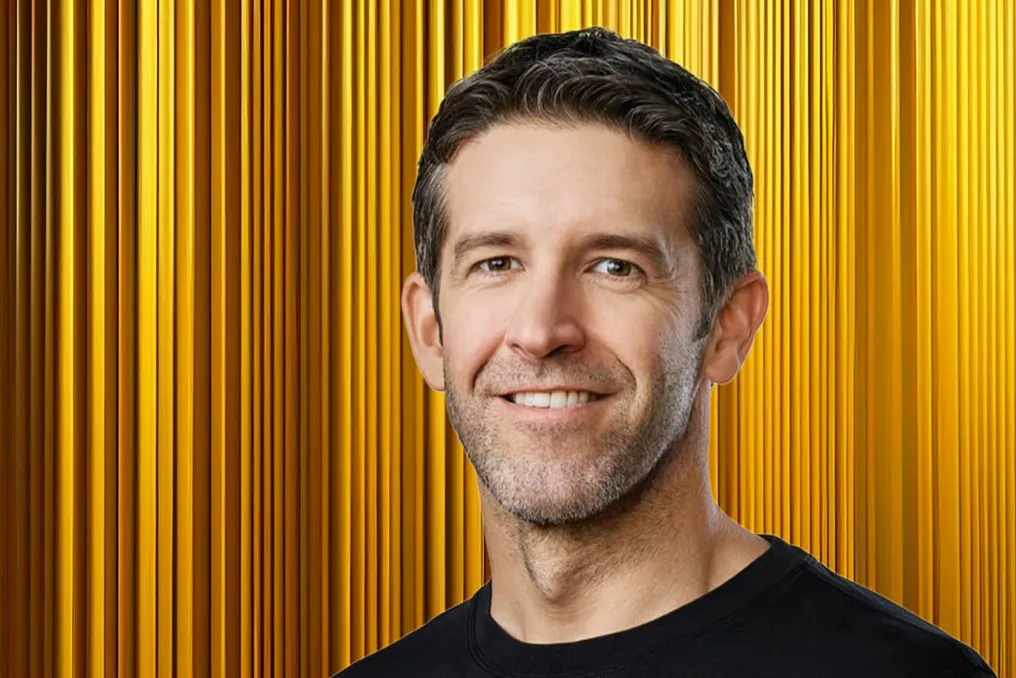
After fifteen years leading the company, which grew from a $350 billion enterprise to a giant with a market capitalization exceeding $4.5 trillion, Tim Cook will hand over the reins to Apple's hardware chief, John Ternus. Ternus will lead the company in the era of artificial intelligence.
Cook will become Executive Chairman on September 1st, where he will oversee Apple's interaction with politicians amid strained relations between its home market in the US and China, where a significant portion of the company's products is manufactured. This transition marks the end of one of the most significant periods of leadership.
Unlike the design genius inherent in Steve Jobs, Cook succeeded by making Apple's supply chain a model for all manufacturers. As CEO, he used this operations-focused approach to make Apple's advanced products accessible to the general public.
An example of his business acumen is understanding that Apple can generate revenue from customers long after an iPhone sale, turning a base of 2.5 billion iPhone users into a source of recurring income. This business has outpaced the growth of the hardware division in recent years.
Apple's annual revenue increased from $108 billion at the start of Cook's tenure to $416 billion in the last fiscal year, and profit grew more than fourfold, reaching $112 billion.
The "Dependency Flywheel"
The wearables business, including Cook-era iPhone accessories such as Apple Watch and AirPods, generated $35 billion in revenue in the 2025 fiscal year. Christopher Brown, a financial advisor at the wealth management firm Synovus Securities, which holds shares in the iPhone manufacturer, noted: "Cook not only forged his own path of operational and supply chain success but also created a culture based on values at Apple. This was followed by consumer loyalty and a dependency flywheel that brought in trillions of dollars in revenue."
Critics have long accused Apple of losing its innovative edge during Cook's tenure. They argue that Cook failed to answer the question of what comes after the iPhone, while hardware competitors strive to replace the smartphone as the primary consumer device.
During Cook's leadership, there were other shortcomings: the electric vehicle project, which Apple canceled in 2024 just as it was gaining momentum in China. The company also famously botched the launch of Apple Maps in 2012, months after Cook took office, which led to the departure of close associate of Jobs and software head Scott Forstall.
Apple's bet on the Vision Pro augmented reality headset, debuting at a price of $3,499 in 2023, did not yield strong sales, and its products lag in AI features, including delays in Siri updates.
Brian Malberry, Chief Market Strategist at Zacks Investment Management, which holds Apple stock, stated: "Artificial intelligence is the biggest challenge for Ternus. Apple must demonstrate that AI will be more than just an app on the iPhone, more than Siri."
He added that "besides AI, the task of continuously moving production out of China without reducing margins is complex, but part of this process is already underway." Apple's reliance on China provided decades of manufacturing efficiency, but growing tensions between China and the US, tariffs, and supply chain disruptions exposed the risks of concentrating production in one country, prompting the iPhone manufacturer to expand production in India and other countries.
Reimagining Apple
These steps, including placing a larger portion of iPhones destined for the US in India by the end of 2026 and assembling certain devices like AirPods and iPads in Vietnam, have helped Apple better cope with the tariff storm that disrupted businesses across the US. Bill Birmingham, Managing Director at REX Financial, noted that Cook expanded the leadership team and reframed Apple into an institution, allowing him to focus on strategy and resource allocation while maintaining a lower public profile. Aditya Soni added: "This gave Cook space to make unpopular decisions and even be ruthless out of sight."