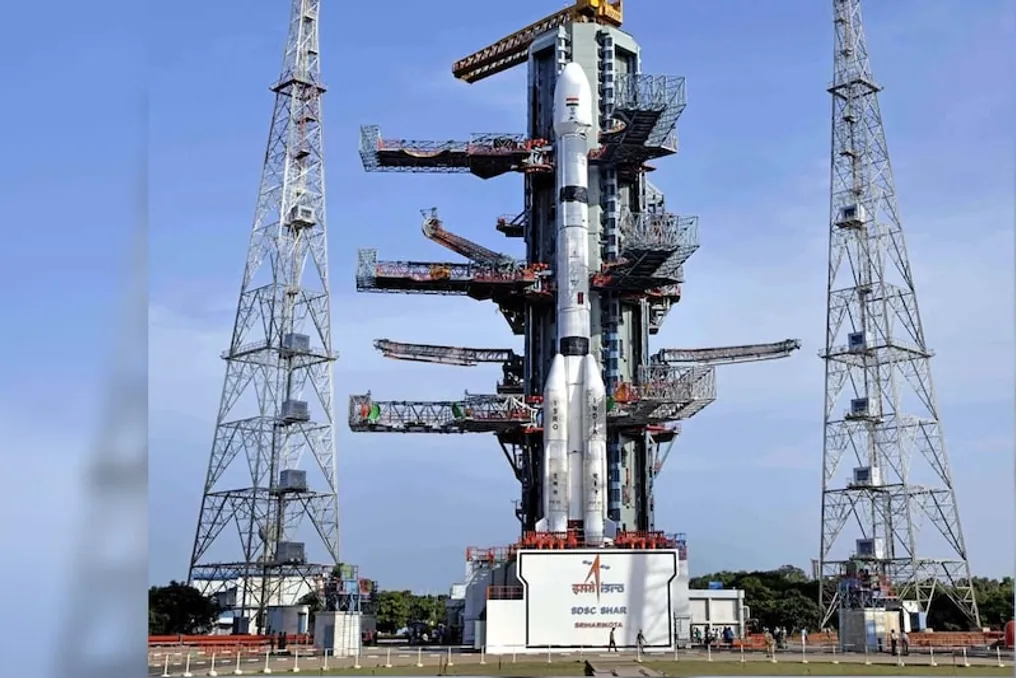
ISRO plans to launch the EOS-05 satellite on September 4th. This launch will be carried out using the GSLV-F17 rocket at 2:55 AM from Satish Dhawan Space Centre in Sriharikota. EOS-05 will be India's first satellite capable of capturing images of vast areas of India from an altitude of 36 thousand kilometers, enabling multiple observations of the same area.
This satellite will assist in monitoring phenomena such as cyclones, floods, sudden downpours, and forest fires. By obtaining images of large territories, changes on the ground can be tracked, and support can be provided for observing activity near borders.
EOS-05 will be sent to an altitude of about 36 thousand kilometers above Earth. It will be placed in an orbit that rotates at the same speed as the Earth. This will allow the satellite to monitor large parts of India for a long time. Unlike regular satellites that fly closer to Earth and pass over one area only briefly, the orbit of EOS-05 guarantees repeated imagery of vast areas of India.
The GSLV-F17 rocket is the nineteenth flight of this series and uses a modified GSLV Mk II. Its total length is approximately 51.7 meters, and its launch mass will reach 420.5 tons. The rocket operates in three stages: first, it will deliver EOS-05 to an initial orbit around the Earth, and then it will move the satellite to the designated orbit.
The images obtained by EOS-05 will be very useful during cyclones and floods, helping to determine the scale of flooding or areas affected by cyclones. Furthermore, the satellite will be able to provide information on areas covered by forest fires. This data will be important for meteorological services, disaster relief teams, and other government agencies. The satellite will also be used to monitor changes in agriculture and landscape.
The EOS-05 mission is related to the previous satellite EOS-03, which was launched on August 12, 2021, using the GSLV-F10 rocket. However, a technical failure occurred in the last stage of the rocket, preventing the satellite from reaching the planned orbit. Now, ISRO is trying to restore this satellite observation service through the EOS-05 mission; if successful, India will gain a new capability for repeated observation of large territories from space.