Mario Tyago Murakami, director of the National Laboratory of Biorenewables (LNBR) at the National Center for Energy and Materials Research (CNPEM), was awarded at the 2026 edition of the FCW Award, granted by the Conrado Wessel Foundation. The award, which recognizes innovative talents and leadership in Science and Culture, focused on Energy Transition this year, a topic addressed in his exclusive article for The Conversation Brazil.
The migration to a low-carbon emission economy will not be limited only to sources such as solar panels, turbines, and electric vehicles. An equally crucial transformation involves replacing products currently derived from petroleum with materials, fuels, and inputs generated from microorganisms and plants.
The bioeconomy represents this promise, and Brazil is one of the few countries that concentrates the necessary natural, industrial, and scientific conditions to lead it. This capacity is not mere speculation but is supported by five well-defined comparative advantages: biodiversity, biomass availability, degraded lands suitable for recovery, low-carbon electricity, and vast experience in bioenergy.
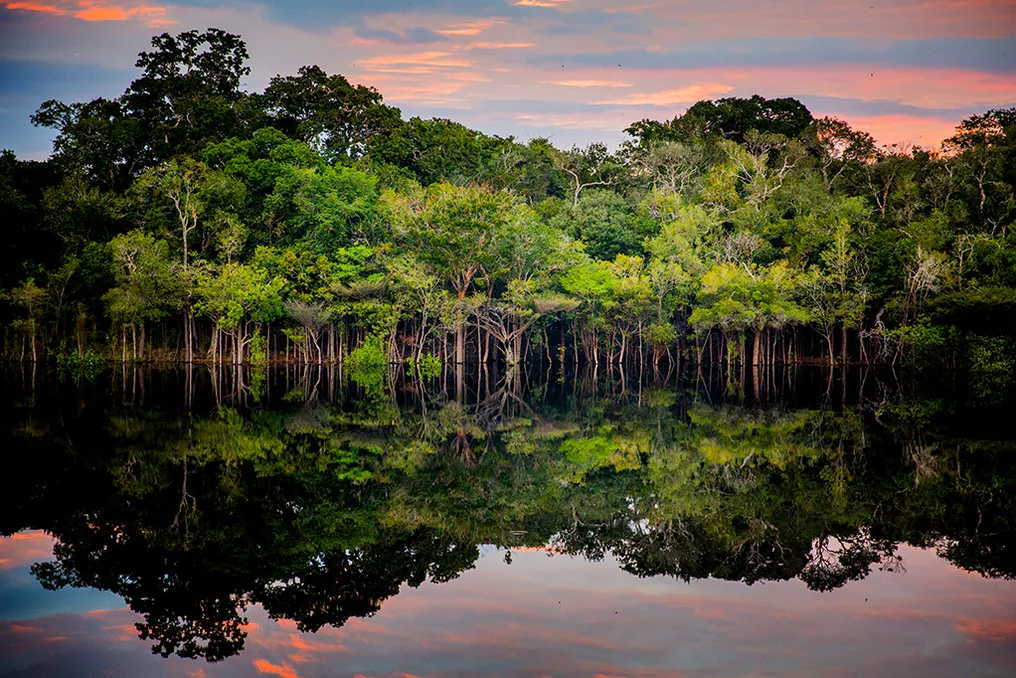
The first advantage lies in Brazilian biodiversity, which holds one of the planet's largest biological reserves. However, this ecological wealth also functions as a vast repository of molecular solutions developed by evolution. Microorganisms, flora, and fauna, along with their microbiomes, produce enzymes, metabolic pathways, and molecules that can inspire new technologies. The challenge is to convert this natural archive into applicable knowledge and subsequently into innovation.
Research conducted in the laboratory demonstrated this potential, such as a paper published in the journal Nature, which detailed a new class of enzymes originating from Brazilian microbial biodiversity. These enzymes are effective in accelerating cellulose breakdown, an essential step to transform plant biomass into sugars, biochemicals, and biofuels. This discovery not only altered the understanding of microbial cellulose metabolism but also increased glucose release from agro-industrial waste by 21% when combined with industrial cocktails.
This example illustrates a valuable connection between basic science and industrial application through the national biotechnological platform OpEn. This platform optimizes biorefinery efficiency and reduces the country's technological dependence, being produced from byproducts of the sugar energy industry and adaptable. It can reduce emissions by up to 50% compared to imported technologies, signaling a local bioindustry capable of converting agricultural waste into ingredients for animal nutrition, biofuels, and biochemicals—a billion-dollar market driven by the substitution of fossil inputs.
Other discoveries came from biodiversity. A group study on the capybara microbiome revealed novel enzymes capable of decomposing vegetable polysaccharides, a fundamental process for obtaining sugars and biofuels. The identification of new enzymatic families and binding modules that control and accelerate biomass breakdown reinforces Brazilian fauna as a strategic reservoir of solutions for the bioeconomy. From this same investigation, a control method emerged that activates and deactivates the enzyme on demand, enabling the development of more precise biotechnological solutions, proving that biodiversity generates cutting-edge science and new productive chains.
The second advantage is captive biomass, meaning raw material available in large volumes in the industry, without additional costs, without extra environmental impact, and ready for biological conversion into new molecules. As an agro-industrial power, Brazil generates over 562 million tons of byproducts, such as straw, sugarcane bagasse, and forest residues, within established chains and without competing with food production. Few countries manage to combine science, industry, and such an abundant, predictable, and concentrated supply of residual raw material, which constitutes a strategic differential for scaling the national bioeconomy.
The third advantage transforms a problem into a solution: degraded lands. It is estimated that more than 100 million hectares of pastures showing signs of deterioration exist in Brazil, about 60% of the total area, according to MapBiomas data cited by the UNFCCC. This territory represents an immense productive and environmental opportunity. The recovery of these areas, using bioenergy, planted forests, and integrated systems, allows for increased production without causing deforestation of native vegetation. Since degraded soils are poor in organic matter, their restoration promotes carbon accumulation, enabling the large-scale production of bioproducts with a positive climate effect.
Thus, the goal is to create a bioeconomy that not only reduces emissions but actively removes CO2 from the atmosphere, restores soils, and eliminates pressure for deforestation.
The fourth advantage is access to low-carbon hydrogen. Hydrogen purity depends on the energy used in its production, and Brazil has a privileged position in this regard. The Brazilian electricity matrix, which integrates hydroelectric, solar, wind, and biomass into an interconnected national system, offers ideal conditions for large-scale green hydrogen production, with a strong contribution from renewable sources. Data shows that most of the electricity generation in the country comes from low-carbon sources, distinguishing it from economies dependent on coal or natural gas.
This is important because hydrogen can be applied in sectors difficult to electrify directly, such as steelmaking, fertilizers, heavy transport, and synthetic fuels, reducing emissions across the entire industrial chain if produced with clean electricity. Furthermore, Brazil can integrate low-carbon hydrogen with biogas, biomethane, ethanol, biomass, and biogenic CO2, paving the way for sustainable aviation fuels, green methanol, and low-carbon ammonia.
The fifth advantage is historical. Brazil has already demonstrated the capacity to establish a bioenergy industry on a large scale. Sugarcane ethanol did not appear ready-made; it is the result of decades of public policies, agricultural research, industrial engineering, technological adaptation, consumer market, and business capacity. Currently, the Brazilian sugar energy sector is a pillar of the country's renewable matrix. According to the Union of Sugar Cane and Bioenergy Industry (UNICA), in the 2024/2025 harvest, 679.68 million tons of cane, 37.3 billion liters of ethanol, and 21 TWh of electricity were produced for the national grid. UNICA emphasizes that Brazilian experience in bioenergy spans almost a century, since the mandatory blending of anhydrous ethanol with gasoline in 1931, evolving into a portfolio that includes bioelectricity, biogas, biomethane, and new routes for sustainable fuels.
Although the natural advantages are significant, Brazil needs to convert potential into strategy. This requires constant investment in science, personnel training, technological infrastructure, regulatory security, intellectual property, risk financing, and stable industrial policies. A change in mindset is also necessary: the country must seek to add more value, instead of just exporting cheap agricultural commodities or biomass, by developing processes, software, biorefineries, and final products.
The relevance of the Brazilian bioeconomy will depend on the union of conservation and development. If biodiversity is only exploited, the source of solutions will be lost. If biomass is only burned, there will be a waste of value. If degraded lands remain unproductive, a climate opportunity will be lost. If science does not reach industry, the country will maintain dependence on foreign technology. Brazil possesses a unique combination of nature, scale, clean energy, biomass, and experience, which can consolidate it as a leader in the transition to a more circular and regenerative economy.