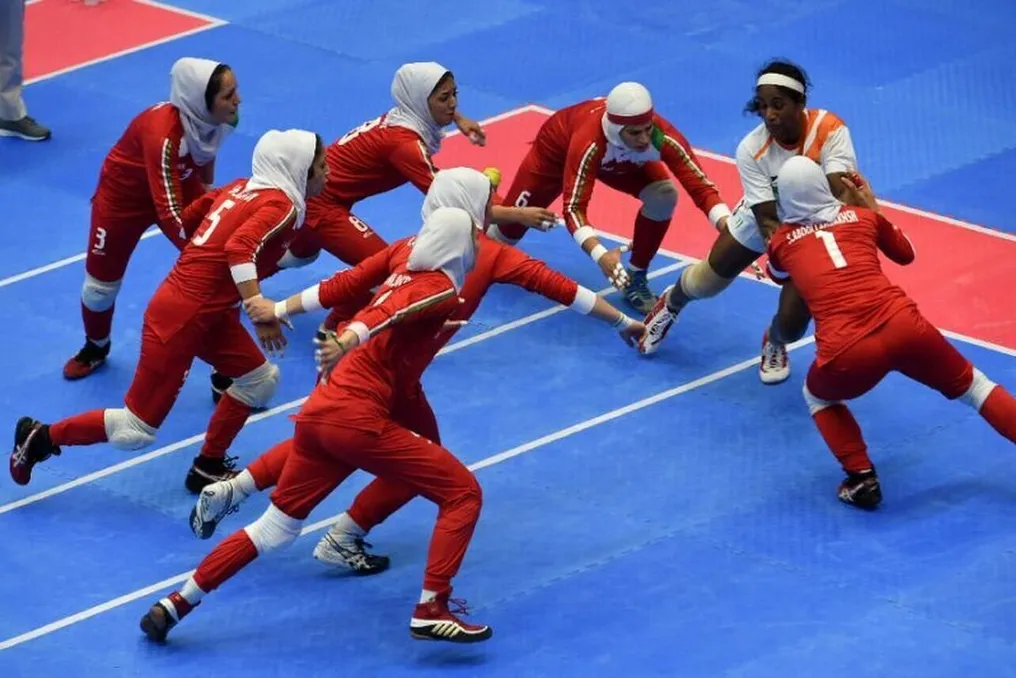
The Iranian women's national kabaddi team is preparing for the 2026 Asian Games with a significantly updated roster. The team's management is working to form a new generation of athletes capable of challenging the traditional dominance of India and Taiwan.
Golamreza Mazandarani, technical advisor to the Iranian women's national kabaddi team, reported that approximately 78 percent of the squad has been replaced this year. The new team is significantly younger than previous squads; many players demonstrate high motivation and energy, but they lack international experience.
According to the technical advisor, gaining competitive experience has been the main priority from the start of the team's preparation. Mazandarani noted that initially, a series of friendly and preparatory matches was planned to familiarize young players with international competition. However, these plans were postponed due to a number of obstacles, including war, flight disruptions, difficulties related to leaving the country, and the refusal of some potential host countries to accept the team for friendly matches.
Despite the difficulties, the team managed to participate in an international training camp and a series of games. The technical advisor called this experience extremely valuable, especially for the younger members of the team. For many players, this was their first international trip and their first chance to compete against foreign opponents.
He added that the camp allowed the coaching staff to assess the players in a competitive setting. Almost every member of the squad was given the opportunity to play in six or seven full matches, which allowed the coaches to evaluate their abilities and determine how they can contribute to the national team.
The technical advisor admitted that transforming a young and inexperienced squad into genuine title contenders in a short period will be a difficult task. He believes that simply declaring a gold medal as the team's goal might seem somewhat ambitious. Nevertheless, the coaching staff intends to prepare the team for the best possible performance at the Asian Games.
Iran will face particularly strong competition from India and Taiwan, two teams that traditionally hold the top positions in women's Asian kabaddi. The technical advisor emphasized that both rivals benefit from the regular hosting of tournaments and competitions on their territory. As a result, their players gain constant playing experience and become more mature through frequent participation in competitive situations.
Mazandarani concluded that despite the challenging circumstances, Iran hopes that the new generation can close the experience gap and challenge the established order. The immediate goal is not just participation, but creating a competitive team capable of breaking the long-standing India-Taiwan duopoly and fighting for the highest possible medal at the Asian Games.