Odyssey raises $74 million to scale solar energy financing and support data centers
Read more
Ventureburn
ventureburn.com

Odyssey raises $74 million to scale solar energy financing and support data centers

The rising initial costs of building artificial intelligence infrastructure create a significant financial barrier for large technology companies and data center developers. These energy-intensive facilities require enormous amounts of electricity daily, forcing developers to seek affordable off-grid renewable energy solutions.

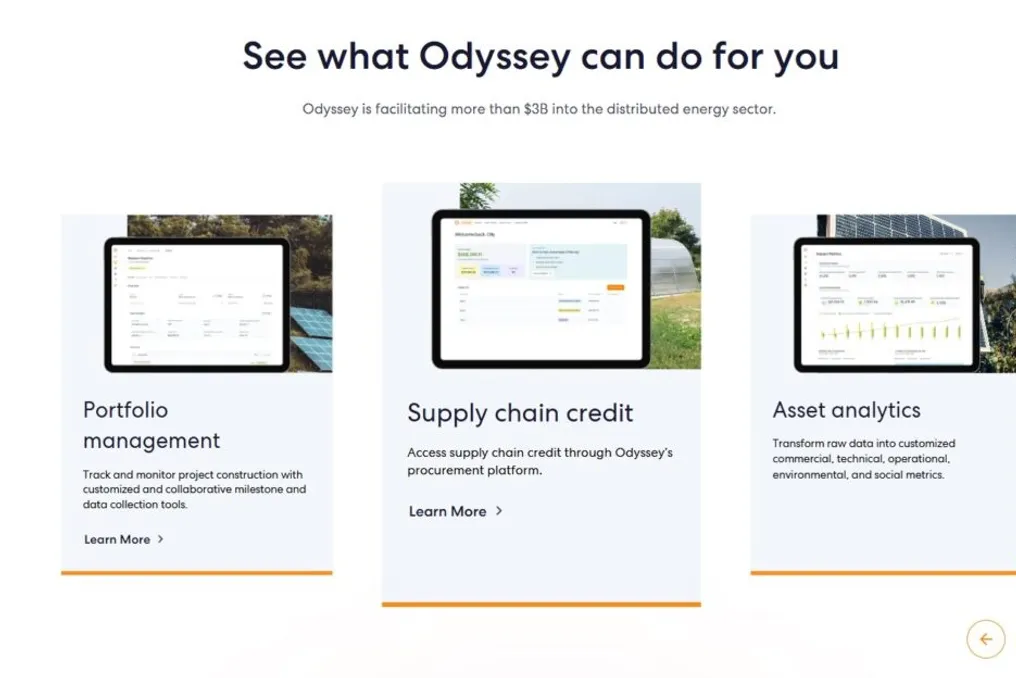
To meet this high market demand, Odyssey has raised $74 million through a combination of equity and debt. The primary goal of this fundraising is to rapidly expand its solar energy financing platform and bridge the gap between small-scale solar installers and the capital they need.

While solar energy looks attractive on paper, it can present a complex logistical challenge for small and medium-sized crews installing rooftop panels. Equipment prices are volatile and high, and securing reliable credit is extremely difficult.

Odyssey fills this niche by acting as a powerful digital intermediary. The company provides seamless connectivity between over 6,000 installers across 50 countries with interested suppliers and leading financial institutions. It is a specialized partner matching service focused exclusively on distributed renewable energy. By simplifying the complex procurement process, Odyssey gives local contractors the financial means to execute large-scale projects, freeing them from bureaucratic red tape.

Scale is crucial in business, and this is particularly evident in India right now. Over the past twelve months, Odyssey's business volume in India has tripled. The country is experiencing historic growth in electricity demand, with energy-intensive sectors such as data center development and artificial intelligence facing massive power shortages.

As India strives to develop faster grid infrastructure, relying solely on traditional grid connections is insufficient. There is a growing need for reliable sources of distributed energy. The Odyssey platform is perfectly suited to support this transition, ensuring that local contractors always have the necessary equipment.

Raising financing for distributed renewable energy involves several risks. Firstly, there is inherent credit risk since Odyssey specifically finances small installers who often have very weak balances. If a large project stalls or a contractor faces payment issues, it directly impacts Odyssey's profitability. Furthermore, a significant portion of the debt in this funding round amounts to $47 million.

Because the company relies on international financial institutions, it is susceptible to fluctuations in global interest rates and currency exchange rates. Moreover, the entire business model heavily depends on favorable government policies. Despite the obvious risks, the outlook is bright. As modern technologies advance, dependence on centralized grids will only increase. Innovative companies like Odyssey are not just financing random solar panels; they are subtly laying the necessary financial foundation to support the next generation of technological progress. By financially supporting small businesses in the solar industry, they are completely transforming how renewable energy is generated, distributed, and consumed globally.

Similar stories

VAST Raises $446 Million in Series B and B+ Rounds to Develop Generative 3D AI
Read more
ventureburn.com

VAST Raises $446 Million in Series B and B+ Rounds to Develop Generative 3D AI

Creating artificial intelligence infrastructure today requires enormous initial capital investments, as maintaining servers is extremely costly. This significant financial burden often prevents most ambitious startups from launching.

However, the situation is changing: VAST has successfully raised $446 million (equivalent to three billion yuan) in a rapid Series B and B+ funding round. This makes the company one of the largest players in the generative 3D space, causing noticeable shifts across the entire market.

For a long time, the development of immersive three-dimensional digital worlds has been slow and expensive. The reason lies in the fact that generative 3D differs from creating flat, two-dimensional images; it requires more than just predicting the next pixel in a grid.

It involves spatial computing, complex geometric shapes, meticulous lighting modeling, and interactive physics. The required computational power is staggering, and the cost of graphics processing units (GPUs) continues to rise. This growing cost barrier has historically excluded small creators and independent developers from the high-quality content generation process because they could not afford the entry ticket.

Major industry players are beginning to recognize this bottleneck problem and, instead of backing away, are directing significant funds toward finding solutions. Matrix Partners China led this process, but it was not acting alone. The volume of industrial capital invested in this round proved to be substantial.

Perfect World, BlueFocus, and 37 Interactive Entertainment joined them, as they understand that the entertainment and gaming sectors are in urgent need of revolutionary changes. Creating complex 3D content for games usually takes hundreds of hours of manual labor. If a sophisticated AI model can generate a fully textured and rigged 3D character in just a few seconds, it will lead to an explosive increase in profit.

The financial syndicate is supplemented by major investors such as CICC Capital, CDH VGC, and CMC Capital Partners. Existing shareholders also actively participated in the subscription, aiming to maintain their stake. In less than six months, VAST has raised about five billion yuan, an unprecedented figure for the 3D AI sector.

Capital always flows where the friction is highest. Currently, this friction is concentrated in the 3D production pipeline. With such a significant reserve of funds, VAST is not just trying to survive the AI hype cycle; the company is poised to dominate it. A radical acceleration of rendering time and deeper integration of physical models are expected.

Essentially, there is a complete transformation in how people create virtual environments from scratch. Examples include modern virtual reality applications and next-generation video games, which require an infinite amount of 3D assets to fill vast digital spaces. Manual creation of such elements is no longer a viable option. VAST has acquired the resources to build a powerful mechanism that brings these assets to life.

The implications of this event are massive. When a company accumulates such a volume of engineering talent and computational power, competitors are forced to either adapt or disappear. It is likely that many accelerated 3D prototyping tools will enter the market next year. Smaller startups will either pivot to niche applications or seek favorable acquisition offers. This is not just a successful funding round, but a loud and aggressive shift in the industry.

Starcloud raises $250 million to build AI data centers in space
Read more
ventureburn.com

Starcloud raises $250 million to build AI data centers in space

Starcloud, a company developing hardware for artificial intelligence, has raised $250 million in new funding to move data centers into outer space. The investment round was led by the investment firm Manhattan West, with participation from Nvidia, Cisco Investments, and over a dozen other investors. This funding expands on the Series A, which the company first announced in March.

About ten months ago, Starcloud conducted its first test launch, sending one Nvidia graphics card into space aboard a small satellite. This experiment successfully demonstrated the ability to train AI during an orbital flight around Earth. Starcloud now plans to significantly scale up this activity.

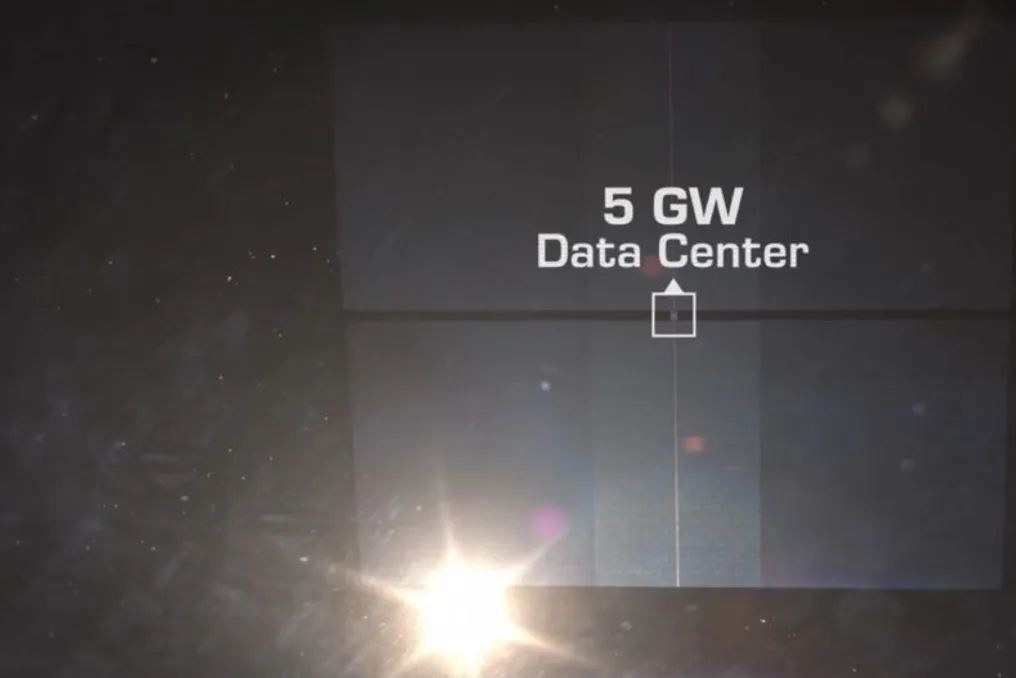
The company's ultimate goal is to create a system of 88,000 satellites, connected by a total computing power of 20 gigawatts. Traditional data centers on Earth face two main problems: energy consumption and heat dissipation. Firstly, when training models, AI chips generate extremely high temperatures, forcing companies to spend vast sums on cooling systems on the planet's surface. In the space environment, however, conditions are naturally cooler.

Secondly, the largest modern data centers consume as much electricity as small cities. Most of this energy comes from the centralized grid, and the cost of using it is constantly rising. In space, Starcloud intends to use solar panels, which also offers a speed advantage. Today, most satellites collect data, such as images or sensor readings, and then transmit all this raw data back to Earth for processing, which requires time and bandwidth.

Starcloud claims that its next satellite, Starcloud-2, will process data directly in orbit. Instead of transmitting terabytes of raw images, it will only be able to send the final result. Starcloud-2 will be the first full-fledged system and will be equipped with AI chips, onboard storage, and a backup module. It is designed to perform both AI training and inference tasks.

This will be followed by Starcloud-3, which will be produced in series. Each satellite of this version will consume about 200 kilowatts of power. Starcloud-3 will include graphics cards, as well as specialized equipment for cooling and heat dissipation designed specifically for space conditions.

The final concept described by Starcloud is Starcloud-4. This is a cylindrical structure that will be attached to solar panels covering 2.5 square miles. Inside, there will be container-sized modules containing liquid-cooled servers. At this scale, the system will be able to compete with the largest data centers on Earth, but without the limitations associated with land, water, and electricity.

Starcloud is establishing production lines for the mass production of Starcloud-3 satellites and is using the $250 million raised to book slots on rockets. SpaceX has been named as the launch partner. It is worth noting that SpaceX is also developing its own competing AI satellite called 'AI1'. It will have a wingspan of 230 feet and computing power comparable to Starcloud-3. SpaceX plans to begin mass production by the end of 2027.

Velaura AI raises $110 million to scale high-efficiency AI computing
Read more
ventureburn.com

Velaura AI raises $110 million to scale high-efficiency AI computing

Velaura AI has successfully raised $110 million in a Series A funding round, valuing the company at over one billion dollars. The round was led by Seligman Ventures, with participation from Capricorn Investment Group, Prosperity7 Ventures, and existing investors including Mayfield, Maverick Silicon, MARA, Premji Invest, and Samsung Catalyst Fund. StepStone Group also participated in the financing.

The capital raised will accelerate the development of the company's portfolio of AI computing power and advance its commercial activities. Velaura is targeting two growing areas: high energy-efficiency data center computing and Physical AI applications.

The company believes that energy consumption is becoming a serious constraint for artificial intelligence infrastructure. Although major cloud providers are actively investing in AI data centers, securing electricity and cooling capacity remains an increasingly complex challenge.

Velaura's core technology is the Titan Core silicon platform. This platform provides patented intellectual property and digital chip design capabilities. The company claims that Titan Core can deliver two to four times higher performance per watt.

The technology is oriented towards mathematical operations used in AI accelerators. It has already been implemented at a commercial scale, deployed in over 30 million ASICs utilizing leading semiconductor manufacturing processes. Velaura also demonstrates data on yield quality and production reliability.

The technology is planned to be applied in AI accelerators, and the architecture will be expanded for Physical AI applications. These applications include intelligent robots, drones, and autonomous systems that operate under strict power and heat dissipation constraints.

Rajiv Kemani, co-founder and CEO of Velaura, noted that further progress in AI will require improving the economic efficiency of computing. He added that the company aims to build a silicon and software foundation for this transition.

As AI infrastructure consumes more electricity, data center operators face the need to improve computing efficiency. Higher energy consumption also entails additional cooling requirements, which can increase the cost of deploying AI capabilities.

Velaura directs its solution at eliminating these limitations at the silicon level, focusing on increasing performance without a proportional increase in energy consumption. Furthermore, the company sees potential beyond traditional data centers, as Physical AI systems require efficient computation to operate in the real world, and robots cannot rely on the same resources as large data centers.

Velaura's leadership team includes executives and engineers from major technology companies such as Apple, NVIDIA, Google, Qualcomm, and Marvell. Their experience spans the development of low-power and high-performance semiconductor platforms and contributions to products shipped to billions of devices.

The new funding will be used to accelerate the development of Titan Core, as well as to expand engineering and customer teams. Additional resources will support deeper collaboration with strategic partners and customers in the fields of AI infrastructure and Physical AI development.

This funding reflects the growing investor interest in energy-efficient AI infrastructure, as power availability is increasingly viewed as the main barrier to AI expansion. Velaura's approach may allow for more computational power to be placed within existing energy constraints and reduce the thermal load on AI infrastructure.

The company positions its technology as suitable for both hyperscale and edge applications, giving it a presence across several segments of the growing AI computing market. Its headquarters in Silicon Valley place it within a dense semiconductor ecosystem.

Popular