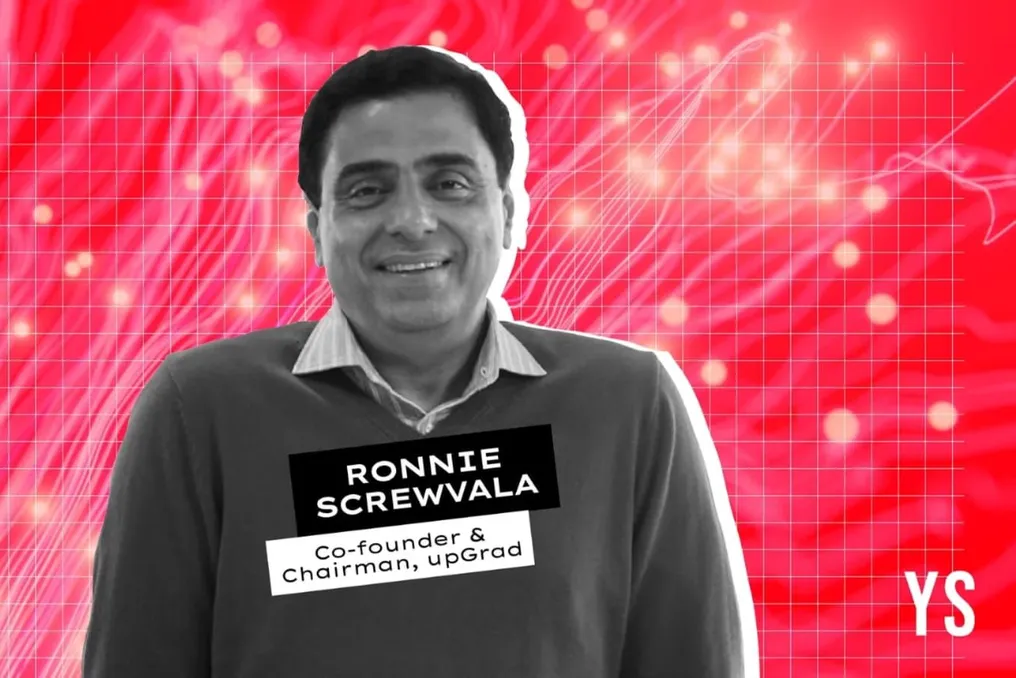
The deal between Unacademy and upGrad, which is reportedly set to close in 2026 for $200 million, began six years earlier, according to Ronnie Screwvala. The story started in 2020 when Gaurav Mundjal presented an unusually bold proposal during a meeting.
During lunch at the Taj Lands End hotel in Mumbai in 2020, Mundjal approached Screwvala and Mayank Kumar with the idea of merging Unacademy and upGrad. His vision went beyond a simple merger; Mundjal wanted to manage the combined company.
Screwvala recalled this episode in a post about the acquisition's completion, describing Mundjal as very confident yet respectful of what both companies had built. He noted: 'He came with a proposal that he could lead the entire combined education. Obviously, that was not our intention at the time.'
He was impressed by Mundjal's willingness to approach a much larger business, openly discuss his ambitions, and justify the need for such a consolidation.
The idea was particularly noteworthy because both companies were developing very different areas at the time. Unacademy was based on an online education model focused on teachers and entrance exam preparation, while upGrad, founded in 2015 by Screwvala, Kumar, and Phalgun Koppalli, focused more on higher education and professional training.
Screwvala entered the edtech sector with the conviction that education could be a long-term, large-scale opportunity, not just another technology category. In 2020, industry forecasts already pointed to rapid growth in the Indian online education market, fueled by the pandemic and the long-term shift to digital learning.
Unacademy became one of the companies to benefit from this shift, attracting capital and expanding its presence in test preparation. By September of that year, its valuation reached approximately $1.5 billion.
Although the two companies did not merge then, Screwvala reported that they met periodically, and a more personal relationship developed between them. He even remembered Mundjal being late for some meetings by about 45 minutes but emphasized that these meetings still reflected mutual respect.
Screwvala wrote: 'Relationships are built on mutual respect, trust, and affinity. And sometimes such relationships create the opportunity to build something truly big.'
These relationships regained commercial significance in July 2025. Screwvala noted that Mundjal contacted him again and openly discussed the crossroads Unacademy had reached. Circumstances had changed drastically by then: the enthusiasm that defined edtech during the pandemic had waned, valuations had been adjusted, and the companies were under greater pressure to demonstrate economic sustainability.
This explains why the initial conversation in 2020 is not just a fun piece of startup history. The attraction between the two companies was based on structural alignment that remained relevant even after the market shifted.
UpGrad provides depth in higher education, online diplomas, professional training, and career development. Unacademy offers a large consumer education platform, a test preparation business, and a productive culture built around technology and educators.
Screwvala believes that these differences are precisely what make the combination interesting. He stated: 'There are incredible strengths that Unacademy brings to what upGrad lacks: insight, product-oriented thinking and technology, the ability to look at a completely different target audience, brand, and the resilience of the team that created it.'
Screwvala's post is less about the mechanics of the acquisition and more about what edtech companies can become when the market moves beyond its initial technological narrative. He believes the real question is whether educational enterprises can contribute to the development of India's workforce and its broader goals.