The US has announced plans to tighten control over states that continue to conduct commercial relations with Iran. Although China's name was not mentioned for Monday, it was clear that threats could affect the entire world, including American consumers whose energy costs may rise.
According to one analysis, in September 2025, Tehran exported oil worth $3.9 and $4.2 billion, with the vast majority of these purchases made by China, the world's largest energy consumer.
The US-China Commission on Economic and Security Affairs previously noted this year that Chinese purchases account for about 90 percent of Iranian exported oil, providing an annual income of tens of billions of dollars that supports Iran's state budget and military activities.
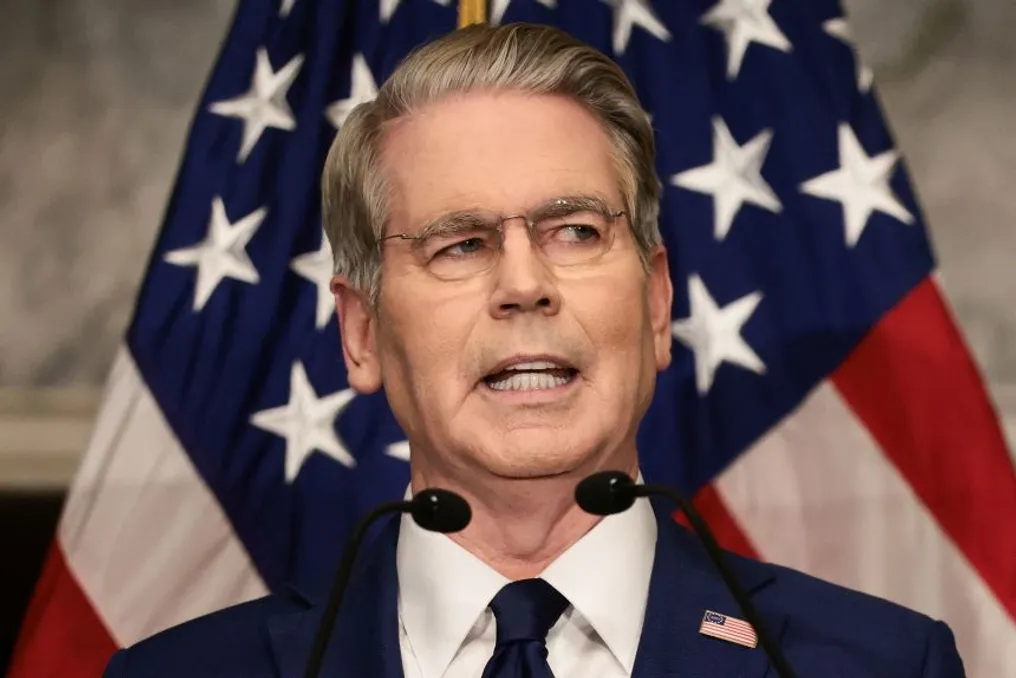
The designation for Monday was described as a 'warning shot,' stated Bessent. Despite some individuals and organizations being sanctioned, he did not announce broad measures targeting any specific countries.
On Monday, Chinese Foreign Ministry spokesperson Li Jian stated that 'sanctions and pressure tactics do not help resolve problems. They will only lead to escalation that benefits no one.' Li also hinted that China might take its own measures, saying: 'China is closely monitoring relevant events and will take all necessary measures to firmly protect its own rights and interests' during a regular press briefing.
According to a Nomura report from April, 38 percent of Chinese oil and 23 percent of its liquefied natural gas pass through the Strait of Hormuz, which is a central point of the Iranian conflict.
China has already reduced its import of Iranian oil. According to Emma Lee from the energy analytical firm Vortexa, the average volume of crude oil imports from Iran was about 1.4 million barrels per day before the war began, but in recent months, it has dropped to approximately 700,000 barrels due to reduced refinery operations and the use of domestic reserves.
Tianyue Hu, an analyst at the energy intelligence firm Rystad, told CNN that a complete ban on importing Iranian crude oil would likely have a limited immediate impact on China's overall energy security, as imports from Iran have already significantly decreased, and China still has relatively large crude oil reserves.
However, new sanctions could further worsen the complex relationship between the Trump administration and China. Last year, both countries were involved in a fierce trade war during President Donald Trump's imposition of tariffs, and recently they resumed mutual sanctions.
Daniel Tanenbaum, a non-resident senior fellow at the Atlantic Council, previously told CNN that 'China is certainly the most influential if you really want to influence Iran's ability to continue funding its activities.'
This is not the first time the United States has threatened sanctions against Iran's trading partners. India was previously a major importer of Iranian oil, supporting trade relations worth $1.1 billion between April and December 2025 for goods such as rice and sugar, but India stopped importing Iranian oil in 2019 due to US sanctions (although in April of this year, India purchased Iranian oil amid the energy crisis).
It is difficult to determine how much the US sanctions can affect China or other countries dependent on Iranian oil.
Wall Street analysts could not even get a clear answer on how much oil is leaving the Strait of Hormuz. While US Energy Secretary Chris Wright claimed the strait is open and oil is flowing, Iran claims otherwise. Data from third-party vessel trackers showed approximately half the volume claimed by Wright.
Furthermore, there are shadow fleets often used by sanctioned countries. These tankers conceal their owners, origins, and destinations, making them difficult to track. The vessel tracking platform Kpler reported this month that shadow transit accounted for about 50 percent of traffic in the strait in recent weeks, compared to about 12.5 percent a month ago.
Nevertheless, the shortage of oil flows affects everyone. Large oil reserves prevented a major oil shortage when the war with Iran began in February. Periodic truces during the war lowered global oil prices, but they rose again whenever these agreements expired or ended.
American consumers have already felt the consequences of rising oil prices due to the war. According to AAA, the current average national price for gasoline is $4.10 per gallon, compared to the average last year of $3.15.
Bessent emphasized that 'no one is beyond the reach of US sanctions' on Monday, but he avoided setting deadlines for any decisions. It is expected that Chinese leader Xi Jinping will visit the US next month. Bessent added: 'I will not set deadlines, but we do not have infinite patience.'