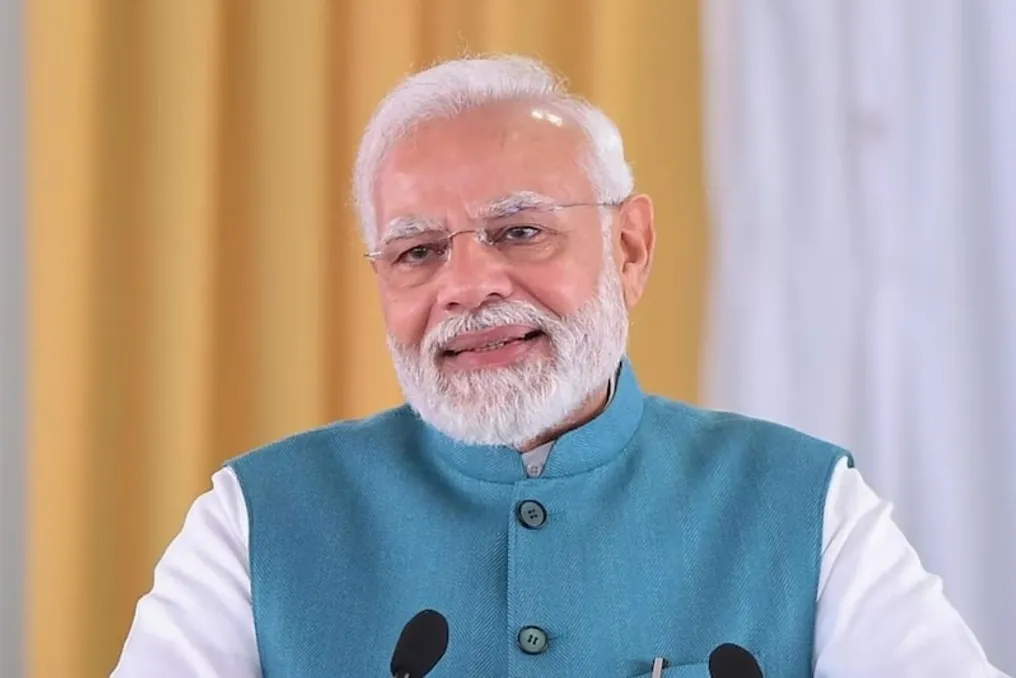
Modi's government reports two positive pieces of news: GDP growth and GST collection
Read more
Aaj Tak
www.aajtak.in

Modi's government reports two positive pieces of news: GDP growth and GST collection

In the last two days, Modi's government has received two good pieces of news indicating the rapid pace of India's economic development despite global difficulties. On Tuesday, encouraging data on GST collection was published, and on Monday, GDP growth figures for the first quarter of the 2026-27 fiscal year were presented, which turned out to be better than expected.

The first good news concerned the GDP figures. In the first quarter of FY27, the Indian economy showed a dynamic growth of 7.8%. This figure exceeds the GDP growth rate of India in the same quarter last year, which was 6.9%. This result surpassed the forecasts of many experts and the Reserve Bank of India (RBI), who expected India's GDP growth to be in the range of 7.1-7.2% for the April-June period.

It is important to note that this GDP growth rate was achieved amidst numerous global problems, including tensions over tariffs and wars, supply chain crises, rising energy prices, and uncertainty in world trade. Prime Minister Narendra Modi stated in a video address regarding the GDP growth: 'The country is filled with joy; we have achieved a growth rate of 7.8%, and we need to maintain this momentum. We will realize the dream of a developed India by 2047 through self-reliance.'

Following the announcement of the GDP growth data, another positive piece of news for Modi's government followed on Tuesday morning. Data on GST collection for August was published, showing an increase of about 15% year-on-year. The total GST collection for August amounted to 1,998.53 lakh rupees, compared to 1,741.16 lakh rupees in the same quarter last year.

Analysis of the GST collection data shows that the central GST (CGST) collection reached 38.413 lakh rupees, state GST (SGST) collection reached 46.316 lakh rupees, and the total integrated GST collection exceeded 1.15 lakh rupees. Furthermore, refunds increased by 68% last month, amounting to 31.795 lakh rupees. The net GST collection was 1.68 lakh rupees. Significant amounts from GST collection were also received by the government treasury in June and July.
Similar stories

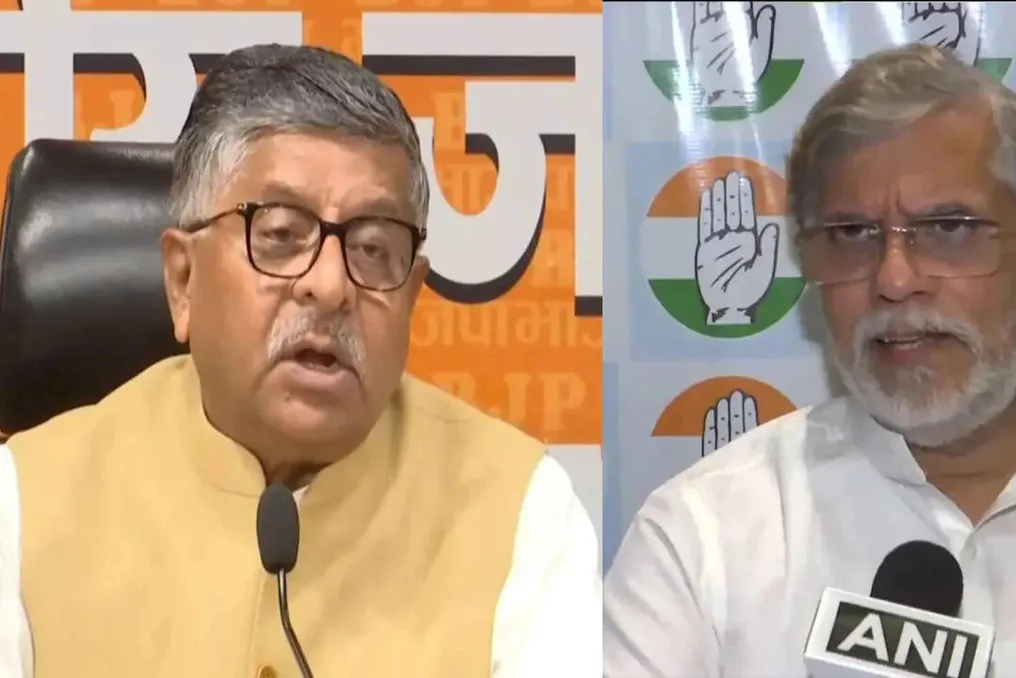
Disagreements between BJP and Congress on India's economic growth amid 7.8% GDP rise
Read more
timesofindia.indiatimes.com

Disagreements between BJP and Congress on India's economic growth amid 7.8% GDP rise

Following the release of official data indicating that India's GDP grew by 7.8% in the quarter from April to June 2026, the BJP party and the Congress have presented diametrically opposed assessments of the country's economic situation.

BJP leader Ravi Shankar Prasad called the latest figures 'particularly significant' at a press conference. He asserted that India demonstrated rapid growth despite increasing geopolitical and economic uncertainty during this period, including the crisis in the Persian Gulf, oil supply disruptions, and supply chain pressures.

Prasad emphasized that India's GDP growth reached 7.8% in the quarter from April to June 2026, noting that this occurred against the backdrop of the escalating crisis in the Persian Gulf, concerns over oil supplies, and global economic instability. He compared this figure to the growth in other major economies: Canada grew by approximately 1.5%, Germany by 1%, the UK by 2.1%, Malaysia by about 6%, South Korea by about 3.7%, and the US by approximately 2% over the same period.

He linked India's success to effective economic management and highly praised the leadership of Prime Minister Narendra Modi. Prasad stated that he congratulates and commends India's economic management, and 'sincerely congratulates the esteemed Prime Minister for his vision, wisdom, and leadership.'

However, the Congress disputed the BJP's interpretation of these GDP figures, arguing that overall growth does not reflect the economic conditions faced by ordinary citizens of India. Congress leader Pawan Khera questioned how a 7.8% growth translates into benefits for youth and farmers, while pointing to issues in employment, production, education, and income distribution.

Khera criticized, asking how GDP growth affects the youth, who constitute the largest demographic group in the country, and how it impacts the agricultural sector, which is the primary source of employment. He also raised the issue of the manufacturing sector's condition, asking what is happening with production data. Khera noted that only a small number of people contribute to the country's growth and demanded an explanation of where income redistribution is going. He also pointed out that 80% of the population depends on free rations.

Earlier, Khera had voiced his criticism on the social media platform X, insisting that strong GDP growth over just one quarter cannot be considered proof of widespread economic prosperity. He stated that 'a 7.8% quarterly growth is not an economic spring,' and asked why the real situation is characterized by high unemployment, leakage of exam materials, and the destruction of the education system if the country has truly 'flourished.'

Khera added that GDP measures national output, not jobs, wages, or opportunities, and if it measured these parameters, the future of India's youth would not look so bleak. He also questioned whether the strong GDP figure has led to a tangible improvement in the cost of living and working conditions, reminding that 80% of the population relies on free rations.

In conclusion, the competing responses highlight the political divide over how India's economic results should be evaluated: the BJP uses the 7.8% quarterly growth to demonstrate the country's relative resilience amidst global turmoil, whereas the Congress focuses on whether this GDP growth is reflected in employment levels, household incomes, and opportunities for India's young population.

Popular