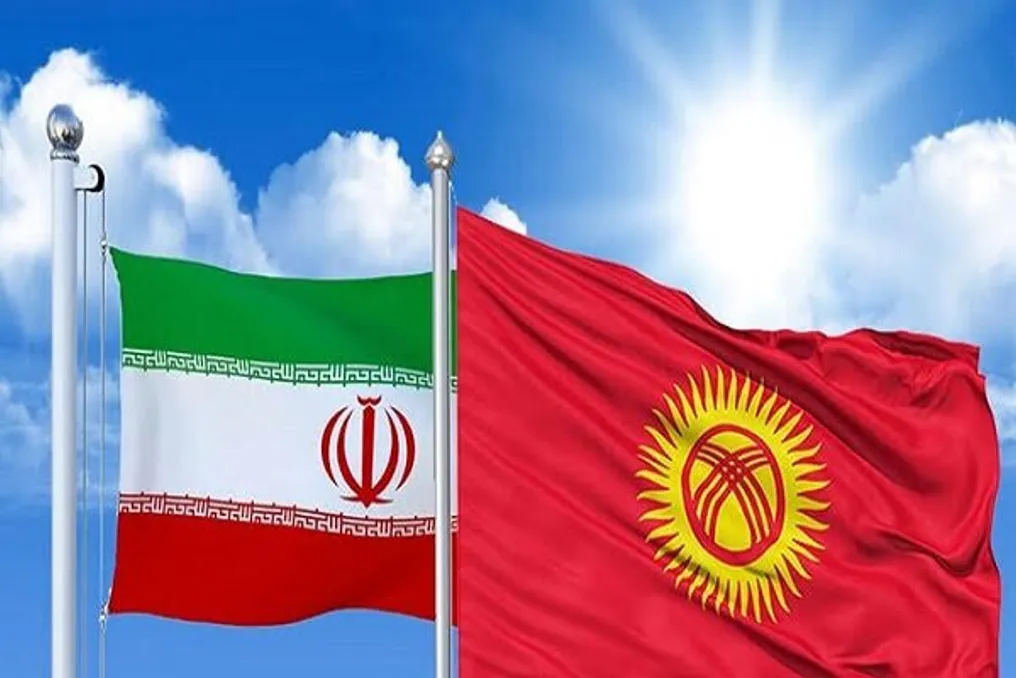
Iran and Kyrgyzstan have reached an agreement to jointly consider a proposal for the construction of an oil refinery in Kyrgyzstan, which is a step towards deepening energy and economic ties between the two states. This announcement was made on the sidelines of the Shanghai Cooperation Organisation (SCO) summit and the 'Shanghai Plus' summit held in Kyrgyzstan on Monday.
Iranian President Masoud Pezeshkian, who met with Kyrgyz President Sadyr Japarov during the summit, confirmed that Tehran positively assessed the proposal and agrees with its fundamental principles. Pezeshkian stated: 'Kyrgyzstan's proposal for the joint construction of an oil refinery in this country has been viewed positively, and Iran agrees with the principle of this proposal.'
According to the proposed cooperation model, Iran will supply the crude oil necessary for the plant's operation, and the resulting petroleum products will be distributed between both nations. The Iranian President characterized this interaction model as a timely opportunity to enhance the level of economic and energy partnership.
This proposal is relevant because energy cooperation has long been a central element of bilateral relations. Kyrgyzstan, which currently heavily relies on imports to meet domestic needs for oil and petroleum products, will benefit significantly from establishing its own refining capacity.
If the partnership is realized, it could go beyond simple trade of oil and products, including joint investments, refining operations, technical and engineering services, as well as petroleum product marketing.
Expansion of Bilateral Economic Ties
President Japarov welcomed the expansion of economic and energy cooperation with Iran and invited qualified Iranian companies involved in oil exploration to bring their expertise to Kyrgyzstan. It is expected that this invitation will pave the way for broader participation of Iranian business in Kyrgyzstan's oil projects and the utilization of Iranian technical and engineering capabilities in various sectors of the Central Asian oil and gas industry.
The oil refinery proposal is part of broader efforts to strengthen economic relations between the countries. In early August, Iran's Minister of Industry, Mining, and Trade, Seyed Mohammad Atabak, met with Kyrgyzstan's Minister of Economy and Trade, Bakyt Tolomushevich Sydykov. During this meeting, both sides emphasized the need to develop trade exchange, joint investments, and expand cooperation in the fields of industry, mining, energy, transport, and free zones.
The ministers particularly noted the huge potential for economic interaction and stressed the importance of promoting trade and investment within regional agreements, including the Eurasian Economic Union (EAEU) and the SCO. They also discussed joint production for export to third-country markets, increasing cooperation in exporting knowledge-based products, pharmaceuticals, and medical equipment, as well as expanding interaction between free zones.
Cooperation in Mineral Extraction, Energy, and Transit
In the mineral extraction and energy sector, the key issue was Kyrgyzstan's mineral value. Iran expressed readiness to participate in exploration, extraction, processing, provision of technical and engineering services, modernization of the mining industry, and transfer of technical knowledge.
Regarding transport and transit, the parties focused on the need to activate the Bandar Abbas–Osh railway route, establish direct flights, reduce transit costs, and complete regional corridors. The importance of participating in China's 'Belt and Road' initiative and utilizing Iran's strategic transit position to connect Kyrgyzstan with regional and international markets was also noted.
Banking and Financial Infrastructure
To support growing economic partnership, both countries agreed to work on developing banking, logistics, and transport infrastructure. Other important agreements included the creation of a joint banking committee, the use of national currencies in bilateral settlements, the formation of joint investment funds, and the application of modern financing methods.
As Iran and Kyrgyzstan continue to strengthen their partnership, the proposed joint oil refinery stands as a potential flagship project capable of changing the contours of their economic and energy interaction for many years to come.