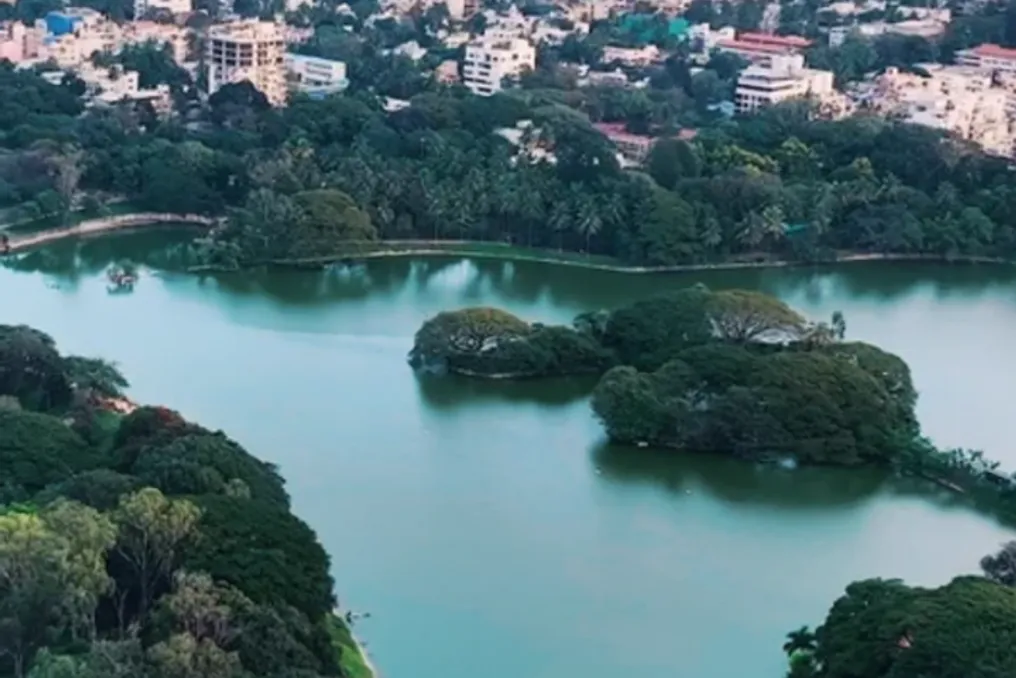
On August 30, residents gathered in Lalbagh to express concern over the use of park territory for infrastructure construction. A recent amendment to the Karnataka Parks Act allows up to 5% of protected park land to be used for public benefit projects.
This dispute is also linked to the planned 17 km tunnel between Hebbal and Central Silk Board, whose corridor includes Lalbagh. Lalbagh possesses plants, birds, pollinators, mature trees, water bodies, soil life, and geological heritage that cannot be recreated elsewhere.
According to Lalbagh's records, 2150 plant species are registered here, belonging to 673 genera and 140 families. This collection includes 63 endemic species, as well as 100 rare, endangered, or vulnerable tree species.
Notable trees include African baobabs (Adansonia digitata), rain trees (Samanea saman), javanese plum (Syzygium cumini), Indian laburnum (Cassia fistula), mahogany (Swietenia mahagoni), and banyans (Ficus benghalensis).
Near the greenhouse are three mango trees estimated to be about 250 years old, possibly dating back to the times of Hyder Ali and Tipu Sultan. Lalbagh also hosts birds such as pink-rimmed parrots, Asian koels, black kites, swamp herons, and kingfishers.
Bees, butterflies, and other insects link the flowering plants of Lalbagh to the broader urban ecosystem. The geological feature of Lalbagh Rock is that it is part of the Peninsular Gneiss, and the ancient rocks of Bengaluru date back approximately 2.5–3.4 billion years. Thus, Lalbagh protects not only living history but also a landscape formed long before human appearance.
The water bodies, permeable soil, vegetation, and tree canopy of Lalbagh contribute to maintaining biodiversity, rainwater absorption, and mitigating the urban environment. A mature rain tree or mahogany cannot be ecologically replaced by simply planting a few saplings elsewhere; the functions of age, canopy, and established root systems require decades to develop. Fungi, bacteria, earthworms, roots, and other organisms ensure nutrient cycling, support vegetation, and maintain soil health. Before Bengaluru begins building on or under green zones, it is necessary to understand the benefits these zones already provide.