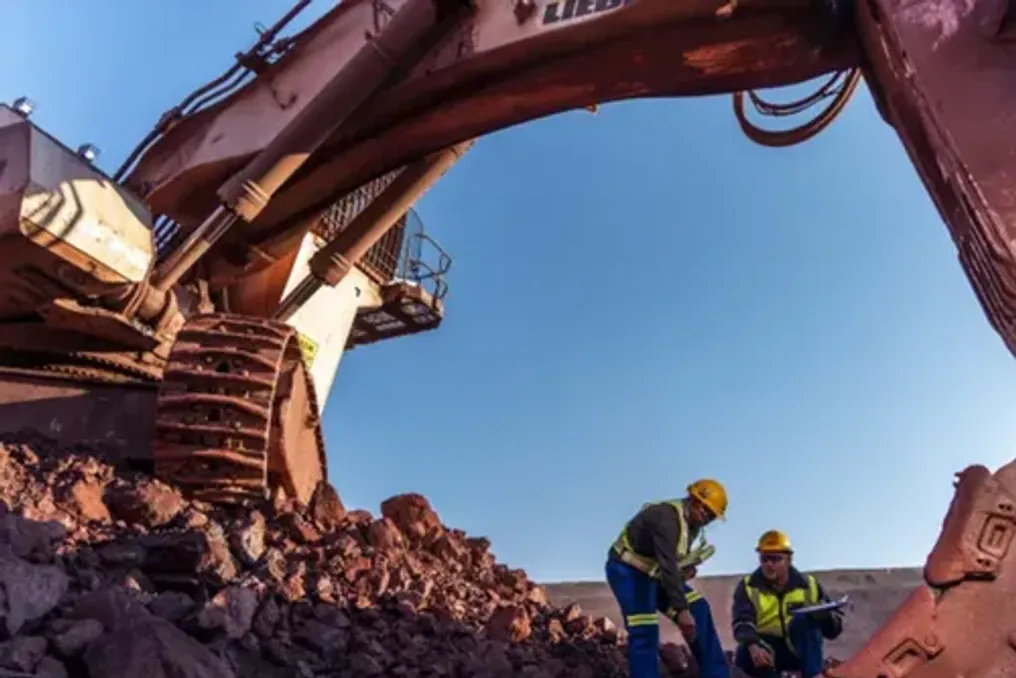
The collapse of a tailings dam at the Samancor Chrome mine in Dikwane, near Brits, occurred on Thursday. Mining expert David van Wyk estimates that over 34,000 illegal miners are currently operating in South Africa, and the damage they inflict extends far beyond the mining industry, affecting the power grid, water pipes, roads, and foundations of the country's economic capital.
The risk associated with underground activity differs from typical informal mining elsewhere. City Power, Johannesburg's electricity supplier, warned that underground excavations have destabilized the soil to such an extent that substations, transformers, power line poles, and transmission towers are at risk of collapse. Miners, known as zama zamas, regularly remove copper cables for resale, damage water pipes, and tunnel under roads.
In Denver, near the city center, a factory owner told AFP that he weekly saw illegal miners emerging from a pit about 100 meters from his building and pointed to cracks in his premises that he attributes to underground blasting. Many old mine shafts are also flooded with acidic mine water—a pollution problem left over from the past, which, according to van Wyk, now directly contributes to sinkhole formation across the plateau.
This process is not a distant rural phenomenon; it is happening directly beneath the foundation of Africa's financial center. The state response has been more military than administrative. President Cyril Ramaphosa sanctioned Operation Prosper, under which about 2,200 military personnel were deployed in five provinces this year at declared costs of 80 million rand. This followed an operation in 2023 where 3,300 people temporarily removed 6,500 miners from sites, but this activity resumed within weeks after the troops were withdrawn.
The most extreme case occurred in Stilfontein at the end of 2024, when authorities blocked the Babbelfontein mine shaft and cut off access to food and water to force out around 4,000–4,500 miners, some of whom reportedly survived on a mixture of toothpaste and toilet paper. This operation drew condemnation from trade union and humanitarian groups, and courts eventually intervened to demand access to aid; however, according to most reports, the development of other parts of the plateau has barely slowed down.
South Africa's situation fits into a larger global picture, and comparisons offer valuable lessons. Ghana has been battling its version of this crisis, known as 'galanse,' for a decade, where illegal small-scale gold mining has poisoned major rivers, including the Pra and Ankobra, threatening the water supply of millions and causing repeated states of emergency and military operations with strikingly similar outcomes: forced site clearance temporarily cleans them up, but miners return as soon as attention shifts.
Peru offers a different model to consider. Faced with a similarly entrenched informal mining sector in regions like Madre de Dios, Peru is experimenting with formalization programs, such as REINFO, registering informal miners under regulated conditions instead of relying solely on force. The results have been imperfect and controversial, but they reflect an acknowledgment that when activity is driven by mass unemployment and a profitable black market—gold zama zama reportedly fetches around $160 per gram—it generates exceptional income in a country where unemployment approaches 40%, and raids alone rarely solve underlying economic problems.
Economic logic is the reason for the constant failure of strategies based solely on law enforcement on South Africa's gold plateau. A study by the Bench Marks Foundation showed that some licensed mining companies purchase gold from zama zama networks, indicating a closer interconnection between the illegal and formal economies than official rhetoric allows. Meanwhile, physical damage accumulates daily: every additional shaft drilled under Johannesburg's substations and pipelines represents infrastructure damage that will ultimately cost the city more than any single military operation costs to maintain.
South Africa does not need to look far to find two possible paths: the cycle of temporary suppression characteristic of Ghana, or the more complex and slower attempt at formalization undertaken by Peru. The ground beneath Johannesburg will not patiently wait for the country to decide which path to take.