Airport advertising screens showcase new arena of battle for Chinese AI cloud technologies
Read more
Pandaily
pandaily.com

Airport advertising screens showcase new arena of battle for Chinese AI cloud technologies

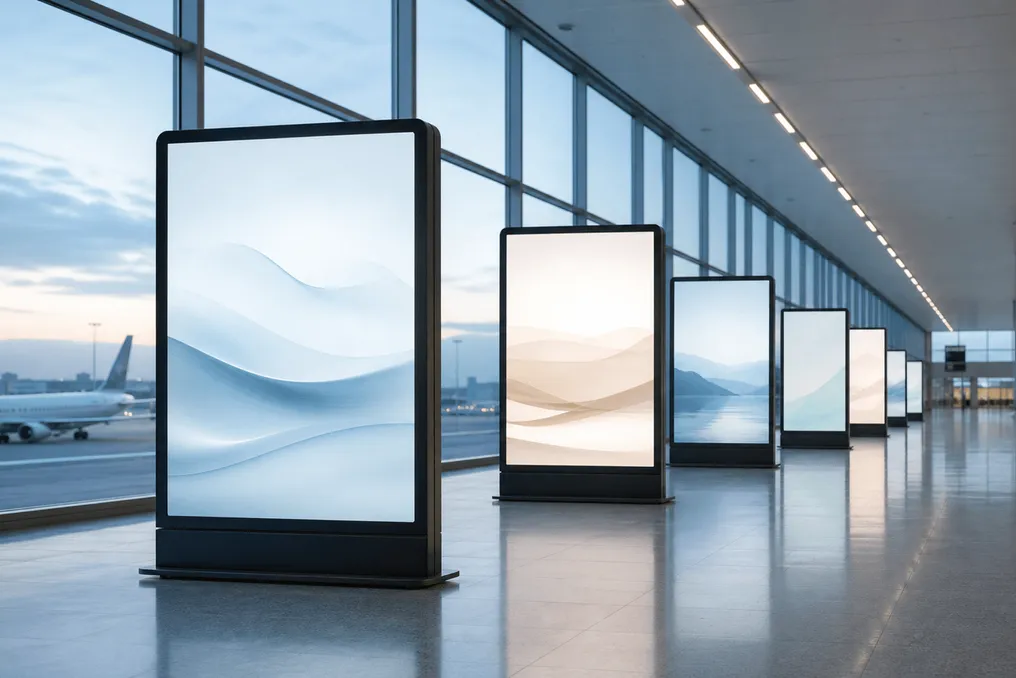
Upon arriving at Beijing Terminal 3, passengers can see a continuous line of LED advertising boards featuring companies such as Alibaba Cloud, Volcano Engine, Baidu AI Cloud, and DataCanvas. This sight is not new; since 2025, the density of cloud service advertising in major Chinese transport hubs has been steadily increasing.

According to data from the outdoor advertising monitoring firm CODC, China's spending on cloud service outdoor advertising reached 352 million yuan in the first four months of 2026, nearly double the previous year. Airports accounted for 84.7 percent of this total.

On the other side of the Pacific, signs for Google Cloud, AWS, and CoreWeave are visible in the arrival halls of San Francisco and Harry Reid airports. Airports rarely serve as showcases for ordinary consumer brands; they represent a premium venue for cloud solution providers. The target audience here is very specific—it consists of company executives who make decisions about migrating to the cloud and fully implementing AI. The conditions are ideal: a closed space, long dwell time, and a short decision-making chain.

Looking at these airport displays overall, they appear not as slogans but as a map of the AI infrastructure industry distribution, which has three recurring narratives. The first is the universal giant: Alibaba Cloud defends its share in the public cloud market, while AWS in Las Vegas only features customer case studies, not rating claims.

The second narrative relates to the struggle between MaaS and agent stacks for workflow access: Volcano Engine advertises its share in public cloud model calls, while agent tools like Doubao have begun appearing on gate screens.

The third, quietly gaining strength over the past two years, is the new generation of AI cloud service providers, or 'neo-cloud.' The concept of neo-cloud was actively discussed abroad around 2024, driven by funding cycles and listings of companies such as CoreWeave, Lambda, Nebius, and Together AI. Researchers have defined it as an AI-oriented cloud infrastructure layer built for generative and agent workloads with accelerators at its core.

Chinese players have adopted the same logic: DataCanvas, mentioned in this article alongside domestic giants, creates heterogeneous planning and splits token training and production into parallel lines, pricing compute power not by resource usage hours but by task completion results.

Forrester predicts that the total addressable market for AI cloud infrastructure in China will be approximately 212 billion yuan in 2025, reaching 410 billion by 2028. As enterprises distribute workloads across universal clouds, execution layers, and neo-cloud management, new providers position their presence on airport displays as a structural bet, not a fleeting trend.

Similar stories

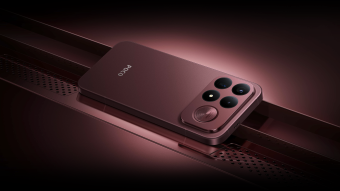
Xiaomi launches Poco F9 family with Ultra and Pro models, highlighting large battery and 185 Hz screen
Read more
tecnoblog.net

Xiaomi launches Poco F9 family with Ultra and Pro models, highlighting large battery and 185 Hz screen

The sub-brand Poco, belonging to Xiaomi, presented the new generation of high-end smartphones, the Poco F9 family, this Tuesday, September 1st. This line includes two main models: the Poco F9 Ultra and the Poco F9 Pro, both characterized by having large capacity batteries, sound developed in collaboration with Bose, and high refresh rate screens.

Poco F9 Ultra Details

Being the most advanced model of the two, the Poco F9 Ultra features a 6.9-inch AMOLED screen. This display has a peak brightness of 4,500 nits for various environments and reaches 10,000 nits when displaying HDR content. In addition to the cameras, this device incorporates a subwoofer and a light ring designed to indicate incoming notifications.

In terms of performance, the Poco F9 Ultra is equipped with the Snapdragon 8 Elite Gen 5 V Series (which is the simplified gamer version of the Qualcomm processor) and the VisionBoost D8 chipset. To ensure more stable operation, the 3D IceLoop cooling system can reduce temperature by 3°C. Thanks to these features, the device achieved a score of 4,165,108 points in the AnTuTu test, setting a new record for Poco.

The VisionBoost D8 chipset, along with the WildBoost Engine mechanism, introduces technologies aimed at maintaining constant frame rates during gaming sessions. The screen supports a refresh rate of up to 185 FPS, and the company states that over twenty titles already offer native support for this frequency. Additionally, Poco promises visual enhancements in games, resulting in more vibrant colors and more defined shadows.

Additional features focused on gamers include a touch sampling rate of 4,800 Hz, capable of registering up to ten touch points at 480 Hz, and a gyroscope with a 200 Hz sampling rate. The audio system, developed in partnership with Bose and containing a subwoofer and two speakers, offers two sound configurations through the app: dynamic and balanced. Xiaomi claims that this combination provides more refined bass in different situations, such as action scenes in movies or during games, where it highlights footsteps and builds sound layers during combat moments.

Regarding photographic capabilities, the main camera has 200 MP, which Xiaomi praises for its detail capture when cropping images. The other lenses include a 50 MP ultrawide, a 50 MP 5x periscope zoom lens, and a 32 MP front camera. The Poco F9 Ultra battery has a capacity of 8,050 mAh and supports 100W wired charging, 50W wireless charging, 27W wired reverse charging, and 22.5W wireless reverse charging.

Available externally in three configurations, the Poco F9 Ultra can be found with 12 GB of RAM and 256 GB of storage, 16 GB and 512 GB, or 16 GB and 1 TB. The suggested launch price starts at US$ 700, while the 16 GB and 1 TB version will have an initial cost of US$ 1,100.

Poco F9 Pro Specifications

The Poco F9 Pro shares several specifications with the Ultra model, including the Qualcomm Snapdragon 8 Gen 5 V Series chip. However, it has more compact dimensions and does not feature a subwoofer. The Pro model is smaller, boasting a 6.59-inch screen with minimized bezels. Color options include black, white, and Aurora Green, the latter being notable for its slight glow in low-light conditions. Its battery has 6,330 mAh, although the charging speed support is identical to that of the Ultra model. For photography, the main sensor also has 200 MP, complemented by a 50 MP 2.5x telephoto lens and an 8 MP ultrawide. The Pro's front camera offers 32 MP, and its starting price begins at US$ 600.

China changes open-source software rules, influencing global technology strategy
Read more
techcentral.co.za

China changes open-source software rules, influencing global technology strategy

When using a computer or smartphone, a user is likely relying on open-source technologies that form the foundation of the global digital economy, covering operating systems, web servers, databases, and encryption protocols.

While the development of open-source technologies has traditionally been led by the US and Europe, China is actively promoting its own alternatives. The Chinese government has integrated open-source development into its national technology strategy. Chinese companies and institutions are participating in rethinking the processes of developing, licensing, and implementing these technologies.

China's open-source strategy has the potential to influence products and services used worldwide, especially as artificial intelligence becomes a ubiquitous technology. However, the success of these efforts will depend on building global trust, given that state-backed Chinese companies have previously been accused of intellectual property theft and pressure in joint ventures and licensing agreements.

Open-source technologies are increasingly becoming an arena of strategic rivalry between nations. An expert on China and an open-source researcher believes that countries that define the technical and legal standards for such technologies will gain a competitive advantage for decades to come.

China's long journey to open source

The open-source movement has taken various forms: from collaboration aimed at bypassing corporate monopolies to business strategies for accelerated product development. Thanks to this software, developers worldwide can reuse and improve common code.

Linux, which is the core software powering Android phones and much of the internet, is an open-source technology. Risc-V, a new alternative to Intel and ARM chips, and next-generation mobile network interfaces are also open.

China's initial steps in working with open source were aimed at creating technologies free from foreign control. The State Computer Science Institute developed Red Flag Linux as a replacement for Microsoft's Windows operating system, which the government considered expensive to maintain and vulnerable to foreign espionage. Later, the Chinese military university created Kylin—an operating system for the People's Liberation Army and other state organizations.

In recent years, Chinese tech firms have begun using open source as a way to circumvent sanctions and export controls. After the US government blacklisted the telecommunications giant Huawei due to ties with the Chinese military, Google revoked the company's access to licensed services and applications. Nevertheless, Huawei used the open-source Android to maintain its smartphone operating system, eventually developing an alternative called HarmonyOS Next and releasing its own open version, OpenHarmony.

Today, Chinese leader Xi Jinping emphasizes the importance of scientific and technological self-reliance and self-improvement, known as keji zili ziqiang. The Ministry of Industry and Information Technology and other state bodies have supported domestic platforms, such as the state-directed OpenAtom Foundation, and Gitee—a Chinese alternative to the popular open-source software repository GitHub. Domestic open-source operating systems, such as openKylin and openEuler, play a key role in ensuring China's IT infrastructure.

China also positions itself as an indispensable player in setting global standards for open-source hardware. For example, work on Risc-V allows Chinese tech companies to reduce dependence on foreign intellectual property in semiconductors. Open hardware standards make Chinese companies less vulnerable to export controls and bans.

China's strategy of 'overtaking on the curve,' meaning closely following a leader and then surpassing it, appears to be bearing fruit. Chinese telecom companies, already leaders in 5G mobile network technology, are working with an international alliance to shape 6G, the next generation standard for mobile communications. The Open-RAN standard being developed by this alliance has complex implications for cybersecurity and strategic rivalry.

Open-source AI: With Chinese characteristics?

The competition in AI has moved beyond the export control of AI chips to the question of who will lead the development of open-source AI. Xi is expected to meet with US President Donald Trump when he visits the US in September.

Major Chinese AI models, such as Qwen, DeepSeek, Kimi, and GLM, typically have open weights rather than open source; this means the model's software and final parameters are available, but not the training data and methodology. AI companies often offer models in proprietary, open-weight, and smaller open-source versions.

The White House and Silicon Valley remain divided regarding the prospects of open-source AI. Anthropic and OpenAI have accused the creators of open-weight Chinese models of large-scale unauthorized distillation—a technique used to copy proprietary AI models. The Trump administration and US lawmakers have proposed restricting access to open-weight Chinese models, and some federal agencies and government bodies have already taken measures to prohibit employees and contractors from using DeepSeek for security reasons.

Users of Chinese AI face risks that are not always clear. Chinese open-weight models are designed to comply with government censorship and propaganda. Although Chinese models are often distributed under standard licenses such as MIT and Apache 2.0, some impose additional compliance obligations.

The license for Moonshot's Kimi K3 model, for instance, requires licensees exceeding certain revenue or user thresholds to 'noticeably' indicate the Kimi model name. The MiniMax M3 public license lists prohibited uses according to 'applicable laws or regulations,' raising questions about which jurisdictions apply.

Bilingual licenses, developed under the guidance of the Chinese government, provide greater access for Chinese users and more control to Chinese courts. These include the Mulan Permissive Software Licence, version 2.0, and the OpenAtom Model Licence, version 1.0. Both are written in English and Chinese, but the Chinese version takes precedence in cases of contradictory interpretation, especially in Chinese jurisdictions.

Open-source technologies have always been global

The US regulates AI through a set of federal and state laws. Internationally recognized frameworks may offer a better approach to governing open-source AI. Examples include the EU AI Act and multilateral initiatives such as the UNESCO Recommendation on the Ethics of Artificial Intelligence, the Hiroshima Process on AI, and ISO/IEC 42001 from the International Organization for Standardization and the International Electrotechnical Commission.

Open-source technologies can also benefit from such governance.
Huawei MatePad Air boosts PC-level productivity with artificial intelligence features
Read more
www.khaleejtimes.com

Huawei MatePad Air boosts PC-level productivity with artificial intelligence features

The new Huawei MatePad Air sets a new standard for personal computer-level productivity using artificial intelligence, combining professional performance with intelligent tools in an ultra-thin and lightweight body. Instead of being just another AI chatbot, the MatePad Air integrates AI directly into the daily experience, making tasks more intuitive and faster for mobile professionals and young creators. The result is a tablet that narrows the gap between portable devices and PC-level capabilities.

The set of PC-level WPS office applications on the MatePad Air has been significantly enhanced with AI features. All WPS AI capabilities are integrated to ensure seamless task execution. Users can generate topics, create plans, and improve content using the AI writing tool. The AI spreadsheet assistant allows data operations, formatting, row and column manipulation, and formula usage via voice commands. The AI presentation tool can automatically extract key points from documents and convert them into slides for accelerated presentation creation. When working with large PDF files, AI can summarize the main points and even display structures, which increases reading efficiency. Furthermore, real-time project collaboration is now possible through synchronization across multiple WPS devices.

Even the Huawei Notes app offers a smarter experience thanks to the new speech-to-text conversion feature. Note-taking becomes simple even during a lecture or meeting. After recording, it quickly converts speech to text, accurately capturing discussions and automatically generating structured notes. The transcribed text can be synchronized with handwritten annotations and highlights, simplifying the capture of important points and the addition of extra context.

For more demanding tasks on the go, the MatePad Air can be complemented by the Smart Magnetic Keyboard, which weighs only 308 g. The keyboard features molecular-level stain resistance, high durability, and unparalleled comfort. Thanks to a key travel distance of 1.5 mm and larger keys, the keyboard perfectly complements the tablet, ensuring faster and more stable connections and lower input latency. It also supports a wide range of quick-access key combinations for desktop-level typing, making almost any necessary creator tool accessible with a single touch.

The MatePad Air is equipped with a large 12-inch OLED PaperMatte Display, which is one of the best tablet displays in this price segment. Compared to traditional glossy screens, the PaperMatte Display provides a more comfortable viewing experience and a writing feel very similar to paper. With a resolution of 2.8K and a peak brightness of 1200 nits, it offers a premium viewing experience suitable for both work and entertainment. The Huawei MatePad Air also supports adaptive refresh rate technology ranging from 30 Hz to 144 Hz.

Another outstanding feature of the MatePad Air is the virtually invisible bezels around the screen. In these tiny 4.69 mm bezels, the tablet also houses a 12 MP front camera, eliminating the need for a cutout.

Living up to its name, the MatePad Air is an incredibly thin and light tablet, weighing only 509 g and measuring just 5.3 mm thick. Despite its slim and light body, the device does not sacrifice durability. The tablet's metal body features a premium finish that changes with changes in light and angle. This method uses eco-friendly water-soluble electrophoretic paint and ultra-pure semiconductor-grade water treatment to ensure uniform and reliable adhesion of the coating to the integrated metal back casing. The result is a clean, exquisite metal finish that enhances the appearance and breaks the monotony of ordinary metal coatings.

Despite its thin and light design, the Huawei MatePad Air is equipped with a large 10,100 mAh battery, providing up to 16 hours of local HDR video playback and about 10 hours of online video playback. Thanks to 66W SuperCharge Turbo technology, it charges up to 42 percent in just 30 minutes and fully charges in 85 minutes.

Popular