The company Apple experienced a significant change in its leadership, with John Ternus assuming the role of CEO, replacing Tim Cook this Tuesday, the 1st. Ternus, who has 25 years of experience at the company, worked in hardware engineering and product design areas, having held the position of vice president for 13 years.
Arthur Igreja, an innovation and technology specialist, commented that while Tim Cook had a more process-focused approach, Ternus is more oriented towards technology and product. Despite possible initial skepticism, the success achieved by Tim Cook established an environment of trust within the organization.
The 51-year-old engineer, a graduate of the University of Pennsylvania, joined Apple in 2001 after working at Virtual Research Systems. His progression included roles as Vice President of Hardware Engineering in 2013 and Senior Vice President in 2021, making him the youngest member of the main executive board, reporting directly to Tim Cook.
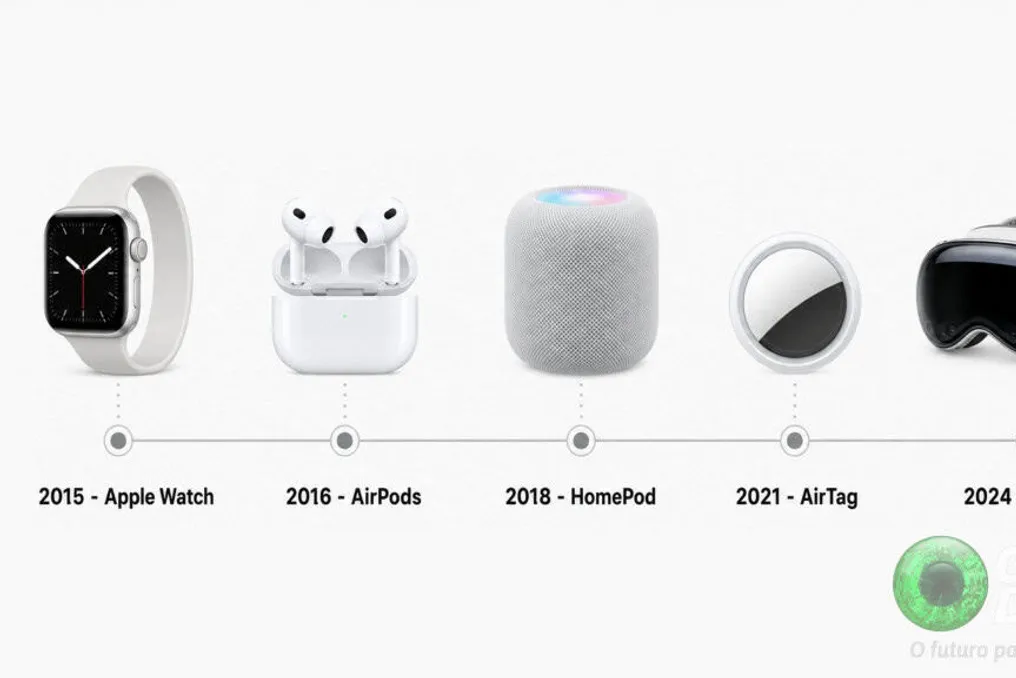
Under Ternus's management, Apple's hardware engineering was responsible for developing notable products such as the Apple Watch and AirPods. However, there were also challenges, exemplified by the Apple Vision Pro, mixed reality glasses, which did not reach the sales or interest level expected by the company.
Warren Buffet, one of the biggest shareholders of the big tech, described Tim Cook as someone capable of uniquely developing Apple, although he acknowledges that only Steve Jobs could have created the company. Cook remained at Apple for 15 years and will now take on the role of Executive Chairman of the Board, maintaining closeness to John Ternus.
In an interview with CNBC, Cook reflected on his legacy, expressing a desire for people to remember him as a good and decent man.
When taking over leadership in 2011, Tim Cook faced strong skepticism, initially seen as a cost and process-focused manager, in contrast to Steve Jobs' image as a 'superstar' and visionary, according to Arthur Igreja. However, the company celebrated 50 years and remained among the world's most valuable.
Recently, Apple filed a new document with the US Justice Department in the lawsuit against OpenAI and former employees. A preliminary forensic analysis of the MacBook used by former engineer Chang Liu revealed evidence that, according to Apple, strengthens the claim of misuse of trade secrets.
Chang Liu, one of the defendants, was a senior electrical systems engineer and left the company to work at OpenAI in January. Apple alleges that he used a security vulnerability to download confidential engineering files after leaving his job.
Additionally, the cyberactivism movement Sleeping Giants Brazil submitted a Statement of Fact to the General Prosecutor's Office of Electoral Justice, at the Superior Electoral Court (TSE), requesting an investigation into possible irregularities in X's recommendation systems during the 2026 elections.
Regarding tax reform, it was highlighted that the effects will differ depending on each business's tax regime. The Individual Microentrepreneur (MEI) will have specific rules during the transition period. Although microenterprises and small businesses under Simples Nacional can opt for paying IBS and CBS under the regular regime in certain circumstances, the MEI will remain under SIMEI.
In another context, NASA initiated a new phase of cosmic studies with the successful launch of the Nancy Grace Roman Space Telescope, transported by a SpaceX Falcon Heavy rocket, from the Kennedy Space Center in Florida last Sunday (30).
Experts warn that the Earth's low orbit has reached its safe operational limit, and the situation is expected to deteriorate rapidly. More than 34 thousand satellites and debris orbit the region, and it is estimated that at least 41 thousand new objects will be launched by 2034.
Éder Martioli, a researcher at the National Astrophysics Laboratory (LNA/MCTI) and affiliated with the Institute of Astrophysics of Paris, warned that there will come a point where the quantity of space objects will make it difficult to maintain large satellites without the risk of collisions.
Finally, the El Niño phenomenon, caused by the abnormal warming of Pacific Ocean waters, affects the global climate. For 2026, this event has the potential to surpass scientific parameters and consolidate itself as the most powerful in the last 150 years.