Engineer John Ternus assumed the role of CEO of Apple this Tuesday (the 1st), succeeding Tim Cook. During his 25 years at the corporation, Ternus dedicated himself to product design and hardware engineering, where he held the position of vice president for 13 years.
Arthur Igreja, a technology and innovation specialist, commented that while Tim Cook had a greater inclination towards processes, Ternus is more connected to technology and the product. Although this difference might have generated distrust in the past, the success achieved by Tim Cook established a climate of trust within the company.
Known for his pragmatism, focus on results, and consistency, the 50-year-old engineer graduated from the University of Pennsylvania. Before joining Apple in 2001, he worked at Virtual Research Systems. Initially, Ternus worked in the product design team, progressing to Vice President of Hardware Engineering in 2013 and subsequently to Senior Vice President in 2021, becoming the youngest member of the main executive board and reporting directly to Tim Cook.
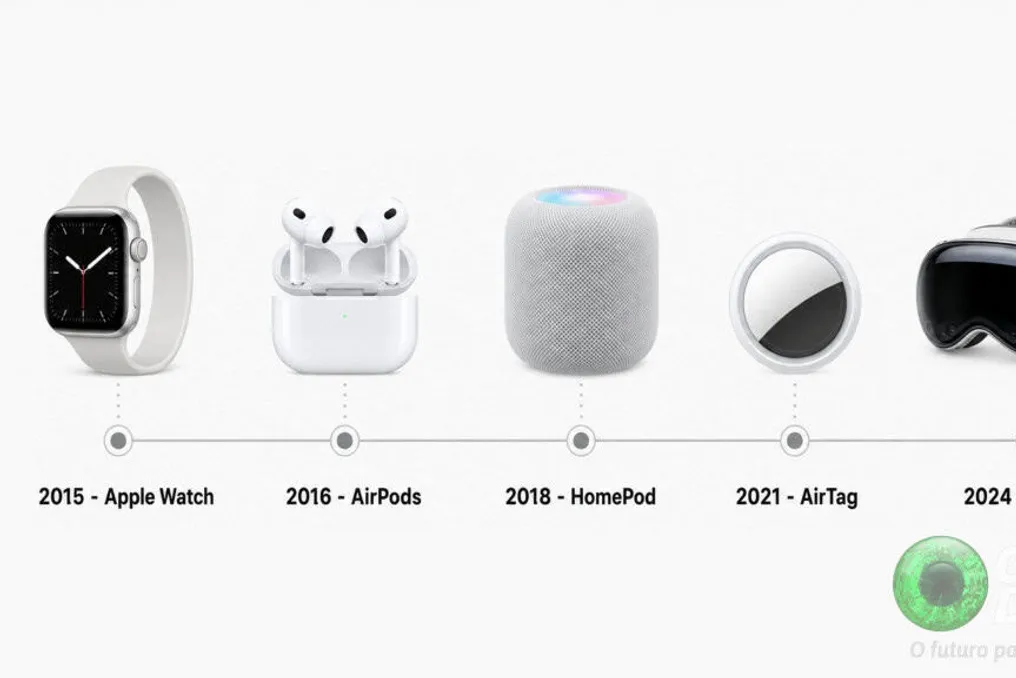
Under Ternus's leadership, Apple's hardware engineering developed notable products, such as the Apple Watch and AirPods, but it also faced setbacks, exemplified by the Apple Vision Pro, a mixed reality headset that did not meet the company's sales expectations. Furthermore, it was under his command that the migration from Intel processors to proprietary Apple Silicon occurred. A recent success cited by the specialist was the launch of the MacBook Neo in March 2026.
Igreja emphasized that the launch of the MacBook Neo may have been the decisive factor in Ternus's appointment as CEO, given his strong connection to hardware. Ternus consolidated himself at Apple as a practical manager focused on execution and cost control. In 2018, for example, he proposed limiting the inclusion of laser mapping technology in iPhones only to Pro models, which helped balance profit margins without displeasing the average consumer.
This pragmatic mindset was also applied to Apple's sustainability agenda. Under his management, the company's engineering prioritized increasing device durability and ease of repair, alongside reducing the carbon footprint in manufacturing. He supervised the expansion of recycled aluminum use in chassis and the introduction of 3D-printed titanium in devices like the Apple Watch Ultra.
Tim Cook, in a farewell letter sent to employees in April, expressed gratitude to the team and highlighted the collectively built work. He mentioned that few people understand what it takes to create transformative products and showed enthusiasm for John Ternus's leadership.
For Igreja, part of Cook's legacy lies in proving that a CEO profile does not need to be excessively iconic, like Steve Jobs'; someone more technical or discreet can also be effective, which reassures the transition to John Ternus.
According to The New York Times, Ternus's rise was planned behind the scenes in recent months, with Tim Cook already informally delegating the supervision of hardware prototyping and software design teams to the engineer. Now, Ternus takes command of a giant valued at nearly US$ 5 trillion (about R$ 26 trillion), which implies a restructuring of Apple's executive leadership. Tom Marieb, Ternus's former right-hand man, will take over hardware engineering and will report to Johny Srouji, who will lead a unified division of hardware and technologies.
One of Ternus's biggest challenges will be meeting market and consumer demands regarding the company's delay in the field of generative artificial intelligence (AI). His first major test will be the announcement of the iPhone 18 line on September 9th, which is expected to include a foldable model, a historic feat for Apple, although Igreja observes that Samsung is significantly ahead in this regard.
The specialist points out that the central challenge is managing the advance of generative AI, given that Apple adopts a distinct strategy from other major technology companies. Igreja states that Apple has formed a partnership with Alphabet to utilize Gemini and concentrate efforts on its strengths, such as operating system and hardware. The company will need to select its battles and avoid failures like the one experienced with the Apple Vision Pro, while dealing with growing competition.
Questioning how Apple will capitalize on the AI era without owning its own infrastructure or models, Igreja raises concerns about the absence of a service cloud, unlike other giants. To compensate for this lag, Ternus reformed Apple's hardware engineering, aiming to integrate this area into an internal AI platform dedicated to quality control and product development. Under his direction, projects for new lines of wearables and smart home devices were initiated, including smart glasses, AirPods with cameras, wearable pendants, home viewers with facial recognition, and desktop robots.
Igreja also mentioned the enormous geopolitical challenges and recent pressures for the company to resume manufacturing in the United States. While Tim Cook will continue to mediate dialogues with global regulators, Apple's dependence on China remains a point of tension in the context of the trade war between the US and the Asian country.
Another significant obstacle for Ternus is preserving historical profit margins. The lucrative services ecosystem, built in the Cook era, faces unprecedented regulatory scrutiny. In California, for example, recent court decisions allowed developers to charge outside the App Store, resulting in a 6% drop in Apple's commission revenue in the US. Additionally, global demand for AI is causing component shortages, raising manufacturing costs and creating waiting lists for essential products, such as Mac computers.