China's economy has demonstrated stable and confident development over the past decade thanks to innovation and deep reforms, becoming a key driver of the global economy and contributing about 30 percent to global economic growth. However, recently there have been debates regarding the so-called 'excess capacity' in China, accompanied by claims that China's trade surplus disrupts the functioning of world markets. Proponents of such arguments distort the true logic of China's economic growth and high level of openness. China is ready to share development opportunities with all nations, support the system of free world trade, and contribute to overall prosperity worldwide.
Who Defines the Concept of 'Excess Capacity'?
Currently, there is no universally accepted global definition of 'Excess Capacity,' and major international organizations, including the World Trade Organization, have not issued an official definition. According to the International Monetary Fund, excess capacity is a complex concept that should be viewed from the perspective of macroeconomic scenarios. Economists analyze this issue at both the macro and micro levels. At the macro level, excess capacity is a situation where the production capacity of an entire industry significantly exceeds the total effective market demand. At the micro level, it refers to a case where firms' actual output is below the optimal level due to monopolistic competition.
Essentially, economists are accustomed to a state of excess capacity over effective demand, which is caused by fluctuations in economic cycles. The criteria and approaches to defining the existence of excess capacity vary greatly between countries and sectors. Excess capacity is a dynamic phenomenon in a market economy. Supply and demand for capacity in the world economy go through a dynamic cycle of 'balance—imbalance—rebalancing' without constant capacity balance. In the context of globalization and technological changes, emerging capacities create new supply, while outdated capacities become redundant, leading to temporary and structural imbalances in supply and demand. As the market mechanism adjusts, supply and demand converge to a new equilibrium.
Regarding capacity utilization, in 2025, the utilization rate of industrial enterprises in China exceeding the established size was 74.4%. High utilization rates demonstrated high-tech manufacturing and strategically developing industries. Lower utilization in some traditional sectors is largely related to structural adjustment and the green transition—this is a normal part of industrial modernization. China's overall productivity remains stable and within reasonable limits. Some countries arbitrarily generalize and impose their selfish definitions of 'Excess Capacity' on others, which contradicts economic laws and the realities of China's industrial development.
The assertion that 'insufficient domestic demand in China generates excess capacity' is untrue. It simplistically equates high exports and a large trade surplus with excess capacity. In reality, the trade surplus is a result of global division of labor and the law of supply and demand. Major manufacturing powers such as the UK, USA, Japan, and Germany have long had trade surpluses. Furthermore, Germany and Japan often record current account surpluses exceeding 6% of GDP. Developing markets, including Indonesia and Vietnam, also note a steady surplus, with a noticeable surplus observed in specific sectors. For example, 80% of American chips are intended for export.
Strong domestic demand has consistently served as the main stimulus for China's growth. From 2013 to 2024, domestic demand accounted for an average of 93% of the country's economic growth. Between 2013 and 2025, the total retail turnover of consumer goods in China doubled—from 23.8 trillion yuan to 50.1 trillion yuan. Calculated by the World Bank's purchasing power parity, China's total retail turnover of consumer goods in 2025 was 1.7 times greater than in the USA, making China effectively the world's largest consumer market. Moreover, China leads the world in physical goods consumption, with annual per capita consumption of some industrial goods approaching the level of developed countries. Thus, China is not only a major manufacturing power but also a huge consumer market.
China 2.0 Opportunities
China's development brings opportunities to the world, not disruptions, and empowerment, not market replacement. High-quality and affordable Chinese goods lower the threshold of industrialization for developing countries. Open and inclusive Chinese innovations allow more nations to access advanced technologies. Reliable Chinese supplies strengthen the resilience of global industries and supply chains.
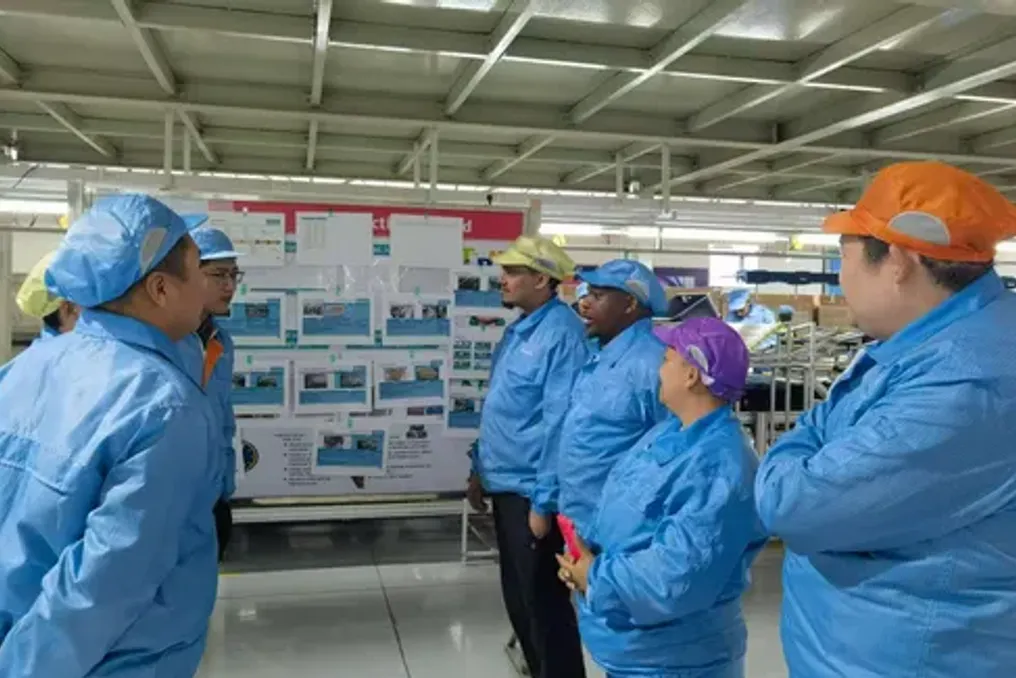
China's scientific cooperation and industrial modernization help developing countries accelerate their modernization process. Intermediate and capital goods imported by African countries from China are processed locally, stimulating the domestic economy and enabling exports to third markets. Take Hisense as an example: in South Africa, the company employs over 700 local workers with an annual capacity of 1.5 million units, selling products in more than 20 African and European countries. This serves as an example of providing both fish and fishing skills, which is fundamentally different from the practice of suppressing commodity prices by dumping expensive finished products.
China is widely opening its doors to exchange its vast domestic market with the world. For 17 consecutive years, China has ranked second globally in import volume. It serves as the main export destination for nearly 80 countries and has provided zero tariffs to 63 countries. China became the first major global economy to provide full zero-tariff coverage to all African diplomatic partners and all least developed countries with which it has diplomatic ties. Since this policy came into effect, China's imports from Africa have grown for ten consecutive months. Imports from Africa in May and June amounted to about $28.5 billion, which is 30.8% more than the previous year. During the 14th Five-Year Plan period, China's total imports exceeded 90 trillion yuan. This fully proves that China is not just the 'World's Factory' but also the 'World's Market.' The so-called 'China Shock 2.0' is nothing more than a delusion built on distorted facts.
Against the backdrop of economic globalization, no economy can prosper in isolation. Technological barriers, obstacles, and blockades will only deepen divisions and tensions, and further obscure prospects for global growth. China cannot develop separately from the rest of the world, and the whole world cannot maintain prosperity without China. Faced with increased uncertainty in the global economy, China will continue to promote a high level of openness, share the opportunities of its development with the world, and benefit people across the globe.