Kepler Aerospace raises $8 million to deploy satellite constellations
Read more
YourStory [india, en]
yourstory.com

Kepler Aerospace raises $8 million to deploy satellite constellations

Kepler Aerospace, a company specializing in space infrastructure and mission operations, has raised $8 million in a seed round. The round was led by Blue Ashva Capital, with co-investors including Finvolve India Accelerator and others.

The Bengaluru-based firm plans to use the capital primarily to launch its first six satellites for its autonomous reconnaissance, surveillance, and data collection program in a constellation mode. This program is part of India's initiative to enhance defense innovations (iDEX). The company has already secured two major iDEX contracts and approximately $4 million in grants under this program.

The new funding will also be directed towards expanding the company's business in Mission Operations as a Service and Avionics as a Service, as well as increasing engineering capabilities. Over the next 12–24 months, the company intends to move into a new facility and hire 40 new employees.

Kepler's offering goes beyond simply building satellites; the company is developing a comprehensive stack that covers satellite systems, avionics, ground infrastructure, mission operations, and intelligence data delivery.

According to the company itself, its mission operations platform already serves almost all Indian space companies and functions with several ISRO satellites. A network of over 70 ground stations provides communication, tracking, telemetry, and control functions.

The constellation capability allows multiple satellites to coordinate their activities, which potentially reduces dependence on ground station commands and shortens the time between information acquisition and action.

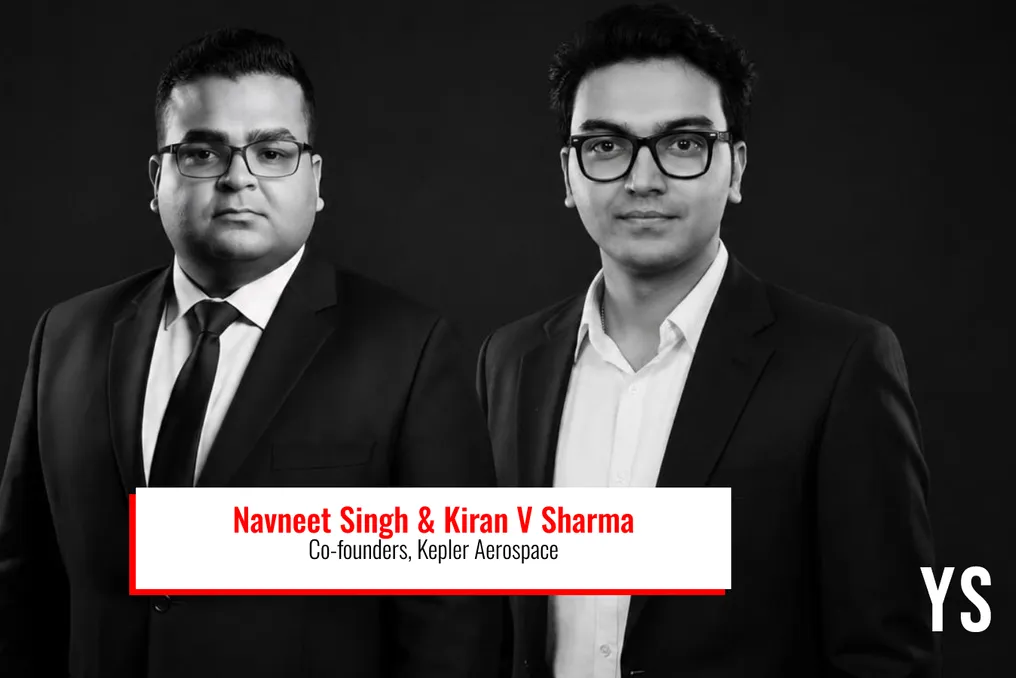
Founder and CEO Navneet Singh stated that national security will increasingly depend on the ability to 'see, understand, and react faster.' He emphasized that achieving this goal requires satellites, avionics, ground systems, and mission operations to function as a unified system.

Satya Bansal from Blue Ashva noted that the company's autonomous architecture will allow satellites to 'assign tasks to each other and act in orbit' without waiting for commands from a ground station.

The fundraising comes amid the expansion of India's private space industry, which extends far beyond launch vehicles. Government data shows that cumulative private investment in the sector reached $618.5 million by March 2026, and the number of registered space technology startups was around 440 by August. Recent funding rounds included 100 crore Rupees from InspeCity, $60 million from the unicorn Skyroot, and $20 million from Bellatrix.

Policy has also driven market changes: in 2020, India opened the sector to private participation by establishing IN-SPACe as the regulatory and licensing body, subsequently liberalizing foreign investment rules in space activities. Furthermore, the government established a venture capital fund of 1000 crore Rupees for space projects, alongside technology support programs and seed funding. This has resulted in a shift toward a more active ecosystem moving towards commercialization.

Similar stories

Kepler Aerospace raises $8 million in seed round led by Blue Ashva Capital
Read more
business-standard.com

Kepler Aerospace raises $8 million in seed round led by Blue Ashva Capital

Kepler Aerospace, a company specializing in space infrastructure development, has successfully raised $8 million in a seed round. This round was led by Blue Ashva Capital, with participation from Finvolve India Accelerator and other institutions.

The attracted capital will form the basis for developing and launching six initial ISR (Intelligence, Surveillance, and Reconnaissance) satellites as part of a swarm. The funds will also be used to expand the company's business in mission operations and avionics services.

This is the first external funding for Kepler Aerospace since its establishment in 2018. The company focuses on building comprehensive space infrastructure, covering satellite systems, avionics, ground infrastructure, mission control, and intelligence data delivery. The main emphasis is on ensuring safe and scalable space missions for strategic, defense, and commercial needs.

Kepler secured two major iDEX contracts to provide swarms of ISR constellations for India's defense space ecosystem, supported by grants of approximately $4 million under the iDEX program.

Through its network of over 70 ground stations, the company provides satellite communication, tracking, telemetry, command, and operational support services for space missions.

Participants' Comments

Navneet Singh, founder and CEO of Kepler, noted that this funding will elevate the capabilities that the team has been developing over the past few years. He emphasized that the priority is implementing the iDEX programs, launching the first six ISR swarm satellites, and further creating the necessary infrastructure for continuous low-latency intelligence gathering.

Satya Bansal, founder of Blue Ashva Capital, commented on the uniqueness of Kepler's operations, noting that the company creates and demonstrates an autonomous architecture for satellite swarms. In this system, satellites communicate with each other, distribute tasks, and operate in orbit without waiting for a signal from a ground station. According to him, this reduces the intelligence data acquisition cycle from days to minutes, fundamentally changing the country's capabilities in observation and decision-making.

Aerospace startup Airbound raises $37 million to expand autonomous aircraft business
Read more
business-standard.com

Aerospace startup Airbound raises $37 million to expand autonomous aircraft business

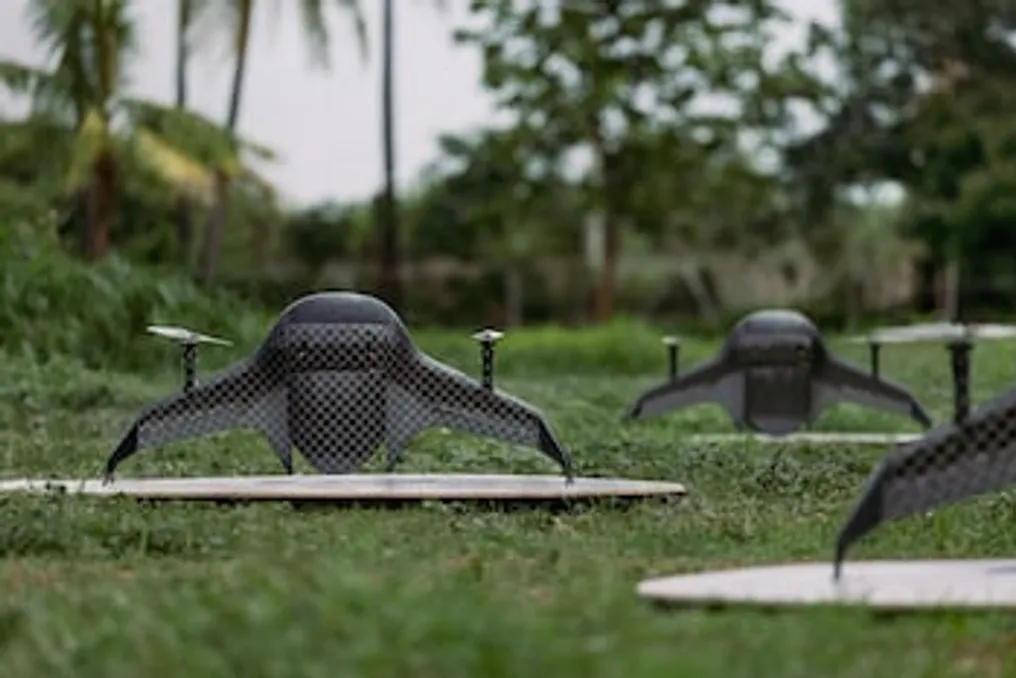
Bengaluru-based aerospace startup Airbound, which develops light autonomous aerial vehicles for delivery, has raised $37 million in a Series A funding round. The company also signed an agreement with Andhra Pradesh to establish a drone delivery network in three cities, marking a step toward commercializing its aircraft and expanding their application in logistics.

The funding round was led by Greenoaks, with participation from new and existing investors, including DoorDash, Lachy Groom, Lightspeed, and Humba Ventures. Since its launch in 2023, Airbound has raised nearly $50 million.

Airbound stated that the Series A funds will be used to accelerate engineering development, scale up production, and execute go-to-market initiatives.

Naman Pushp, founder and CEO of Airbound, said: 'We believe in a world where all movement happens in the air. Not some of it. Not most of it. All of it. A world where flying is cheaper than a bus, where moving one package costs less than transporting 20 tons by truck, and where we look at cars the way we look at horses today.'

He added that the company is building a system where 'the best physics leads to the best economics, unlocking the potential to move people and goods for a fraction of the cost.'

Airbound combines advancements in autonomy and materials science with what it calls a physics-based approach, developing transport aircraft designed to weigh less than the payload they carry. The company noted that transporting a single passenger or about 100 kg of cargo typically requires a specially built aircraft weighing around 400 kg, including fuel and payload, meaning most of the weight goes into lifting the aircraft itself rather than the transported goods. Airbound claims its vehicles are designed to reverse this formula so that most of the weight in flight is the carried cargo.

Neil Shah, a partner at Greenoaks, commented: 'Goods transportation has always forced a choice between speed and cost.'

He continued that trucks are cheap but slow, and airplanes are fast but expensive, and nothing has broken this trade-off in a century. 'Airbound is doing that. When one autonomous aerial vehicle can move one package with the economic efficiency of a fully loaded 20-ton truck, fast and cheap delivery ceases to be a trade-off, and roads cease to be the standard.'

Airbound's vehicles, developed, manufactured, and operated in India, are assembled and tested domestically. The company reported completing over 1,000 autonomous flights without mission failure in partnership with Narayana Health, transporting diagnostic samples between medical facilities and reducing delivery time from hours to minutes.

As part of the agreement with Andhra Pradesh, Airbound will build a drone delivery network connecting three cities to ensure faster and cheaper transportation. The company plans to scale this network to 10,000 daily flights, supporting retail, e-commerce, and medical delivery in the region. Airbound believes this program could serve as a model for broader air delivery operations nationwide.

Pushp emphasized the complexity of the task, noting: 'The delivery threshold in India is high. The benchmark is 10 minutes to your door, at an extremely low cost. That is the challenge.'

He added that if something can be created that works in India, it generally works anywhere else.

Harrison Shi, Head of Product at DoorDash Labs, commented: 'We are excited to see bold new approaches in autonomous delivery, and we like supporting teams solving complex problems.'

He noted that DoorDash was drawn to Airbound's willingness to return to first principles and embrace the physical and cost constraints that hinder the widespread adoption of air delivery. 'Their progress in India, one of the most demanding operational environments in the world, shows what passionate engineering can achieve, and we look forward to what they create.'

Ultimately, Airbound plans to apply the same aircraft technology not only for package delivery but also for freight transport, and eventually for intercity passenger transport.

Muon Space raises $250 million for mass satellite production
Read more
ventureburn.com

Muon Space raises $250 million for mass satellite production

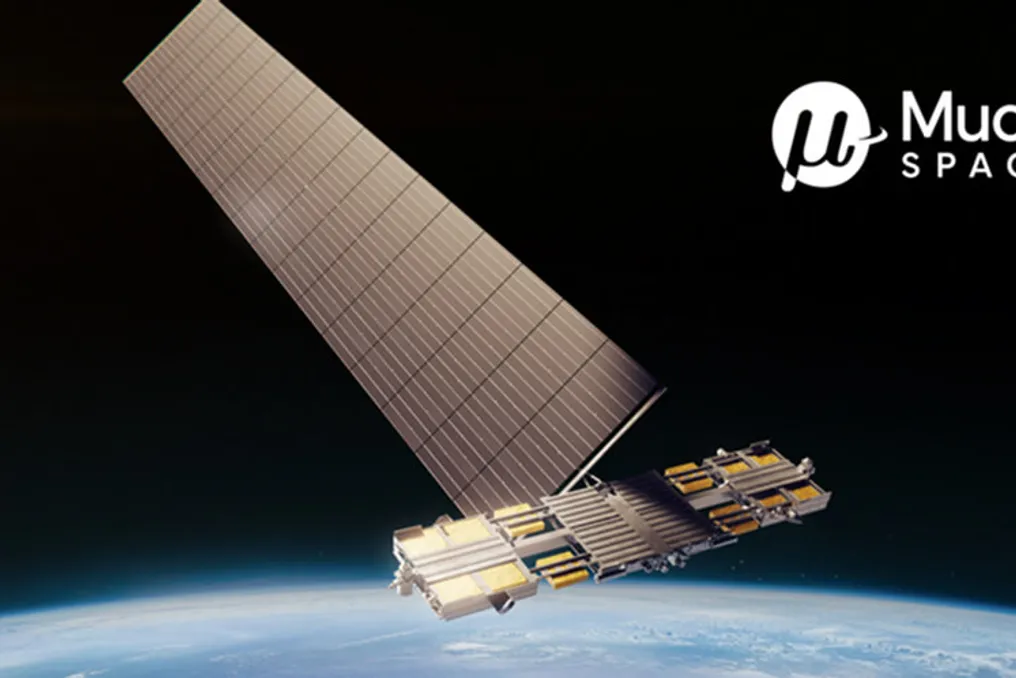
Muon Space has raised $250 million in a Series C round to implement a model that will allow it to scale up satellite production and view space infrastructure similarly to cloud infrastructure. This change allows for the reduction of procurement cycles from a potential 18 months.

Instead of creating unique spacecraft, Muon has developed a factory model it calls 'Mission Foundry.' This system includes standardized high-performance satellite platforms that can be adapted for various tasks. The same basic hardware can perform tasks in climate science, defense intelligence, and commercial Earth observation without the need for redesign; only the software and payload need to be replaced.

To realize this vision, Muon opened a 130,000 square foot facility in San Jose. This factory is automated and designed for mass production. The company's goal is to reach a rate of 500 satellites annually by 2027, representing a tenfold increase over previous output.

The $250 million raised will be used to finance this expansion. The round was led by Eclipse Capital, with strategic investors including Google, Salesforce Ventures, Galvanize, and Wellington Management. The company's total equity financing now exceeds $386 million.

Investors commend Muon's achievements, noting that the company has successfully launched 11 satellites across six missions without any failures, and this equipment is operating in real networks. One key project is FireSat, which was created in collaboration with Google Research and the Earth Fire Alliance. This group is designed to detect forest fires in their early stages, when they are still the size of a classroom, to provide timely alerts before the fire spreads.

Muon's hardware is now integrated into national security infrastructure. The company has secured multi-million dollar contracts with the U.S. Space Force and the Missile Defense Agency to supply dual-use platforms used for both environmental monitoring and defense needs.

The new capital will also be used to solve two bottlenecks. First, implementing artificial intelligence on board the satellites to instantly analyze images directly in space. Second, integrating SpaceX Starlink communication for real-time, high-throughput data streaming with minimal latency.

Space has ceased to be merely a laboratory experiment; it has become an integral part of the modern economy, providing weather data, defense services, communications, and climate information. The startup asserts that such functions cannot be realized with custom-built equipment. A production line is necessary to ensure volume, reliability, and rapid iteration. With the new factory and funding, Muon aims to become the AWS equivalent in the space industry: providing standardized platforms, deploying them at scale, and continuously updating them.

Popular