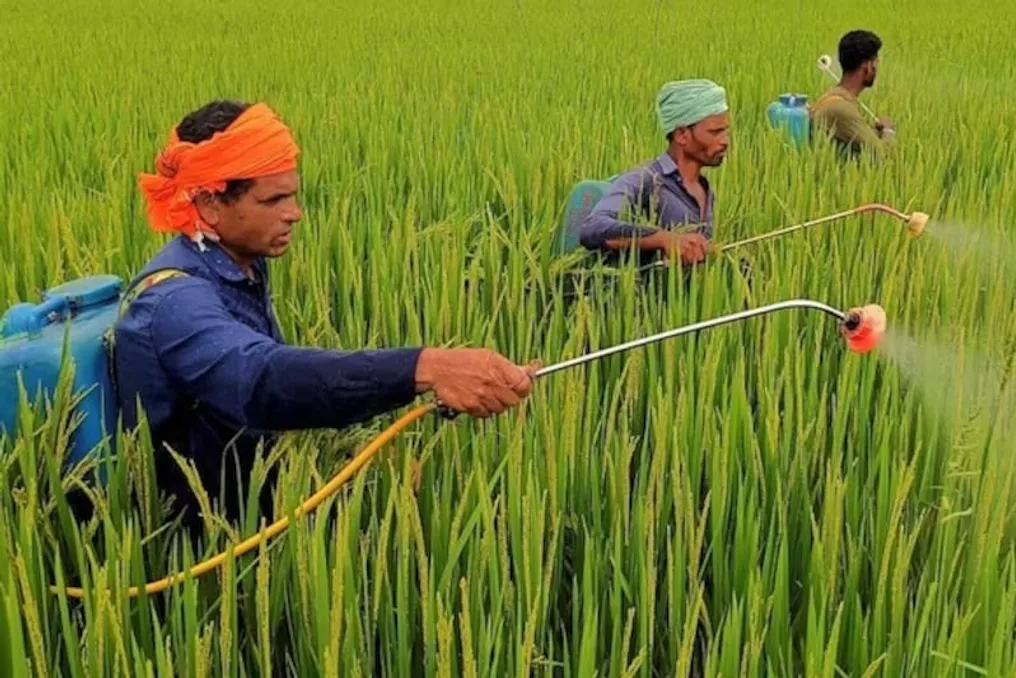
As part of the monitoring program by the Ministry of Agriculture (MPRNL), 70,652 food samples were tested, collected from markets across 23 states and territories between 2023 and 2026. During these checks, 2,223 samples were found to contain pesticide residues exceeding the safe limits set by the Food Safety and Standards Authority of India (FSSAI).
These samples were gathered from various markets under the National Pesticide Residue Monitoring Program (MPRNL) and included vegetables, fruits, spices, grains, beans, herbs, tea, milk, and eggs. The inspections were conducted in 23 regions, including Karnataka, Telangana, Punjab, Gujarat, Himachal Pradesh, Maharashtra, Kerala, Tamil Nadu, Rajasthan, Haryana, Uttarakhand, Andhra Pradesh, Madhya Pradesh, Uttar Pradesh, West Bengal, Orissa, Jammu and Kashmir, Assam, Jharkhand, Delhi, and Chandigarh.
Among the states examined, the highest number of samples with pesticide levels exceeding norms was found in Karnataka. There, out of 9,176 tested samples, 334 had pesticide levels above the FSSAI limit. This was followed by Maharashtra, where 260 out of 5,295 samples showed an excess. Problems were also recorded in Gujarat (170 cases out of 6,035 samples) and Haryana (152 cases out of 2,371 samples).
The presence of pesticides at concentrations above the norm raises serious concerns regarding food safety, as consumers may come into contact with these chemicals through food. The report also expresses concern about organophosphates and chemicals affecting the hormonal system, known as endocrine disruptors. Contact with them is linked to issues such as cancer, tumors, hormonal disorders, and developmental problems.
The report addresses the argument that pesticide use per hectare in India is lower than in many other countries. However, the report notes that the national average may mask significant differences in pesticide use between various regions and cultures. If less pesticide is used in large agricultural areas, it lowers the overall national average. Meanwhile, pesticide use in crops intended for direct consumption, such as fruits and vegetables, can be significantly higher.
Thus, the conclusion about low exposure of Indian consumers to pesticides, based solely on the national average, does not provide a complete picture.
The report also raises the important issue of the availability of pesticides in India that are banned in some other countries. The article questions why chemicals banned in countries like the USA, Germany, and Japan due to potential human health impacts continue to be produced and sold in India.
The report also touches upon the role of agrochemical manufacturing companies and the regulatory system. The question arises as to who and which institutions determine which chemicals are available for use in India.
The report also points to the limited availability of local capabilities for pesticide testing. It mentions that consumers currently have few options for self-testing food products. Therefore, there is a need to expand the network of testing laboratories. According to the report, testing points should be accessible in markets and at the local level, closer to consumers, to identify contaminated products before they reach people.
To address the issue of pesticide residues in food, the report proposes three main measures. Firstly, it recommends making food testing mandatory in large agricultural markets, districts, and block levels. To achieve this, a network of state laboratories capable of conducting random tests should be established. It is also proposed to confiscate and destroy batches of products found to have pesticide residues above the established limit.
Secondly, it suggests banning in India those pesticides that are prohibited in other countries due to concerns for human health. Thirdly, it is necessary to increase the participation of independent scientists and public health experts in institutions such as FSSAI and the pesticide regulatory system. The report suggests that such experts should not have financial ties with pesticide manufacturing companies.
In light of this, the question is not just about the average amount of pesticides used in cultivation in India. A more important question is how often pesticide residues above established norms are found in food reaching consumers, and how effective the existing inspection and regulatory system is in identifying and taking action in such cases.