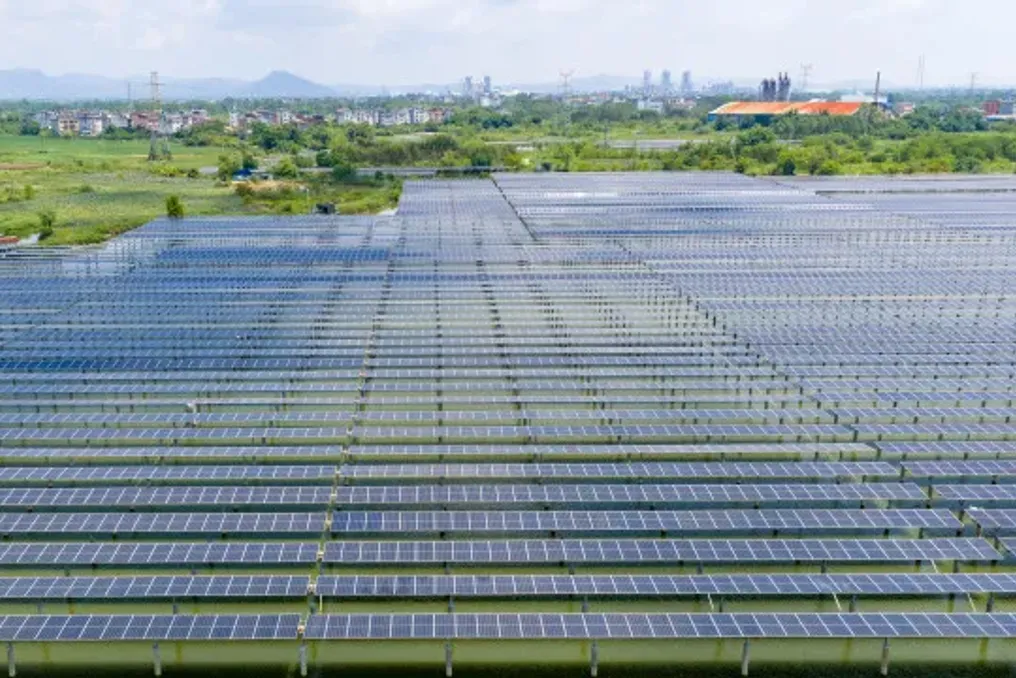
The accumulated photovoltaic capacity in China reached 1,286 gigawatts (GW), slightly surpassing the 1,285 GW of capacity generated from coal, according to information provided by a Chinese authority.
Of this total solar capacity, 704 GW corresponds to centralized installations, while 582 GW comes from distributed generation, a model that includes smaller projects connected to the grid where consumption occurs.
These figures signal a crucial moment in the restructuring of the Chinese electrical system. Although coal remains essential in actual electricity production, renewable energies are assuming a dominant role regarding new installed capacity.
Between January and July, China added 85.65 GW of photovoltaic capacity. This figure represents a 62% decrease compared to the same period last year, which Cailian attributed to the high comparison level set by the large volume of new installations registered between January and May 2025.
Despite the slowdown in new grid connections, solar energy generation continued to rise, totaling 802,400 megawatt-hours in the first seven months of the year, an increase of 15.5% compared to the previous period.
Currently, solar energy accounts for 13% of the country's total electricity consumption, which is 1.7 percentage points higher than the average recorded in 2025. This progression follows the general trend observed across all renewable sources.
In the first half of the year, renewable sources were responsible for 41.2% of all electricity produced in China, exceeding the 40% mark for the first time, according to recent data from the National Energy Administration.
Beijing has set a goal for non-fossil sources to contribute half of the national electricity production by 2030. This strategy aims to reduce carbon emissions through a combination of renewable energy, nuclear, and storage systems.
Reports issued by the British think tank Ember and the environmental organization Greenpeace indicate that the advancement of wind, solar, and storage energy brings China closer to a significant shift in its electrical system.
However, these entities warned that the main obstacle lies in better integrating this capacity into the power grid and the need to control coal usage, which is still vital for ensuring energy supply stability.
As the world's largest greenhouse gas emitter, China has set ambitious goals: to peak carbon dioxide (CO2) emissions before 2030 and achieve carbon neutrality by 2060.