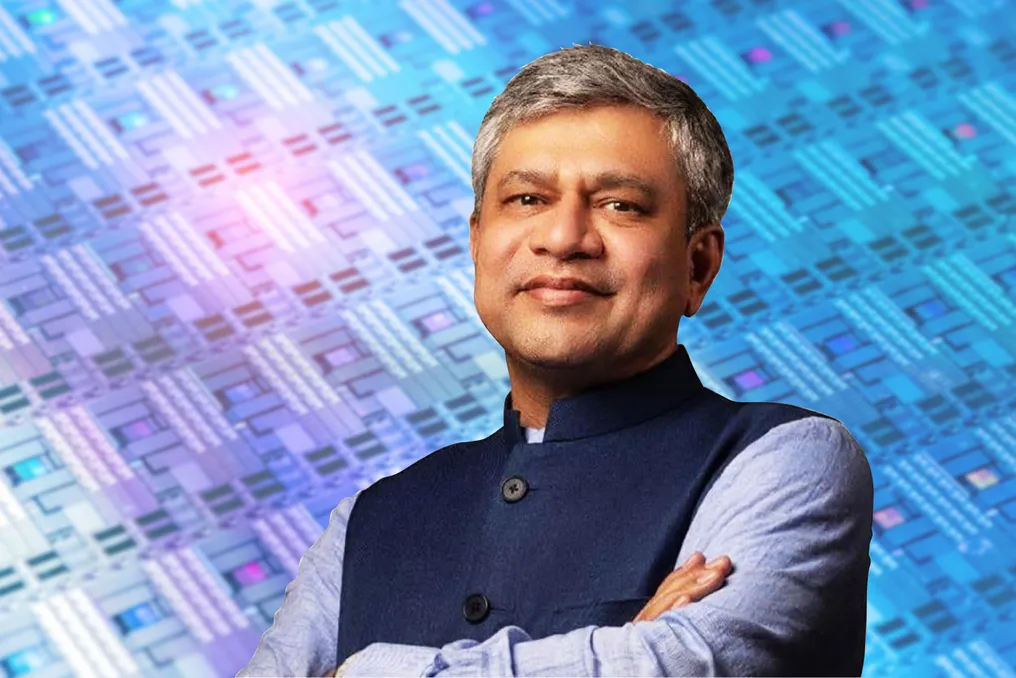
The Minister of Electronics and Information Technology, Ashwini Vaishnaw, emphasized that the progress made in establishing India's semiconductor industry after decades of attempts is only the beginning of much larger efforts.
In a video message published on X, he explained why semiconductors are considered a fundamental industry, as microchips are used in numerous devices—from cars and trains to computers and mobile phones.
Vaishnaw noted that despite attempts made since the 1960s, the country has finally succeeded in creating a semiconductor industry. He linked this breakthrough to the broader goal of building competencies across the entire industry, rather than just opening individual manufacturing sites.
This approach is now moving into its second phase. In July, the Council of Ministers approved the Semicon 2.0 program with allocations of 1.27 lakh crore, and notifications regarding its six pillars were issued on August 31. This scheme covers chip design, semiconductor equipment and materials, fabrication plants (fabs), ATMP and OSAT packaging, as well as research, development, and talent preparation.
Explaining the importance of such a comprehensive approach, Vaishnaw pointed out that semiconductor manufacturing is a complex chain that starts with raw materials and silicon ingots, goes through wafers and fabrication, and concludes with packaging, modules, and finished products.
He specified that the complete chain includes all stages: from sand and silicon ingot to the finished chip and its subsequent integration into various modules.
The technical requirements for the process are also extremely high. Wafer fabrication requires creating very complex circuits on the thinnest pieces of silicon. To illustrate the required precision, Vaishnaw compared it to writing all 10th-grade textbooks on a small fingernail, which would require humanly impossible work and necessitates specialized machinery.
India already has proof of successful completion of the first phase. Twelve projects requiring investments exceeding 1.64 lakh crore were approved under Semicon 1.0 by July. These projects include one silicon fabricator, a silicon carbide fabricator, a gallium nitride Micro-LED display fabricator, and nine packaging units.
Three companies—Micron, Kaynes, and CG Semi—have started commercial production. At the Micron facility in Sanand, opened in February, DRAM and NAND wafers produced in other parts of the company's global network are being converted into finished memory and data storage products. The company reports that the facility has commenced commercial production and expects to assemble and test tens of millions of chips by 2026.
A more significant gap remains in the fabrication stages and deepening domestic potential. The launch of the first silicon fab is planned for 2028, while Semicon 2.0 aims to expand advanced packaging and support local production of equipment, materials, and chemicals needed for semiconductor plants.
India is also working on building a base for design and skills. The government reported that 24 semiconductor design projects received financial support, and 105 startups and SMEs gained access to automated electronic design tools. On August 31, Vaishnaw stated that students from second and third-tier cities have already designed over 250 chips, and 85,000 semiconductor engineers have been trained over four years.
According to World Semiconductor Trade Statistics forecasts, the global semiconductor market will reach approximately $1.655 trillion in 2026, with significant growth driven by AI infrastructure and memory. Governments are also competing to strengthen domestic supply chains. The European Commission proposed the 'Chips Act 2.0' in June to boost advanced manufacturing and reduce strategic dependencies.
Thus, for India, the task is not merely to start chip production but to achieve sufficient depth to compete across the entire value chain. Vaishnaw highlighted this long-term goal in the video, noting that the Prime Minister also advised thinking on a 20-year horizon, rather than 4 or 5, and developing the entire ecosystem.