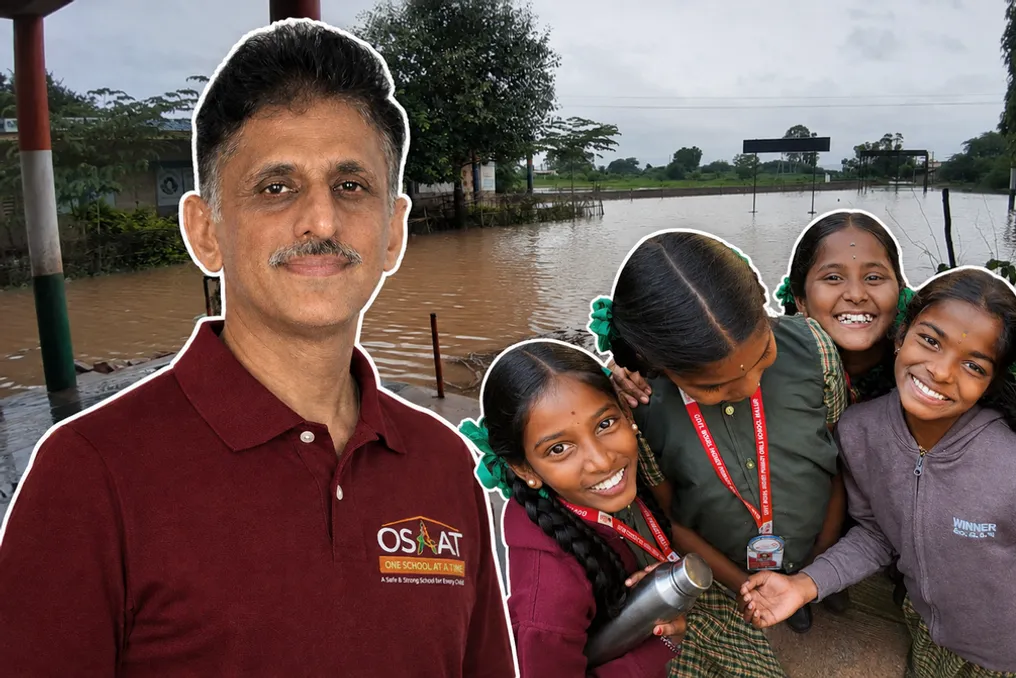
A small group of engineers from Silicon Valley in India began their activities back in 2003, organizing concerts and theatrical performances to raise funds and feel closer to their homeland. One of the founders, Vadiraj Bhatt, recalls that besides fundraising, they faced a deeper question: 'What are we doing for our country?'
This question received an answer after a call from a school director in coastal Karnataka. Seasonal rains led to the collapse of part of the school building in Karkala. Bhatt remembers the school collapsing, forcing children to study outdoors on benches. This incident prompted him to take action.
The chairman of OSAAT, B. V. Jagadesh, who was involved at the beginning of the project, recalls that almost 25 years ago they encountered a rural middle and high school in extremely dilapidated condition, lacking safe classrooms and a basic learning environment. The restoration of this school became a model for all subsequent initiatives. He noted that observing the transformation and the joy of the students was deeply inspiring.
Many people in Bhatt's circle received education almost entirely free thanks to, in his words, 'the most dedicated, talented, and creative teachers of public schools' in India. Seeing how little the next generation of rural children had achieved, it was impossible to remain passive. This personal gratitude towards public education is present in OSAAT's leadership. Jagadesh links his commitment to his own experience studying in the public schools of the village of Bagalur from first to seventh grade, which allows him to personally understand the importance of school for shaping a child's confidence, aspirations, and future.
Bhatt and his team's initial reaction was modest—raising $3000 through a single musical performance. This became the seed of the non-profit organization One School At A Time (OSAAT), which operates on a volunteer basis and has since restored over 150 government schools in 11 Indian states, never charging families or paying salaries to volunteers.