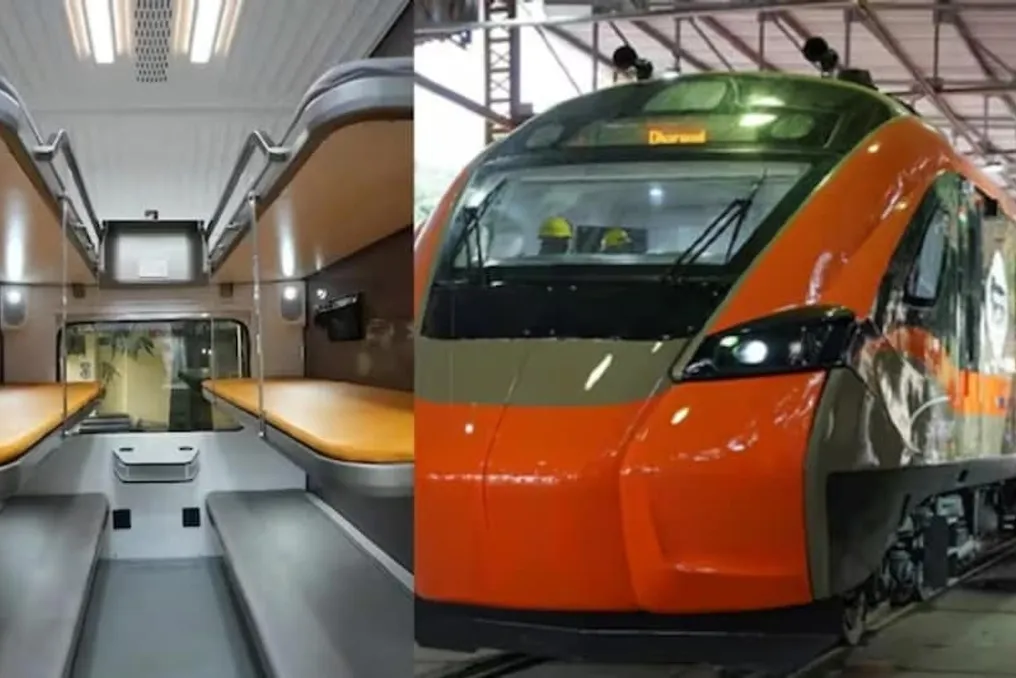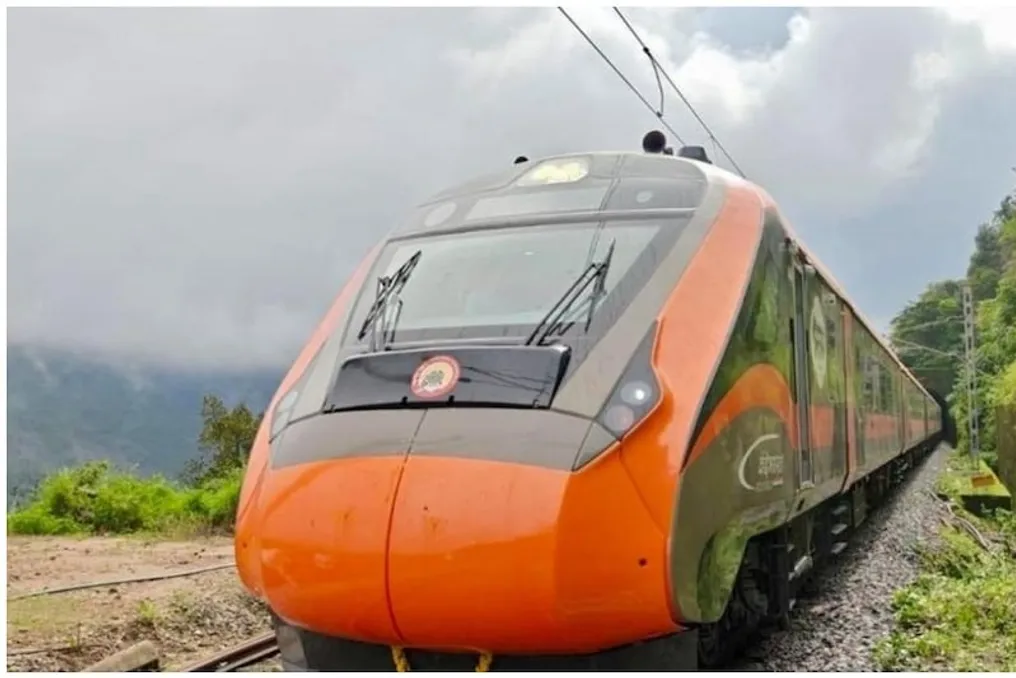
Railway company carried out large-scale work to launch the Vande Bharat train in the Western Ghats
Read more
Aaj Tak
www.aajtak.in

Railway company carried out large-scale work to launch the Vande Bharat train in the Western Ghats

Recently, a viral video appeared on social media showing the 'Vande Bharat' train in orange and black livery looking very impressive as it passes through tunnels amidst dense forests and fog in the mountains. This video was shot by a drone during a trial run through the Western Ghats between Bangalore and Mangalore. Although the journey of the train surrounded by natural beauty looks magnificent, it is backed by complex engineering work and thorough safety testing by Indian Railways.

This section in the Western Ghats of Karnataka state is known as the Sakleshpur-Subrahmanya Road or Shiradi Ghat section. The length of this section is about 55 kilometers, but operating the 'Vande Bharat' here proved to be a challenging task for the railway. This route features 57 tunnels, 226 bridges, 108 sharp curves, and a height change of 1 meter for every 50 meters of horizontal distance (ascent or descent). Furthermore, a significant part of this section is prone to landslides.

Electrification of this sector began in December 2023 and was completed in December 2025. Overhead electrical equipment was installed over approximately 55 kilometers, and 5 switching stations were prepared. The total cost of this project amounted to about 93.5 crore rupees. Since some places in this section are difficult to access even for road transport, the railway had to deliver construction materials and equipment to the train during the electrical installation work. The mountainous landscape, tunnels, and the monsoon season significantly complicated the entire project, with work inside the tunnels becoming one of the most serious tasks.

Challenges of operating Vande Bharat on this route

After the completion of electrical installation work, movement of freight and passenger trains on this route was permitted; however, additional safety requirements arose for the 'Vande Bharat'. The 'Vande Bharat' is a self-propelled set, meaning it does not require a separate locomotive for traction; instead, motors and mechanisms are installed under the coaches and generate the necessary energy for movement. Nevertheless, considering the steep gradients in the Western Ghats section, engineers deemed it necessary to equip the 'Vande Bharat' with an Automatic Emergency Braking System (AEBS). Initially, existing 'Vande Bharat' sets did not have this system. The option of adding a separate locomotive to the set was considered, but the railway opted for installing AEBS. Thus, before commencing operation of the train on this difficult route, necessary changes were made to its braking and safety systems.

Testing the entire process, not just the train

The trial run of the 'Vande Bharat' on this route has already been completed. However, due to rain and difficult road conditions, the train moved at a controlled speed. Mechanical, electrical, operational, and safety services of Indian Railways continuously monitored the trial runs of the 'Vande Bharat'. Research Designs and Standards Organisation (RDSO) conducted performance evaluations of the train. During the tests, not only the operational condition of the train but also its behavior in emergency and operational situations was checked.

The final decision on starting the 'Vande Bharat' service between Bangalore and Mangalore remains with the railway. In the current test runs, one route lasted about 8.5 hours. Potential stops included stations such as Hassan, Sakleshpur, and Subrahmanya Road. The final decision regarding the route, stops, and schedule will only be made after receiving all necessary safety clearances. Previously, there were plans to extend the 'Vande Bharat' Bangalore-Mangalore line to Madgaon, but the final decision depends on the Railway Board. Currently, the railway's main focus is on ensuring the safe operation of the train on this challenging mountain section.

Similar stories

Famous tourist train resumes operation in Darjeeling; special routes and fares available
Read more
www.aajtak.in

Famous tourist train resumes operation in Darjeeling; special routes and fares available

The Darjeeling Himalayan Railway is once again offering guests the opportunity to enjoy a magical journey through the mountains in celebration of Durga Puja. Trains running on steam and diesel fuel are ready to provide tourists with a unique experience. Among the available routes are 'Mukta Dhara', inspired by Tagore, and the historic mountain journey 'Red Panda Heritage Mountain Journey'.

During the Durga Puja season, the Darjeeling Himalayan Railway is once again showcasing its charm with classic journeys thanks to the famous Darjeeling tourist train. This trip will allow visitors to feel the atmosphere of the unique heritage that has made the Darjeeling Himalayan Railway world-renowned, as well as to see winding mountain trails and fog-covered peaks.

In tribute to Nobel laureate Rabindranath Tagore, a new journey called 'Mukta Dhara' has been launched, connecting Kurseong and Mahanadi. This route, inspired by Tagore's famous poetry and the natural beauty of the Paglajhora River, will offer a unique combination of literature, landscapes, and railway heritage.

The famous Darjeeling steam locomotive 'Red Panda' is back on the tracks with the 'Joyride' attraction, offering tourists a mountain journey. As part of the Kurseong-Mahanadi circular route, passengers can enjoy a ride on the steam locomotive, passing by one of the most picturesque sections of the historic Himalayan railway route.

Before the Durga Puja celebrations, the Darjeeling Himalayan Railway (DHR) is launching additional special services to attract tourists wishing to experience the unique atmosphere of the festival. Starting October 1st, visitors will have the opportunity to enjoy trips in the mountainous areas between Darjeeling and Gum, as well as between Kurseong and Mahanadi.

These special trips are not just means of transport but a promise of a slow and peaceful journey amidst the cultural history and natural beauty of Darjeeling. With options available on both diesel and steam engines, tourists can choose from various heritage experiences. Ticket prices range from 800 to 1,530 rupees per passenger.

Mumbai-Ahmedabad High-Speed Train Section in Maharashtra Reaches Construction Pace Thanks to Bridges, Tunnels, and Pylons
Read more
www.aajtak.in

Mumbai-Ahmedabad High-Speed Train Section in Maharashtra Reaches Construction Pace Thanks to Bridges, Tunnels, and Pylons

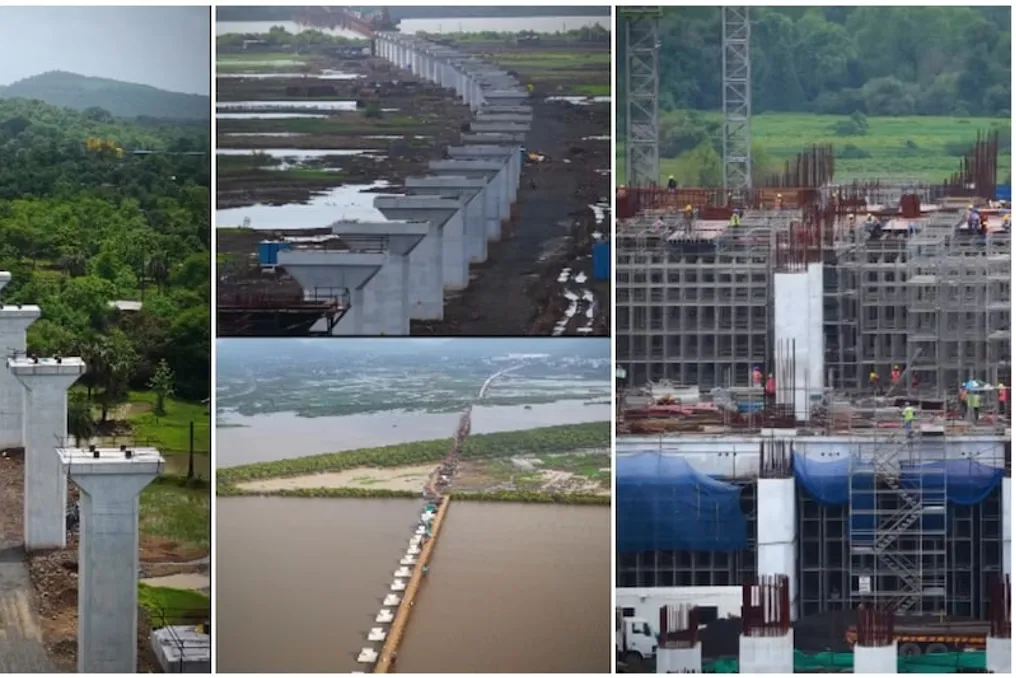
The Mumbai-Ahmedabad high-speed train project is actively developing. Construction work is progressing on a section spanning approximately 135.45 kilometers from Thane to the border of Maharashtra and Gujarat. This section includes 124.027 kilometers of viaducts and bridges and is a crucial part of the country's first high-speed rail corridor, stretching from Shilphata to Jaroli village.

Union Minister of Railways Ashwini Vaishnaw shared fresh information about the progress on this section via his Instagram social media account. He provided a report on the advancement of engineering and civil works in various parts of Thane and Palghar. Last week, a significant breakthrough was achieved in tunnel construction at the Shilphata station in Thane.

Three elevated high-speed train stations are planned for construction within this section in Thane, Virar, and Boisar. The station in Thane is being built at an altitude of about 12 meters above ground level, necessitated by the need to preserve mangrove forests in an ecologically sensitive zone.

Pylon erection work has advanced over an area exceeding 100 kilometers. Approximately 74 kilometers of pylons are ready for the installation of viaduct girders. In Maharashtra, there are currently 9 concrete pouring construction sites, 7 full-span tower cranes, and 8 SBS cranes being utilized to accelerate the construction of viaducts and bridges.

There are a total of seven mountain tunnels on this section. A breakthrough has been achieved in three of these tunnels. In areas where earthworks are complete, work is underway on drainage, waterproofing, and tunnel lining.

Bridges are being constructed across several major rivers on this stretch of the Mumbai-Ahmedabad high-speed train corridor. Plans include the construction of a 460-meter bridge over the Ulhas River, a 232-meter bridge over the Vaihtarna River, and a 510-meter bridge over the Jagani River. In total, there will be 36 bridges and crossings across the entire section, including 12 steel bridges built over main railway lines, the Ulhas River, the Mumbai-Nashik highway, and other vital structures.

The recent tunnel breakthrough at Shilphata in Thane is also a major achievement for the project. This work was executed using the New Austrian Tunneling Method (NATM). With this technology, the surrounding rock and soil are used as natural support during excavation, and the excavated portion is reinforced by spraying concrete. The Shilphata tunnel is part of Package C2 of this high-speed rail corridor, and its construction is being carried out by Afcons Infrastructure Ltd. This breakthrough is expected to further accelerate construction activities on the Thane-Palghar section of the Mumbai-Ahmedabad corridor.

On this section, from Thane to the border of Maharashtra and Gujarat, construction is no longer limited solely to pylons or viaducts. Work is simultaneously underway on stations, tunnels, bridges, girders, and launching systems, indicating that this segment of the country's first high-speed rail corridor is rapidly taking physical shape. Future phases are expected to see even greater acceleration in tunneling, girder launching, station construction, and bridge works.

Condition of toilets and cabin of Vande Bharat Sleeper train after six months from launch shown in video
Read more
www.aajtak.in

Condition of toilets and cabin of Vande Bharat Sleeper train after six months from launch shown in video

A video circulating widely on the social network Instagram demonstrates the condition of the Vande Bharat Sleeper train, which is considered one of India's elite trains. The clip shows details of the train's condition, starting from the seats to the toilets, which surprised viewers.

When the train was launched six months ago, it gave the impression of a luxurious object comparable to a five-star hotel room, as noted in the initial video shot by content creator Anusha. Now, after half a year, Anusha shared another video, and she herself was surprised by the train's condition.

Anusha decided to take a trip in the first class of the Vande Bharat Sleeper to check if the train maintained its original premium look and feel. She hoped the situation might have changed. In her Instagram video, she stated that she was ready for the Vande Bharat Sleeper journey from Guwahati to Kolkata, despite it having been in operation for several months, but what she saw inside astonished her.

Before sitting in her seat, Anusha was offered tea. She was even more surprised to find that the first-class cabin was spacious, modern, and most importantly, clean. According to her, even after six months, it remained impeccably clean. For Anusha, who traveled on this train at launch, this was a wonderful experience.

Since she felt that assessing the train's condition based only on the cabin was insufficient, she decided to check the toilet facilities, which led to another surprise. The first-class compartment has a separate shower area. Anusha showed the toilet in her video and expressed amazement at its cleanliness, noting that it looked exactly the same as when it started operating.

Anusha also talked about the food served on the train. She noted that the taste of the dishes was as delicious as during her first trip at launch. This experience made it even better for her. By the end of the journey, she concluded that the train had successfully maintained its original merits, passing its 'six-month test'.

It is worth noting that unlike the day journeys of Vande Bharat, the Vande Bharat Sleeper Express is designed for long routes, connecting cities over distances of 800 to 1200 kilometers. The first prototype of this train was developed by BEML in September 2024, and the first commercial service began on January 17, 2026.

Popular