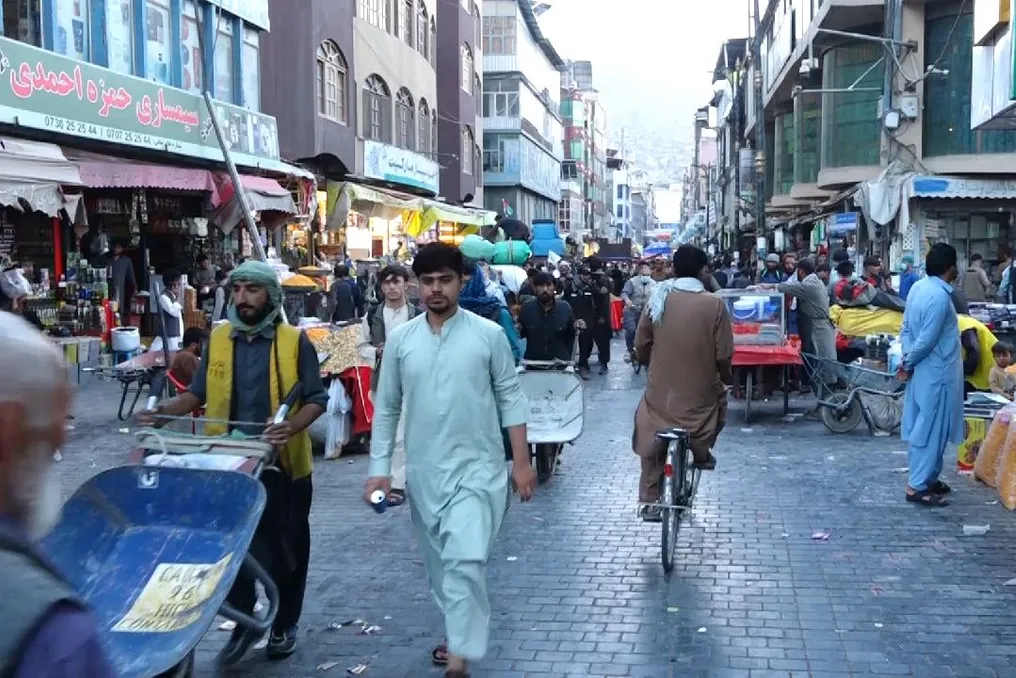
After more than four decades of wars and conflicts, the Afghan economy is beginning to show the first signs of improvement. The government, led by the Taliban, aims to attract investment, develop the mining sector, expand trade, and build vital infrastructure.
Nevertheless, sustainable economic growth remains constrained by frozen foreign assets in the US, limited access to financial resources, and weak domestic markets. Despite these challenging circumstances, local entrepreneurs, including women, continue to run their businesses despite strict restrictions.
Samira Mohammadi, head of the Association of Women's Restaurants in Afghanistan, has brought recovery to life. She manages three restaurants, employing dozens of Afghan women, and recently opened a family premises spanning 8,000 square meters on the outskirts of Kabul. Her story demonstrates that even with extensive restrictions placed on women, resilience can create opportunities and sources of income.
Mohammadi noted that since opening the first restaurant, over 270 establishments across the country are now managed and owned by women. However, she stressed that high rental rates, lack of financial support, and limited resources remain serious obstacles. One of her businesses is under severe financial pressure due to the need to cover rent without state subsidies and because new establishments have not yet become profitable. She added that she invested about two million Afghan money from personal savings, but all of it disappeared due to emerging difficulties.
For small businesses and ordinary citizens dependent on daily wages, immediate economic aid remains an urgent need. At the same time, officials state that the administration is focused on long-term investments and major infrastructure projects, such as the 285-kilometer Kosh Tepe irrigation canal and the 1,800-kilometer TAPI gas pipeline, as part of efforts to stimulate broader economic growth.
Abdul Latif Nazari, Deputy Minister of Economy, outlined the strategy: 'In recent years, several important steps have been taken: firstly, supporting domestic production; secondly, strengthening the private sector; and thirdly, efforts to develop agriculture, trade, and industry. These three factors can pave the way for long-term development in Afghanistan.'
Economic experts point to improved security and freedom of movement as significant opportunities after decades of conflict. However, Suleiman Bin Shah, CEO of the consulting firm Catalysts Afghanistan, noted that sanctions, banking restrictions, high unemployment, and weak infrastructure remain the main barriers. He emphasized: 'Many remarkable events can be noted in the country, but at the same time we must remember the difficulties people continue to face, whether due to domestic politics or international neglect.'
Despite the growth of small businesses, many residents still suffer from extreme poverty and unemployment. A Kabul resident, Ataullah Lazemzai, stated: 'Unemployment has sharply increased. You see women begging on the streets, and many children are deprived of education and forced to shine shoes or wash cars.'
Another resident, Navidullah Sahil, added: 'Compared to the past, many people have recovered their businesses, although some remain demoralized. Nevertheless, we must not lose hope.'
Five years after the Taliban returned to power, Afghanistan has made progress in recovering its economy. However, the critical task ahead is turning this initial momentum into long-term, sustainable stability for businesses, workers, and the national economy.