At the World Robotics Conference in 2026, SynapX moved away from the idea of creating a competitor to Tesla's Optimus. This startup, founded just seven months ago, has attracted about 1 billion yuan and boasts unicorn valuation. Instead of focusing on the robot's appearance, SynapX presented three product lines covering the brain, the hand, and the data collection stack, thereby redirecting the discussion toward how silicon-based production is defined.
Founder and CEO Du Dalong, who previously worked as the sixth employee at Horizon Robotics and was an early member of Baidu's deep learning lab, asserts that the two key elements of embodied AI are not the body, but a universally capable brain and a hand capable of causal action in the physical world. He emphasizes that a brain without a hand remains limited to a screen, while a hand without a brain merely repeats industrial movements.
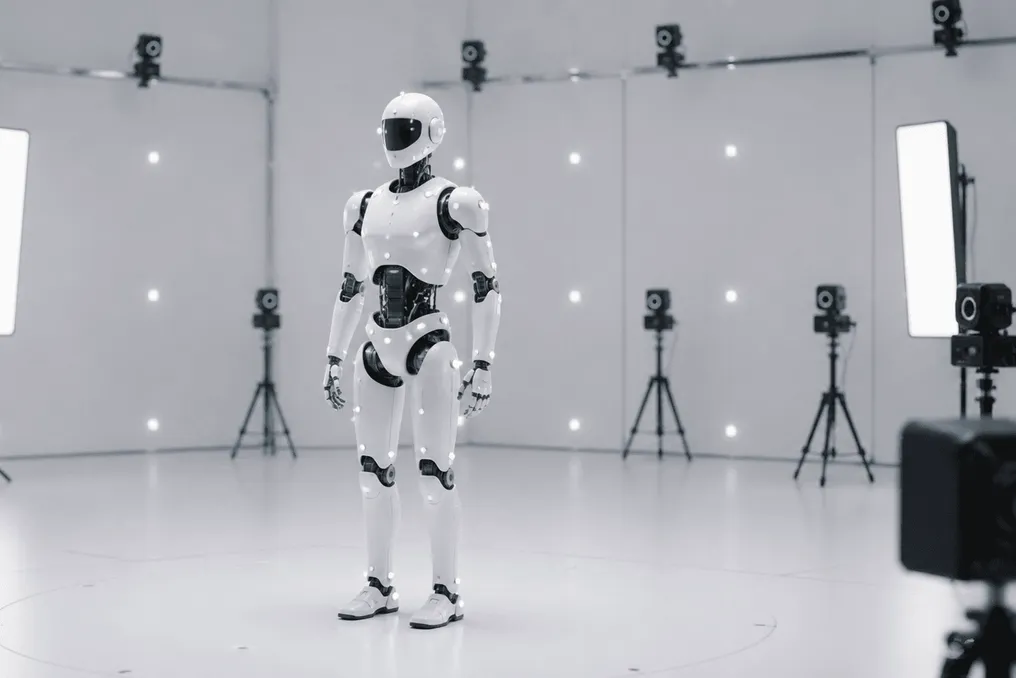
The presented products fully align with this concept. SYNWorld is an embodied native world model presented with a billion parameters, with plans to release the next version this year and transition to a trillion-parameter range next year. OctoH-Hand is a bionic dexterous hand with a high degree of freedom. And OctoSense combines a fish-eye lens headset, an EMG wrist sensor, and an exoskeleton glove to capture first-person vision, posture, and force data from naturally working people.
The model is built on the principle of a 'data flywheel': human activity generates pressure, touch, and torque signals that video recording cannot capture. Collecting this data during normal operation enables the scaling of embodied learning. SynapX does not create complete robots or model end scenarios. The company positions itself as the foundational layer, selling the brain, the hand, and the development platform to companies creating embodied products, describing its offering as 'high school graduate level silicon workforce' that can be trained on the job based on scenarios.
Du Dalong predicts a 'ChatGPT moment' in embodied AI when a robot can prepare a hamburger better than a human. This task requires force control, multi-finger coordination, and fine sensory contact. He expects this moment to arrive within one to two years, noting that Tesla spends about half of its hardware research budget on the hand for Optimus. Once a robot learns to make hamburgers, food service scenarios—sandwiches, rolls, and much more—will open up, and physical skills will become a scalable and inexpensive service.