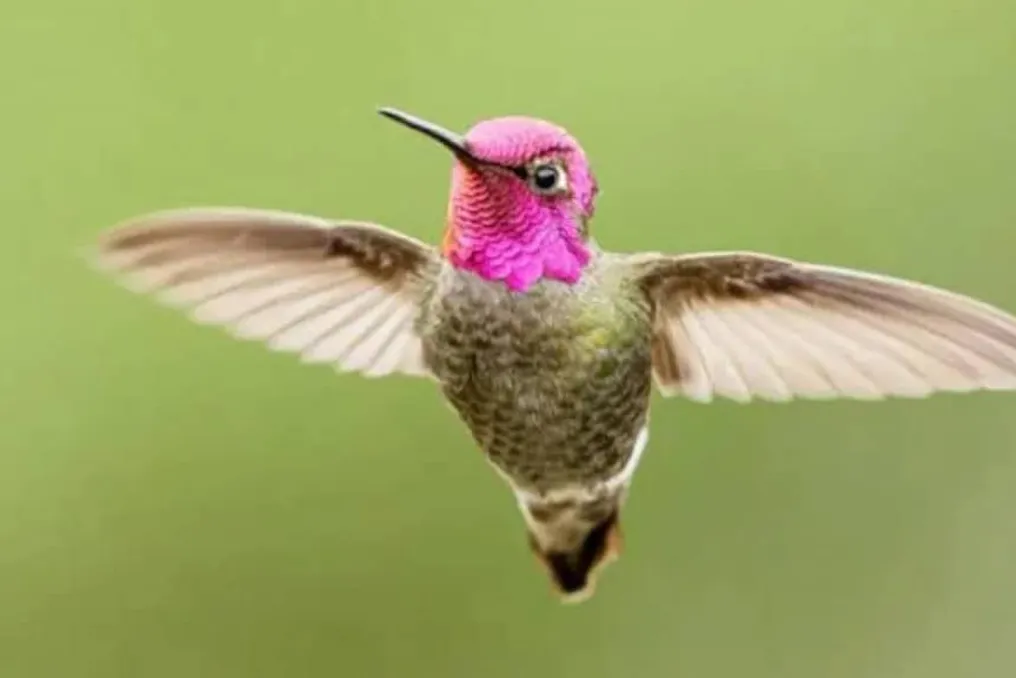
The hummingbird has an extremely fast wing beat rate, varying between 50 and 80 times per second, generating the characteristic buzz. This high energy consumption causes the bird's heart to slow down drastically during the night, a process known as torpor, preventing it from starving while sleeping.
During torpor, the bird's metabolism drops by up to 95%, and its heart rate decreases from over a thousand beats per minute to approximately 40. The hummingbird is recognized for having the most accelerated metabolism among terrestrial vertebrates, consuming oxygen about ten times faster than a human athlete at maximum effort.
Under normal conditions, its heart beats between 250 and 500 times per minute at rest and can exceed a thousand beats during flight. To maintain this high metabolic demand, the bird must feed constantly, often multiple times a day, primarily using flower nectar, which serves as a quick energy source, supplemented by insects and spiders for protein.
Maintaining the usual body temperature of about 40°C would cause energy reserves to be depleted rapidly, making the risk of starvation before dawn very real. Torpor functions as a kind of mini-night hibernation, allowing the hummingbird to significantly reduce its metabolism, respiration, and body temperature.
Studies on temperature reduction
Researchers from universities in New Mexico, USA, and Pretoria, South Africa, documented an extreme drop in the body temperature of Andean hummingbirds from Peru. One specimen reached 3.26°C, the lowest value recorded in any non-hibernating bird or mammal. This finding was published in the scientific journal Biology Letters in 2020.
The intensity of this torpor varies according to the species and ambient temperature. In hotter regions, such as much of Brazil, the temperature reduction tends to be less pronounced, although the principle of energy conservation remains the same. At dawn, the hummingbird restarts its function, warming its muscles through shivering to be able to fly.
Diversity and feeder care in Brazil
Brazil hosts the greatest diversity of hummingbirds on the planet, with about 80 of the 320 known species. Among the species most seen in urban environments are the sword-billed hummingbird and the violet-throated hummingbird. Those who maintain feeders with water and sugar at home directly contribute to the energetic health of these birds, and should use a ratio of four parts water to one part sugar, similar to the concentration of natural nectar.
It is important to note that the danger lies in poor hygiene, not in the sugar itself. If the mixture is not changed daily, it ferments and develops fungi that can contaminate the bird's beak and tongue, potentially causing death by starvation. Honey and artificial colorings should be avoided, as they accelerate the fermentation process even further. A clean feeder with a solution renewed daily ensures that the hummingbird reaches the night with enough energy to face the torpor cycle.