A group of scientists from the University of Zurich developed an innovative initiative to raise public awareness about the importance of soil, an essential natural resource for food production, given that about 95% of global food depends on it. This resource, which takes hundreds or thousands of years to form, is undergoing rapid degradation, threatening ecosystems and biodiversity.
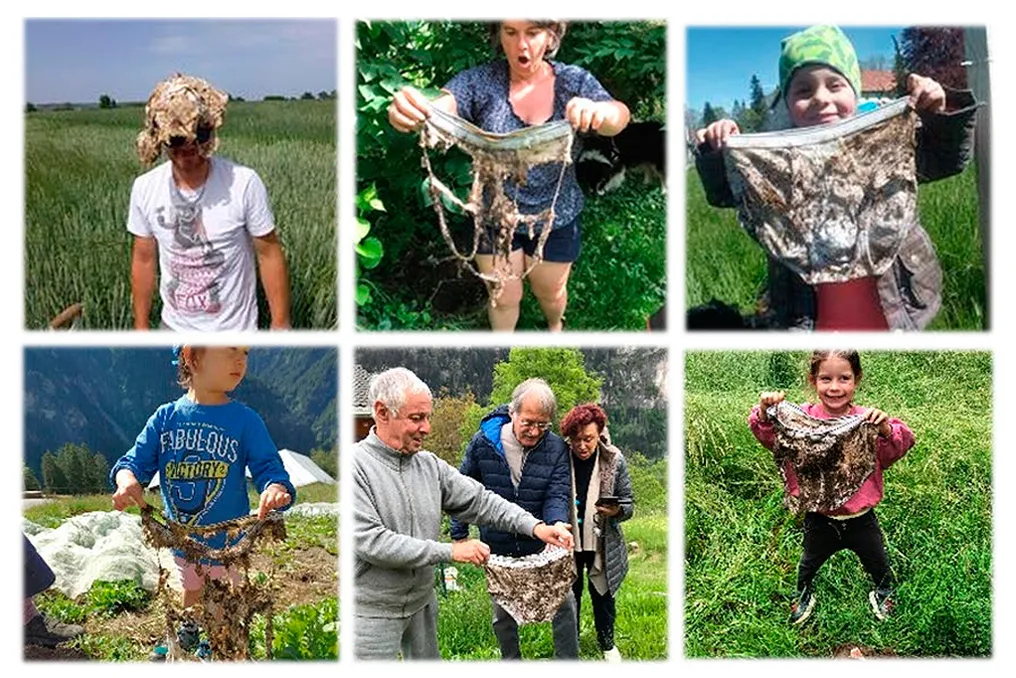
In 2021, the team mobilized approximately one thousand volunteers to conduct an experiment across Switzerland. They buried over 2,000 pieces of cotton underwear, including panties and briefs, along with 12 thousand tea bags. The items were placed in various types of soil, ranging from gardens to field and lawn areas, with the purpose of demonstrating how such objects can act as indicators of soil condition.
After two months, the volunteers retrieved the pieces for laboratory analysis. The results confirmed the researchers' expectations: while some clothes remained almost intact, with only minor tears, others showed a much more advanced level of deterioration, reducing to a mere skeleton of the fabric.
The findings were published on August 26 in the scientific journal Plants, People, Planet. The authors concluded that the lower rate of degradation in briefs and panties was associated with soils with low nutrient concentration and lower biological activity. Conversely, the greater the tissue decomposition, the higher the presence of organisms capable of degrading cotton.
This phenomenon was named by the researchers as the 'underwear index.' Previously, similar studies used materials such as cotton strips, which are effective but less appealing to the general public.
The scientists also investigated the correlation between the decomposition of the pieces and land management practices, which directly impact soil quality. It was noted that agricultural lands, pastures, and lawns exhibited pieces with a lower degree of deterioration. The least fertile soil analyzed in the study was that from grass monoculture, common in homes and buildings.
In contrast, private garden soils showed high biological activity, thanks to the presence of earthworms, fungi, and other living beings, resulting in the decomposition of 58% of the cotton from the pieces buried in this type of soil during the two-month period. This pattern suggests a link to the care and frequent fertilization of these environments.
However, the study warns that higher fertility does not automatically imply excellent soil quality. Private gardens, for example, registered higher levels of phosphorus, nitrogen, and potassium, exceeding ideal limits in some cases. Thus, excessively rapid decomposition of underwear should not be interpreted as a positive indicator either.
The authors emphasize that this project proves that underwear functions as a simple and easy-to-understand tool, providing valuable data on soil condition. They propose the 'Underwear Index' as an accessible and engaging method to assess fertility and decomposition processes, aiming to raise public awareness about soil as a vital resource under threat.