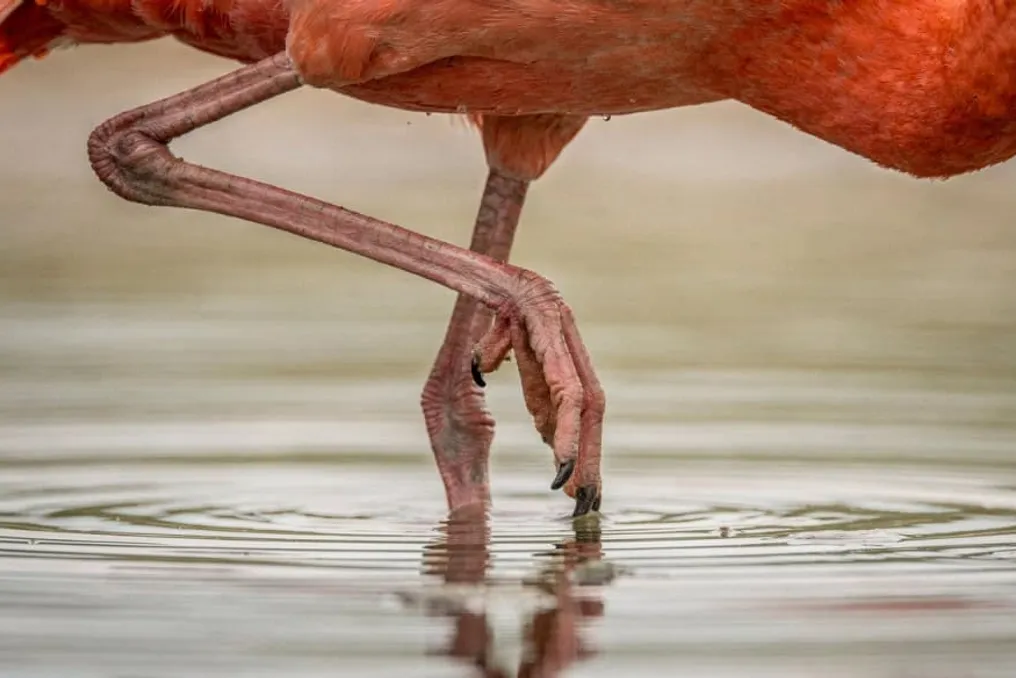
Flamingo chicks do not possess the characteristic pink plumage; they are born with light-colored feathers that gradually gain tone as they mature. This chromatic transformation is directly influenced by diet, as the organism absorbs pigments called carotenoids present in food and deposits them in the new feathers.
In nature, these pigments are obtained by consuming small crustaceans and algae. The bird's body metabolizes these substances, using them to form the coloration of its feathers, which establishes a direct link between diet and the animal's appearance. The Smithsonian National Zoo clarifies that the carotenoids found in the algae and crustaceans consumed by flamingos are responsible for the pink coloration of the plumage.
Carotenoids are natural pigments capable of producing colors such as yellow, orange, and red, and are present in various organisms and food sources. In the context of flamingos, they are vital for producing the distinctive feather color. One of these pigments is astaxanthin, which imparts a reddish hue and is also found in several aquatic animals, playing a crucial role in the pigmentation of fish and crustaceans.
A study conducted by Denis L. Fox, published in 1955 in the journal Nature, demonstrated that the American flamingo, Phoenicopterus ruber, obtains the pinkish-red coloration of its feathers, leg skin, and part of its beak from dietary carotenoids. This same work observed that flamingos kept in captivity tend to progressively lose this pigmentation if they do not receive adequate care to ensure carotenoid intake.
This discovery underscores the importance of nutrition for flamingos in zoos. Without an appropriate source of carotenoids, the typical color can become less intense over time, especially during the feather molt process. Thus, the color is not a completely autonomous trait but rather depends on the pigments reaching the organism through diet.
Astaxanthin has applications beyond flamingos; it is also associated with the pink coloration of other aquatic beings, such as salmon and crustaceans. A review published in 2024 in the journal Fish Physiology and Biochemistry details that astaxanthin is a natural carotenoid in various aquatic organisms and is essential for the pigmentation of fish and crustacean species.
In the case of salmon, the presence of this pigment contributes to the pink color of the flesh. In fish raised in controlled environments, astaxanthin can be incorporated into the feed to aid in pigmentation. Shrimp serves as another example, as astaxanthin is present in these crustaceans and participates in their coloration. When shrimp is cooked, the heat modifies the pigment's bond with proteins, making the reddish tone more visible.
Thus, flamingos, salmon, and shrimp share a common characteristic: their pink tones are intrinsically linked to carotenoids, with astaxanthin being a relevant factor in some of these cases. Therefore, the pink color of the flamingo is the result of a process that begins with diet.