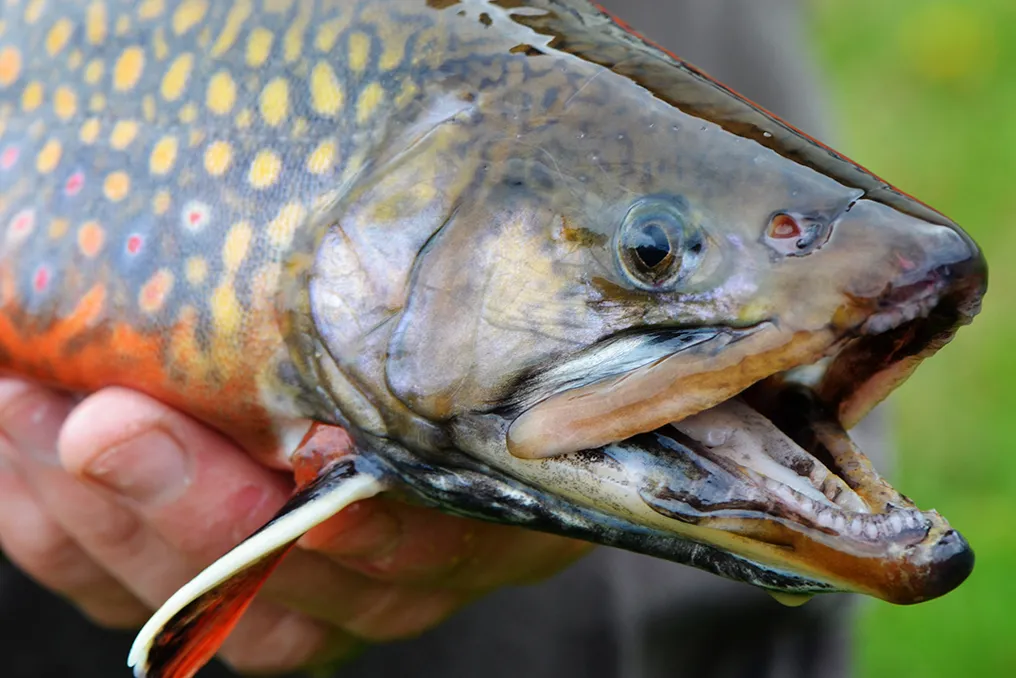
Invasive species represent one of the greatest threats to global freshwater biodiversity, and their control often requires severe methods. An example of this is the case of the Apache trout and the red-tailed chub, native fish of the West Fork Black River in Arizona, which have long competed with the fountain trout, a species considered invasive.
To combat this invasion, biologists are introducing more captive-bred fish of the invasive species directly into the river. Initially, this tactic may seem illogical, but these new fish possess a specific genetic characteristic designed to lead the invasive population to extinction.
Known as supermales or Trojan YY males, these individuals have two Y chromosomes instead of just one. When these supermales mate with female trout, all offspring are born male. Over time, this results in a population composed exclusively of older males, thus extinguishing the invasive lineage.
After six years of implementing the experiment, the results have been favorable. In the West Fork Black River, the proportion of males in the population reached 61% last year, and in two streams located in Idaho, the supermales managed to completely eradicate the fountain trout. These findings were detailed in an article published in the Transactions of the American Fisheries Society.
Previously, methods used to control invasive fish included the use of poisons, such as rotenone, and electric fishing. However, both approaches face limitations: rotenone affects both native and invasive fish, while electric fishing does not show significant effectiveness in large bodies of water.
The idea of supermales was developed in 2008 by the research team. Dan Schill, the first author of the study, received the suggestion from a mathematician that YY males could cause the extinction of an invasive species. Thus, he and his collaborators decided to test this methodology on the fountain trout.
The fountain trout was chosen because, although it originates from the eastern United States, it became invasive in the western region more than a hundred years ago. Additionally, the rapid maturation of this trout facilitated the testing process.
In 2016, the team introduced the first supermale offspring into the Bear and Willow streams in central Idaho. To ensure an initial numerical advantage, the technique of electric fishing was also applied to remove at least half of the fountain trout population. Consequently, the supermales outnumbered the wild males, and currently, there are almost no invasive species in these two streams.
More proof of the strategy's effectiveness may appear soon. Currently, nine American states support a Trojan male breeding program, and eight states are conducting active tests in streams. In New Mexico, the proportion of males in three experimental streams reached 90%.
The tests are not limited only to the fountain trout. Researchers are analyzing at least ten other species, including fish such as northern pike and channel catfish, as well as amphibians like the bullfrog.
It is important to note that not all invasive fish species can be eradicated using supermales. Some of them have the ability to change sex according to water temperature or population density, which complicates the intervention of supermales. Furthermore, extensive bodies of water, such as rivers and lakes, require an extremely high number of YY males for the strategy to be successful.