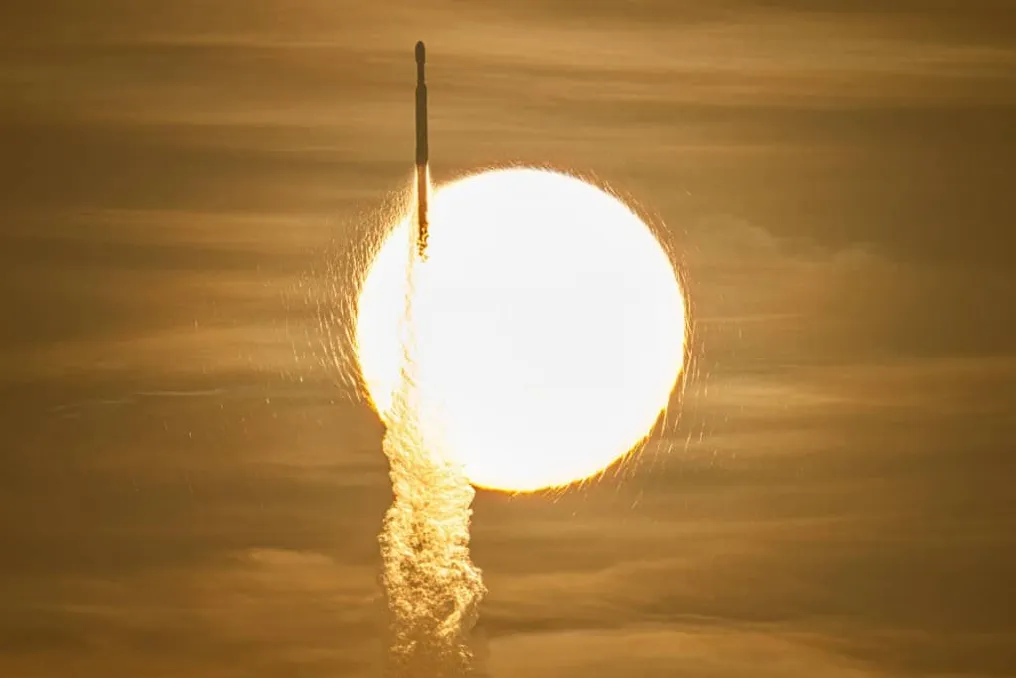
With the successful launch of the Nancy Grace Roman Space Telescope, transported by a SpaceX Falcon Heavy rocket last Sunday (30th) from the Kennedy Space Center in Florida, NASA has initiated a new and unprecedented phase in the investigation of the Universe.
The deployment of this observatory to Lagrange Point 2 (L2), located over 1.6 million kilometers from Earth, marks the beginning of a mission focused on solving three major current scientific questions: the hidden composition of the cosmos, the dynamics of spatial expansion, and the search for new worlds in the Milky Way.
Over the last century, science has established that everything directly visible to humanity—from stars and planets to entire galaxies—constitutes only 5% of the Universe. The majority of physical reality is composed of substances that do not interact by emitting, reflecting, or absorbing light. Understanding this invisible structure is the central purpose guiding the technological design of the Roman telescope.
Dark matter remains one of the biggest enigmas in astrophysics. Its existence is proven by the gravitational effect it exerts on galaxy rotation, acting as a network that prevents celestial bodies from dispersing; however, no terrestrial equipment has managed to register its constituent particles.
The Roman telescope proposes a distinct methodology. Instead of trying to capture dark matter in a laboratory, it will use its vast field of view to map the distortions caused by the gravity of this invisible substance on the light from billions of distant galaxies. This phenomenon, known as gravitational lensing, will enable the creation of a high-precision three-dimensional map, illustrating the distribution of matter across billions of years of cosmic history.
In parallel, the observatory will investigate the mystery of dark energy. This unknown force, identified in the late 1990s, operates opposite to gravity, driving the accelerated expansion of spacetime itself. To measure the behavior of dark energy throughout the ages, Roman will record the location of numerous galaxies and analyze Baryon Acoustic Oscillations—marks left by pressure waves in the early cosmos that function as a standard ruler for calculating the rate of universal expansion.
The results of these observations may validate existing cosmological models or compel physicists to develop new theories about gravity and spacetime.
Scientific Perspectives and Planetary Advances
During the live broadcast of the launch, conducted by Olhar Digital, astronomer Marcelo Zurita stated that the solution to this cosmic mystery lies among the highest honors of global science. He declared that 'whoever manages to explain very assertively the origin and nature of dark energy will certainly need to be awarded the Nobel Prize.'
In addition to investigating the cosmic scale, the mission represents a significant leap in planetary scale. The search for exoplanets (planets outside the Solar System) will enter a new instrumental phase thanks to the advanced coronagraph onboard the observatory, an optical system designed to overcome intense stellar brightness and reveal planets in their orbits.
In an interview with the Olhar Espacial program, astrobiologist Raíssa Estrela, a researcher at NASA's Jet Propulsion Laboratory (JPL), detailed the functioning and urgent importance of this technology for space research. She explained that 'this technology we call a coronagraph is basically an instrument that blocks the light of the parent star. And why do we want to block this light? Because when we block the light of the parent star, we can see the light reflected by the planets inhabiting that star. The star's brightness is so strong that it overwhelms the entire image. So, we need to block it to see the light reflected by the orbiting planets. With this type of observatory, we will be able to image the planetary system.'
Currently, most exoplanets are discovered through indirect methods, such as the momentary dimming of starlight when a planet transits in front of it. With Roman's coronagraph, astronomers will have the ability to record the light directly reflected by the planet, starting the focus on giant gaseous worlds similar to Jupiter.
To map smaller and more distant bodies, the observatory will employ the combined technique of gravitational microlensing. When a star is positioned in front of another more distant one relative to Earth, the gravity of the foreground star acts as a natural lens, intensifying the brightness of the background star. If the lensing star possesses planets, the gravity of these worlds generates small variations in the light signal. This strategy will allow scientists to catalog thousands of new planets, including rocky worlds located tens of thousands of light-years from our system.
According to Zurita, gravitational microlensing is the most appropriate method for identifying Earth-sized planets. 'If the main goal is to find a 'Earth 2.0' (an Earth-like planet in the habitable zone), this is the technique to be used.'
The dataset collected by the Roman telescope will serve as a strategic basis for future space missions. The ultimate goal of astrobiology—detecting biological signs in the atmosphere of a planet with mass and temperature similar to Earth—demands a level of technical accuracy that is currently being established.
Raíssa emphasized the pioneering role of the new telescope in NASA's exploration planning. 'Roman will study other planets, but it will be more focused on gas giants. The technology will not reach the point of characterizing planets like Earth. But it will bring this technology that we need to understand, which is direct imaging of exoplanets, which will be used by the Habitable Worlds Observatory, but for smaller planets. So, it is like the first step we are taking in this journey toward characterizing Earth-like planets.'
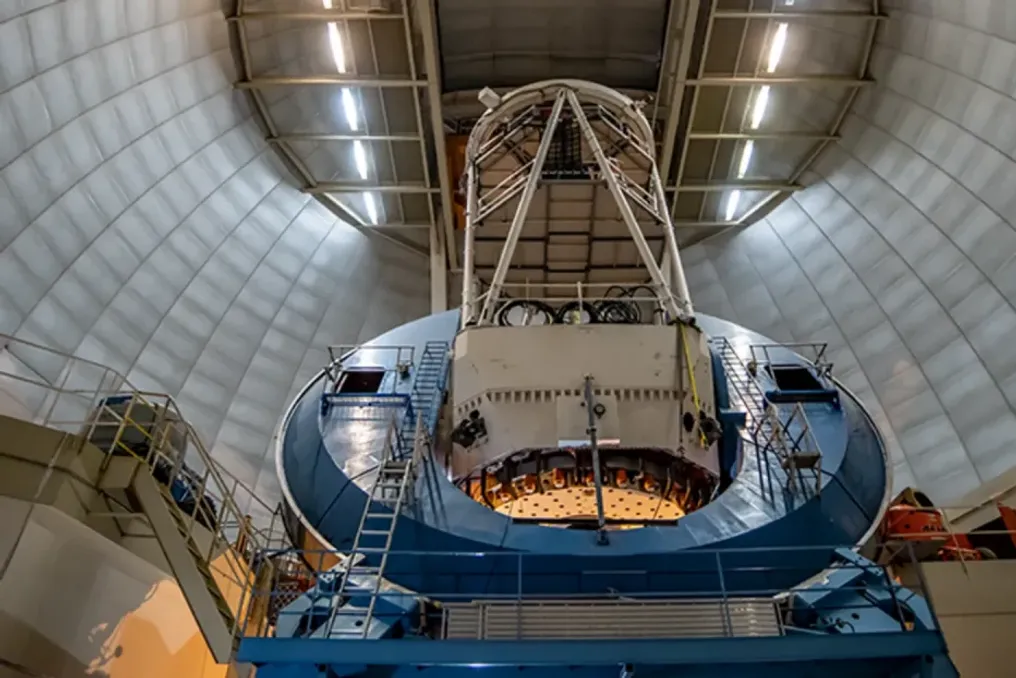
All this research will be supported by an unprecedented capacity for information processing. Equipped with the Wide Field Instrument (WFI), a 300-megapixel camera that captures areas a hundred times larger than those of the Hubble Space Telescope, Roman can generate over 20 petabytes of data in its first five years.
This colossal volume will require intensive use of artificial intelligence and machine learning algorithms to analyze images and catalog billions of astronomical objects. By integrating cutting-edge technology, theoretical physics, and space engineering, the launch does not just signify the start of another NASA mission, but the most crucial step taken to date to decipher the hidden nature of the Universe and our place within it.