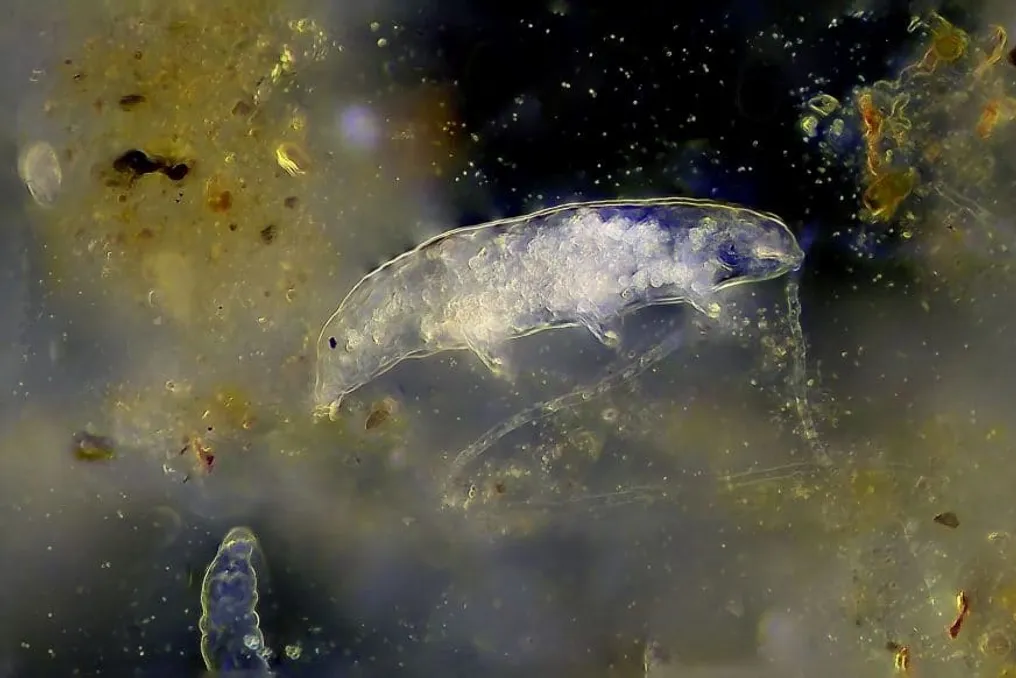
Half-millimeter tardigrade survived space vacuum in 2007 test
Read more
Olhar Digital
olhardigital.com.br

Half-millimeter tardigrade survived space vacuum in 2007 test

A tardigrade, an organism measuring only half a millimeter, demonstrated the ability to survive direct exposure to space vacuum in 2007 without any form of protection. This test, named TARDIS, involved placing the animals in low Earth orbit for a period of ten days.

This feat was made possible because, before launch, the animals were induced into a state known as cryptobiosis. In this state, the tardigrade eliminates almost all the water from its body and reduces its metabolism to near-zero levels.

The experiment took place aboard the Foton-M3 mission, conducted by the European Space Agency (ESA), and was launched from Russia in September 2007. The spacecraft carried 120 individuals of each of two species: Richtersius coronifer and Milnesium tardigradum. The animals were fixed in an external compartment called Biopan.

Upon reaching orbit, at an altitude of approximately 270 kilometers, the experiment panel was opened. One group of tardigrades was subjected only to the space vacuum, being protected from solar radiation by a filter. Simultaneously, another group was exposed to the vacuum along with direct solar ultraviolet radiation, without any filter.

The results were published the following year in the scientific journal Current Biology, authored by a team led by K. Ingemar Jönsson from the University of Kristianstad, Sweden. There was a notable disparity between the groups. Those exposed only to the vacuum survived in proportion similar to tardigrades kept on Earth. However, among those exposed to vacuum combined with total solar radiation, the survival rate dropped drastically, leaving only a small resistant portion.

Chemical Mechanism of Cryptobiosis

Cryptobiosis is sustained by a specific chemical mechanism. During the dehydration process, the tardigrade replaces much of the cellular water with a sugar called trehalose. This substance forms a kind of biological glass around the internal structures, preventing membranes and proteins from disintegrating when the water disappears, which would normally lead to cell death.

In this state, the animal contracts, pulls its legs inside its body, and adopts a dry form called a tun. There are various variations of this state, triggered by different types of stress, such as water scarcity, extreme cold, lack of oxygen, or high salt concentration. In all these conditions, the metabolism drops to nearly undetectable levels, allowing the organism to remain in this state for years; just a drop of water is enough to reverse the process and restore vital functions within a few hours.

This performance reinforced the reputation of the tardigrade as an extremely resilient creature. However, the European Space Agency (ESA) itself classifies the 2007 experiment as the first demonstration of an animal surviving direct exposure to space, not as proof of unlimited resistance. Extreme resistance only manifests during the dry state of cryptobiosis; a hydrated and active tardigrade would die in the space vacuum, like any other animal.

This occurs because its cells remain dependent on liquid water to operate. Even in cryptobiosis, the combination of vacuum with direct solar radiation showed a limit. The greater the dose of radiation received, the lower the probability of survival. This behavior differs from the popular notion of an invulnerable being, and this limit is relevant for research focused on astronaut protection and the conservation of biological tissues.

It is important to note that this survivor does not require a laboratory environment to exist. It is found in mosses and lichens scattered globally, including roofs, gutters, and gardens in Brazil. It is enough to find a puddle of stagnant water for a few days over a clump of damp moss to observe these animals fully active under a microscope.
Similar stories

Neptune was mathematically predicted before being observed, due to gravitational perturbations in Uranus
Read more
olhardigital.com.br

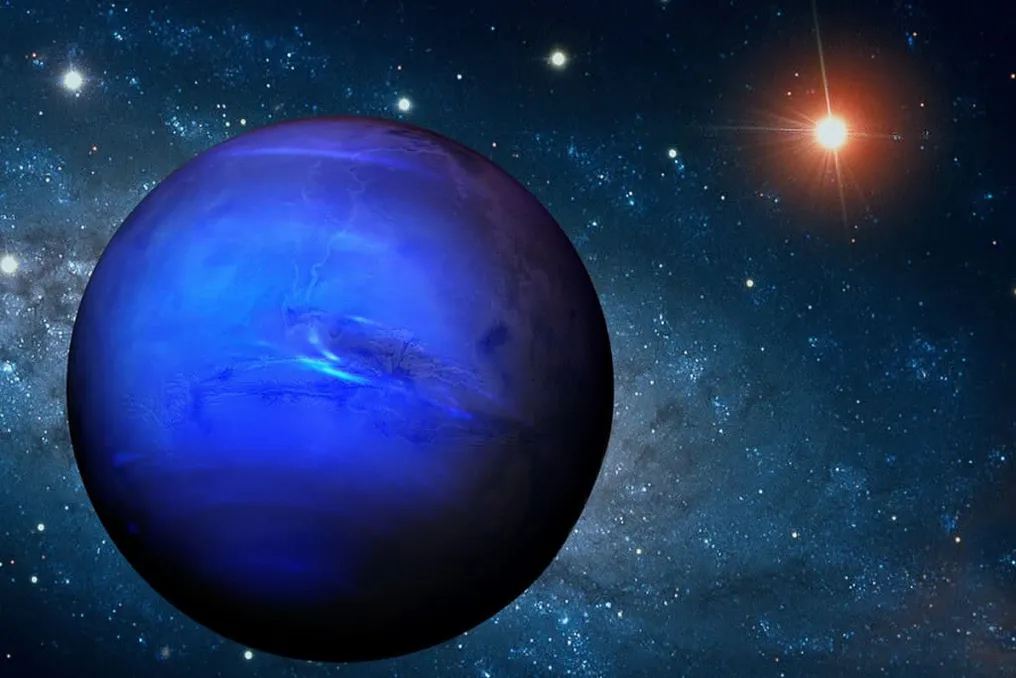
Neptune was mathematically predicted before being observed, due to gravitational perturbations in Uranus

Neptune was anticipated through mathematical calculations before it was actually detected as a planet. Deviations in Uranus's orbit, when compared with observations, indicated that the gravitational influence of another celestial body might be affecting its path. In this context, Urbain Jean Joseph Le Verrier, in France, performed calculations to locate this planet, while John Couch Adams, in England, arrived at a similar prediction independently.

The confirmation occurred during the night of September 23rd to 24th, 1846. At the Berlin Observatory, astronomer Johann Gottfried Galle and Heinrich Louis d’Arrest compared the area pointed out by Le Verrier with a celestial map and identified an object missing from the catalog. Subsequent observations showed that this object exhibited movement relative to the stars, thus confirming it as Neptune.

The crucial factor in solving the enigma lay in gravity. As established by Isaac Newton's law of universal gravitation, masses exert mutual attraction. In a complex planetary system, this attraction generates minuscule modifications in trajectories. This turned Uranus into a kind of cosmic indicator; if there were an unknown planet beyond its orbit, its gravity would cause small perturbations in Uranus's movement, allowing astronomers to use these variations to estimate the position of the causative body.

This problem had already drawn the attention of the French astronomer Alexis Bouvard, who compiled tables for Uranus's orbit in 1821. Later measurements did not align perfectly with the projections, strengthening the theory of an unmapped body. Both Le Verrier and Adams approached the challenge independently. Instead of starting with the observation of a planet, they started from the gravitational effect noted on Uranus to calculate its origin, thus conducting an inverse investigation: the trajectory of a known planet served to search for another still invisible one.

Adams concluded his calculations before the disclosure of Le Verrier's prediction, but his findings were not published at that time. Le Verrier published his studies and sent his estimate to the Berlin Observatory, where it was directly used in the search. Galle received the coordinate calculated by Le Verrier and began the search. On the night of September 23rd, he and d’Arrest located a celestial body near the predicted location that did not correspond to the stars on the map used for the observation. The deviation of this object relative to the stars proved that it was not a fixed star; Neptune was present.

NASA sources classify this event as a great triumph of celestial mechanics, as the existence of a planet was deduced from its gravitational impacts before its visualization in the sky. Le Verrier's prediction demonstrated high accuracy for the time, with NASA recording that Galle found the planet less than a degree from the indicated position. Neptune orbits the Sun on average 30 times farther from Earth and is not visible to the naked eye.

There is also a relevant detail in this narrative: Galle was not the first to spot Neptune. The British astronomer James Challis had recorded the object in August 1846, before the identification in Berlin. He monitored the celestial region on August 8th and 12th, but did not recognize that luminous point as a planet. The distinction lies between observing and identifying; Challis recorded the point, but did not understand its nature, whereas Galle and d’Arrest made the identification that validated the discovery.

The success of the calculations generated a dispute over precedence between the French and the British. Adams had worked on the problem independently and achieved results before Le Verrier, but his prediction was not disclosed in the same way nor did it directly lead to the planet's location. Le Verrier, on the other hand, published his calculations, which were used by Galle in the search that culminated in the discovery of Neptune. Thus, the attribution of merit became a sensitive issue between the two countries.

The most accepted historical view today recognizes the independent contributions of Adams and Le Verrier to the prediction, without disregarding that it was Le Verrier's published estimate that directly guided the identification of Neptune by Galle and d’Arrest. Therefore, the controversy is not just about defining who 'discovered' the planet. This episode teaches a lasting lesson in astronomy: it is not always necessary to see an object directly to know that it exists; often, it is enough to precisely analyze what its gravity does to another body. In the case of Neptune, a small variation in Uranus's movement served as the clue that led scientists to a planet billions of kilometers away.

NASA study shows Earth microbes can survive on the Moon's surface under certain conditions
Read more
www.aajtak.in

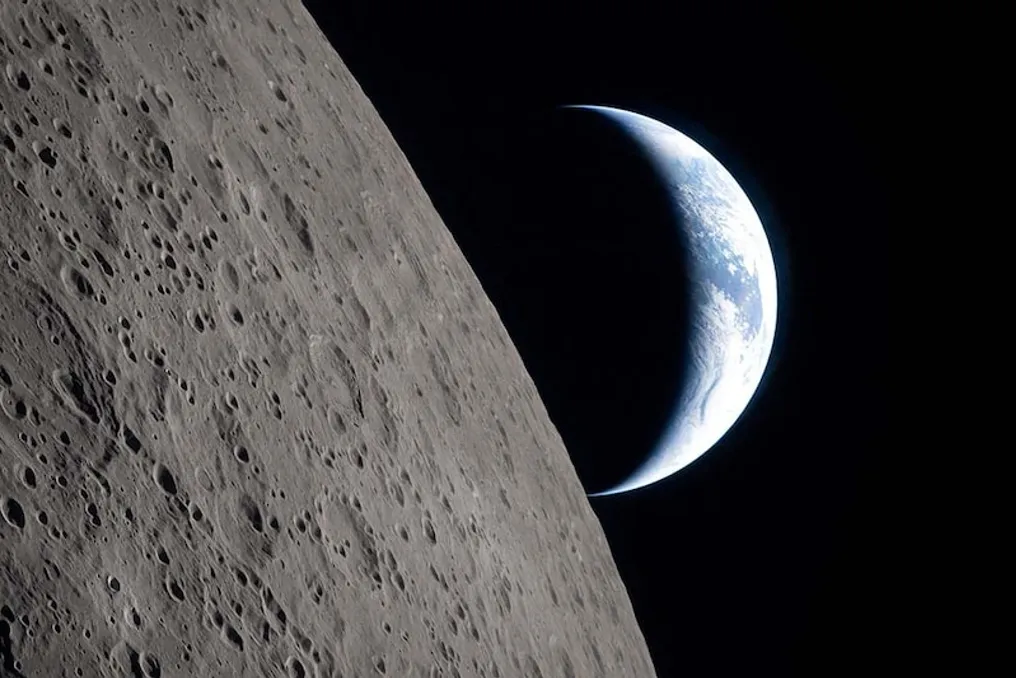
NASA study shows Earth microbes can survive on the Moon's surface under certain conditions

Human life on the Moon involves several difficulties, including the lack of an atmosphere, sharp temperature fluctuations, and exposure to intense solar radiation and radiation. However, a new study conducted by NASA found that some microorganisms from Earth are capable of surviving for a period on the lunar surface.

According to the study data, some of these organisms can maintain viability from several weeks to several months in specific locations. Scientists conducted this research by examining three sites on the Moon's south pole: Nobile Rim, Connecting Ridge, and De Gorles Rim. Data obtained from the Lunar Reconnaissance Orbiter and information on the radiation background on the Moon were used for the analysis.

Five types of microbes were tested in computer models: two species of fungi and three species of bacteria. The most resistant among them turned out to be the fungus Aspergillus niger, often called black mold and usually found in damp and warm places, and which was also discovered inside the International Space Station.

The second fungus studied was Fusarium, which typically inhabits soil and demonstrated the ability to survive in harsh conditions, although it was less resistant than Aspergillus. Among the three bacteria, Deinococcus radiodurans proved to be the most resilient; the other two bacteria—Staphylococcus aureus and Bacillus subtilis—were most affected by the Moon's ultraviolet radiation.

The main obstacles for microbes on the Moon are strong ultraviolet radiation, radiation, and extreme heat, as temperatures on the Moon can reach about 127 degrees Celsius during the day. Nevertheless, conditions are not uniform everywhere. In some craters on the Moon's south pole, there is no direct sunlight, which increases the probability of microbial survival for some time.

Modeling showed that in certain zones, these organisms can remain alive for several weeks to several months. It is important to note that this study concerned only the duration of survival, not the ability of the microbes to grow or increase their population.

Scientists hypothesized that if a microorganism is buried under the lunar soil, it may receive some protection from intense radiation exposure. Since water ice is also present on the Moon, it is crucial for scientists to understand whether microbes arriving from Earth will affect future studies related to lunar soil and water.

Preparation for NASA's Artemis missions includes sending humans to the Moon's south pole. In this process, terrestrial microbes may unintentionally reach the Moon with astronauts through spacesuits, equipment, or mechanisms. This could create a serious problem for future scientists: if a microbe is found in lunar soil or ice, it will be necessary to determine whether it was originally on the Moon or brought from Earth.

Therefore, scientists emphasize the need for complete documentation of microbes taken from Earth as part of lunar missions. This will aid in the subsequent correct analysis of samples collected on the Moon. The study does not mean that these microbes can live comfortably on the Moon; it only indicates that some small terrestrial organisms can survive longer than expected in specific locations on the Moon.

Popular