Before occupying the refrigerators of Brazilians, Danone's products were already available on pharmacy shelves. In 1919, in Barcelona, founder Isaac Carasso began selling yogurts, based on the scientific discoveries of the time regarding fermentation and digestive health. This modest operation evolved into a corporation present in over 120 nations, with approximately 2,000 scientists focused on converting knowledge into nutritional solutions suitable for various life stages.
This trajectory explains why Danone has established itself as one of the most influential companies in the creation, development, and transformation of food categories globally. The company integrates microbiology, food science, clinical studies, and innovation to promote health through nutrition to as many people as possible, ranging from everyday dairy products to highly specialized nutrition.
In Brazil, where the company has operated for over 55 years, this evolution is visible both in the improvement of its products and in the change in consumer eating habits. A notable example is Danoninho, which has been on Brazilian tables since 1973, and currently contains 50% less sugar compared to twenty years ago. Although it seems like a simple change, the reduction in sugar impacts not only the taste but also the texture, consistency, and sensory perception of the food, requiring years of research and reformulation to maintain public acceptance.
More recently, Danone Zero stood out as one of the best-selling products last year, presenting five simultaneous characteristics: absence of added sugar, cholesterol, saturated fat, trans fat, and lactose. Its success led to the expansion of the sales format, moving from family-sized bottles to trays.
Gustavo Alvarez, Director of Research and Innovation for Danone in Brazil and the Southern Cone, explains that processes such as substituting or removing an ingredient are complex, comparable to moving a domino piece, as a single change can affect texture, aroma, consistency, and flavor. He emphasizes that the challenge lies in integrating nutritional advances without compromising the expected food experience for the consumer.
The science behind the categories
While many companies merely follow trends, Danone has actively participated in shaping categories that are part of daily Brazilian life. Danoninho helped consolidate the children's petit suisse category, while Activia promoted awareness of digestive health among consumers. Furthermore, YoPRO contributed to popularizing protein consumption in shake form.
The company's work goes beyond product launches; it has shaped discussions about nutrition, health, and food. Its expansion into areas of high scientific complexity occurred after the acquisition of Nutricia, a Dutch company, adding more than 130 years of specialized nutrition solutions for individuals with specific needs and patients at different life stages.
Products such as Aptanutri, Fortini, and Nutridrink require extensive research and regulatory approval processes before being made available to patients, caregivers, and healthcare professionals. Arthur Lorenzetti, VP of Specialized Nutrition for Danone in Brazil, points out that while it is common to think only about the contents of the plate, there is a very specific nutritional need for each life stage, and the challenge of specialized nutrition is to translate these differences into support solutions for people at various moments, from children to recovering patients.
A global network of researchers
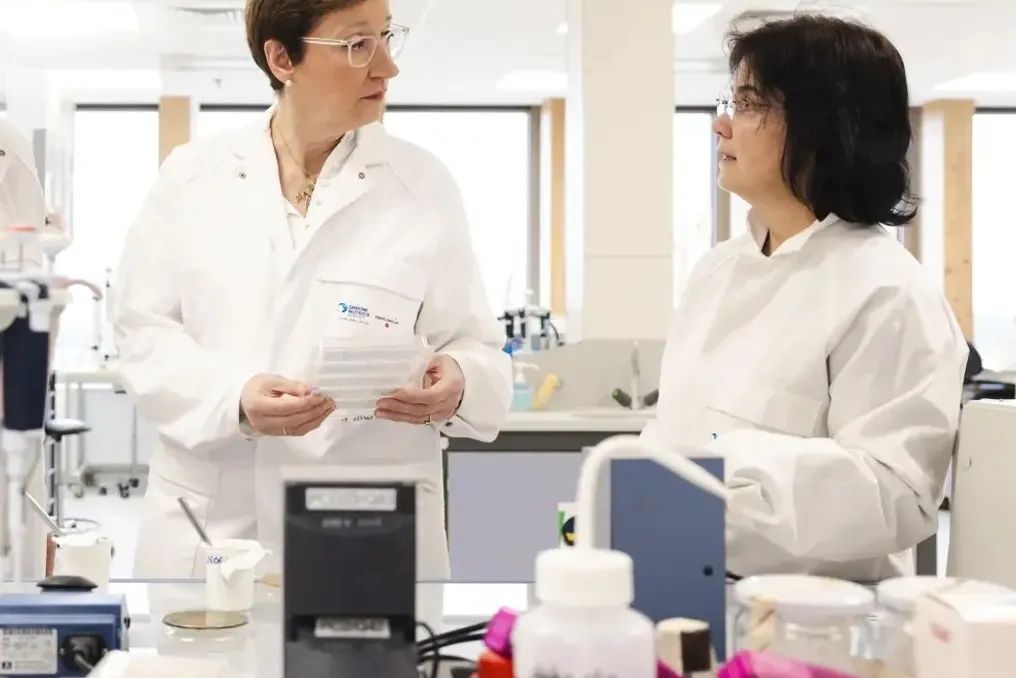
To understand Danone's scientific dimension, one must look behind the scenes. The company operates two major global research centers, located in Paris-Saclay, France, and the Utrecht Science Park, Netherlands. These centers are linked to six specialized global hubs focusing on topics such as precision nutrition, dairy technology, plant-based foods, and packaging.
This structure reflects the genesis of the company: Isaac Carasso founded Danone inspired by the scientific advances that were beginning to show the importance of microorganisms for human health. A fundamental reference during this period was the work of Élie Metchnikoff, who won the Nobel Prize in Medicine in 1908 and pioneered studies on immunity and fermentation. The initial premise was revolutionary: applying scientific knowledge to food development, a principle that persists today, but with more sophisticated tools, including artificial intelligence and artificial stomachs.
From yeast to data usage
If the initial focus was fermentation, current product development covers microbiology, biotechnology, digital modeling, data intelligence, and clinical studies. The company maintains one of the largest collections of yeasts on the planet, used to preserve and study distinct strains that can generate new foods and nutritional solutions.
The time required for development varies according to the project's complexity. While reforms and improvements to existing items may take a few months, more advanced solutions, especially in specialized nutrition, can require years of testing, research, and regulatory approvals. This is a multidisciplinary effort that unites specialists in nutrition, quality, engineering, microbiology, regulatory affairs, and supply chain.
Food and future health
Science also guides the nutritional evolution of Danone's portfolio. In recent years, the company has invested in initiatives to reduce sugar content in several lines, optimize nutritional profiles, and create options that align with consumer expectations and new habits.
Beyond products, the company has taken on environmental and social commitments. In 2021, it became the first large food manufacturer in Brazil to obtain B Corp certification, recognizing its commitment to positive social and environmental impact. Danone is also advancing goals for reducing pollutant gas emissions, promoting regenerative agriculture, strengthening the dairy chain, and diversifying leadership roles.
If over a century ago innovation lay in selling yogurts in pharmacies, today it encompasses specialized nutrition, clinical research, microbiota studies, fermentation, breast milk, and data intelligence. The tools have changed, but the company's central question remains unchanged since 1919: how to use science to improve health through food? This is the quest that Danone has pursued for 55 years in Brazil and over a century on the world stage.