Last week, Pakistan announced its refusal to comply with the latest sanctions imposed by the United States on Iran and stated its intention to continue trading with its neighbor. This news followed just a few days after a similar statement from China.
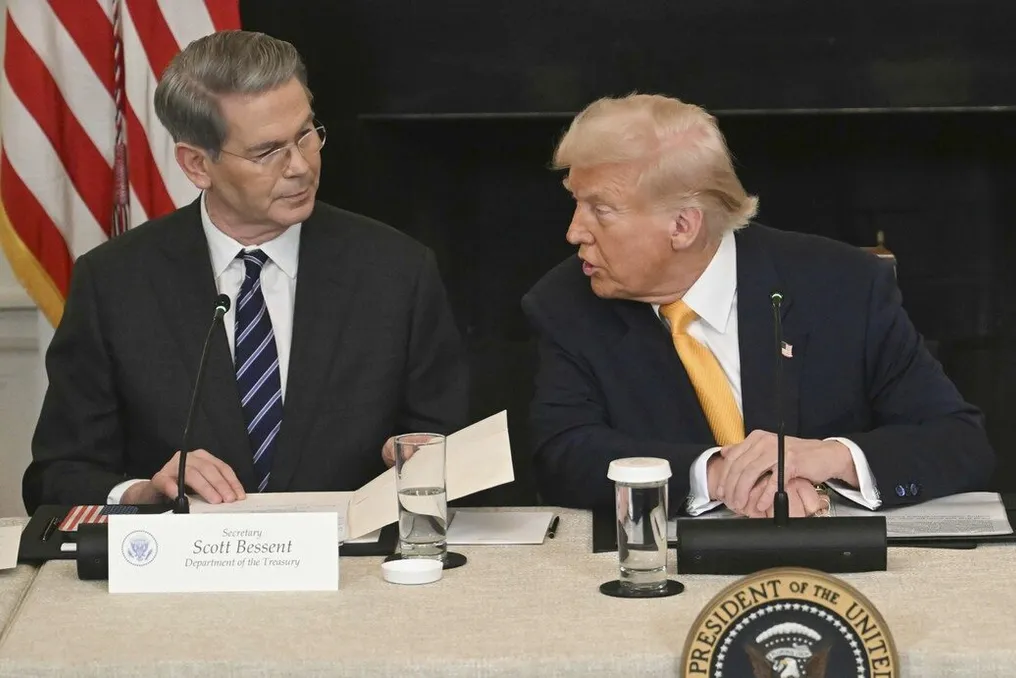
The sanctions, announced by U.S. Treasury Secretary Scott Bessent on August 24 as part of 'Operation Economic Outcast,' are intended to be 'the harshest sanctions in history' and ensure 'the most coordinated economic isolation in world history.' Previously, President Donald Trump called this initiative 'ECONOMIC D-DAY' on social media, promising 'huge economic consequences' for any nation that provides 'any support' to Iran.
Since six months of American bombing and naval blockade have not led to a US victory, the current plan is to induce Iranian capitulation through economic exhaustion. However, the new approach is illegal, brutal, and doomed to fail for several reasons.
Firstly, historical experience shows that economic sanctions do not lead to the overthrow of governments determined to survive. While sanctions can impoverish the population and strengthen smuggling security services, providing a foothold based on US malice to the target country, they are incapable of toppling governments.
Furthermore, one must consider the basic arithmetic of the global oil market. Bessent proposes excluding Iranian oil exports from a world that has already lost a fifth of its oil supply due to the closure of the Strait of Hormuz. The US proposes deepening the stagflationary shock already experienced by Europe, Japan, and their allies, demanding that these countries adhere to sanctions that will suffocate their economies.
Above all, this campaign is aimed at China, which purchases over 80 percent of Iranian oil exports. If the US imposes sanctions on the Bank of China or the Industrial and Commercial Bank of China, Beijing will not respond with a mere diplomatic note. It will restrict the export of rare earth metals, as it has already conducted such an experiment and succeeded.
In April 2025, China introduced licensing for the export of heavy rare earth metals in response to Trump's tariffs, and within weeks, automotive manufacturers in America and Europe halted assembly lines due to a shortage of rare earth magnets. In October 2025, China announced a much broader package of measures, and Washington agreed to back down, agreeing to suspend its recently expanded restrictions on Chinese companies in exchange for a one-year deferral of Beijing's measures.
The control introduced in April was never lifted, and the suspension of the October measures expires in November. Thus, Bessent chose this moment—just over two months before the return of China's expanded rare earth regime and a few weeks before the visit of Chinese leader Xi Jinping to Washington—to notify Beijing that it is either with the US or against it. This is a trap set by the US itself.
Beijing has clearly stated its position. Foreign Ministry spokesman Li Jian told journalists: 'China has repeatedly stated its firm opposition to illegal unilateral sanctions that lack a basis in international law or authorization from the UN Security Council. Economic warfare and maximum pressure are not a solution.'
Not only does the Chinese government consider US sanctions illegal; Article 2(4) of the UN Charter prohibits the threat or use of force against the territorial integrity or political independence of any state. The US rejection of the UN Charter goes far beyond Iran.
Of all 193 UN member states, America is currently the least aligned with UN-based multilateralism. In January 2026, Washington withdrew from more than 60 international organizations. In 2025, it voted with the international majority in only five percent of registered UN General Assembly resolutions.
At this stage, every government must draw three conclusions. Firstly, the US has rejected the UN Charter. Secondly, America's security guarantees are unreliable. Thirdly, dependence on dollar-based trade makes states vulnerable to US sanctions.
Around the world, countries are turning to new defense agreements, such as the Mecca Agreement between Saudi Arabia, Turkey, and Pakistan. They are also predictably abandoning transactions in US dollars and reducing their holdings of US Treasury bonds in reserves. Furthermore, they are beginning to use open-source AI models from China to meet AI needs instead of paying for proprietary American models.
Thucydides' ancient account of the Peloponnesian War is viewed today as a mirror of the rivalry between the US and China. Its most famous phrase is the taunt thrown by Athenian generals to the people of Melos in 416 BC, stating that 'the strong do what they can, and the weak suffer what they must.' However, just a dozen years after the Athenian generals uttered their taunts, Athens itself was defeated by Sparta.
Today, the US speaks to Iran and other countries in the same tone. Pride precedes the fall, and no government today is more arrogant than the US under Trump and his executor Bessent.
Governments around the world will not blindly follow the US into disaster.
3.