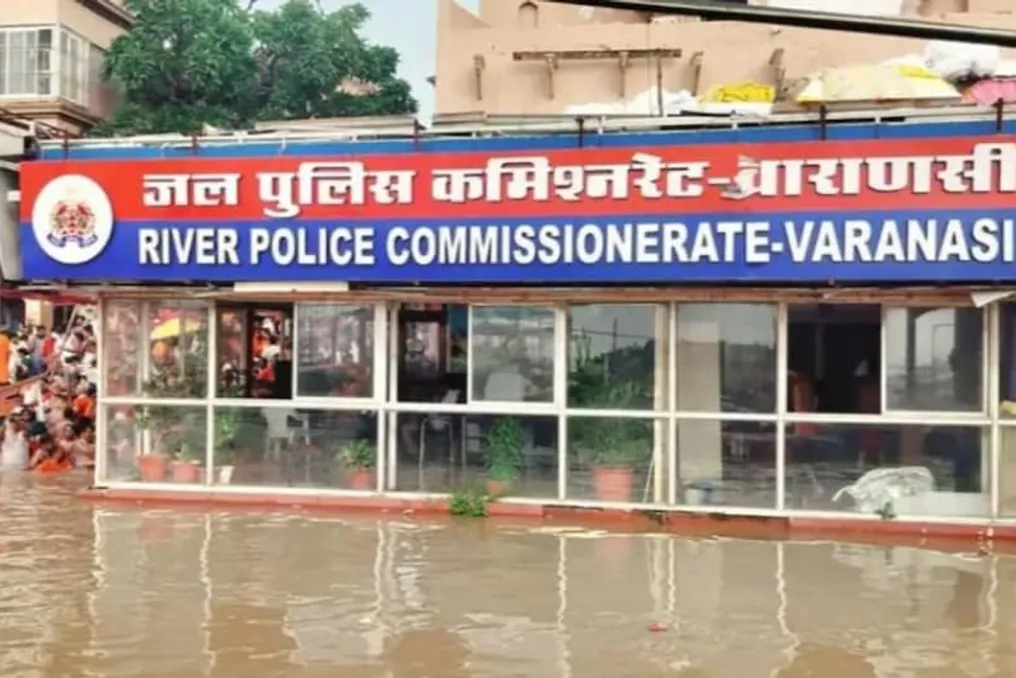
The situation in Varanasi is becoming increasingly serious due to the rising water level of the Ganges. The famous Kashi jetties are gradually being engulfed by the strong current of the river. At Dashashwamedh jetty, the water reached above the steps, and the water police post was flooded by more than half.
Despite this, pilgrims arriving in Kashi during the month of Sawan continue to bathe in the Ganges and express their devotion, loudly chanting 'Har Har Mahadeva' after bathing.
The rise in the Ganges water level is not limited to the Dashashwamedh jetty; the water level has also risen rapidly at Assi jetties. To ensure safety, boat traffic there has been suspended. Where pilgrims and tourists usually gather, an expanding body of water is now clearly visible.
The most severe consequences of the flood are observed at the Manikarnika jetty. The usual cremation grounds in this ancient mahashmashana have been submerged. Circumstances have arisen such that burials must take place on high rooftops. Due to the constant rise in water levels at the Manikarnika jetty, funerals are currently being held in confined spaces, with reports indicating that cremations for about 20 bodies may take place at one time.
Photographs of burning funeral pyres on rooftops demonstrate the scale of this crisis. The water, spreading further from the jetties, is causing concern among residents in the low-lying areas of the surroundings. The rising level of the Ganges complicates life for both local residents and pilgrims. In Kashi, the Ganges is part of faith and life, and its rising level has changed the appearance of the city jetties. This scene, from the flooded Dashashwamedh post to the rooftop cremations at Manikarnika, shows the destructive power of the flood in Varanasi.