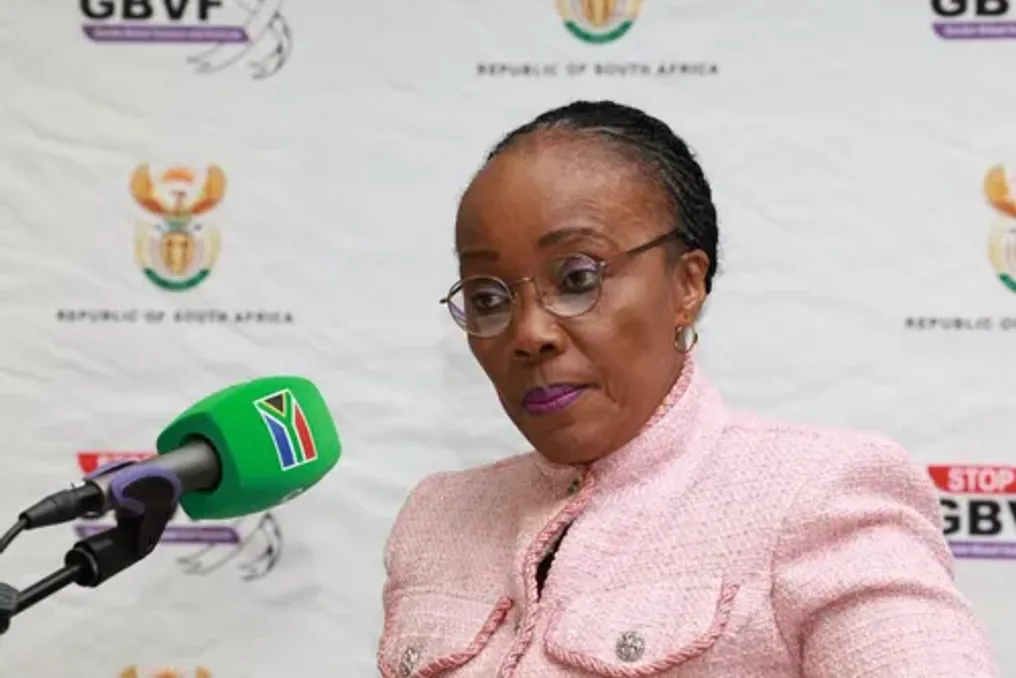
Minister in the President for Women, Youth and Persons with Disabilities, Sindisive Chikunga, announced the priorities of South Africa's newly established National Council on Gender-Based Violence and Femicide following its first meeting.
The new legislative council, established under Act No. 9 of 2024 on the National Council on Gender-Based Violence and Femicide, convened in Pretoria on Monday. This marks a step by the government toward implementing a structure that was one of the resolutions from the 2018 Summit of Heads of State on combating gender-based violence and femicide.
Chikunga noted that this meeting signaled the commencement of the council's work after many years of pressure from survivors, women's organizations, civil society, and other sectors demanding the creation of a permanent body to coordinate South Africa's response.
The Minister emphasized that the first meeting was initiated by Act No. 9 of 2024 on the National Council on Gender-Based Violence and Femicide, finally allowing the long-awaited process to begin.
Chikunga reported that the council begins its activities against the backdrop of alarming data presented by the South African Research Council in its first study on the prevalence of gender-based violence in South Africa, published in November 2024.
According to this study, approximately 7.3 million women aged 18 and older have experienced physical violence in their lifetime, and over 2.15 million have experienced sexual violence. It was also found that about 3.2 million women were subjected to physical violence by a partner, while around 2.5 million men reported committing such violence.
Furthermore, Chikunga drew attention to the study's findings regarding women with disabilities: 14.6% of them experienced sexual violence from a life partner, compared to 7.2% among women without disabilities.
Police data indicates that in the 2025/26 financial year, SAPS registered 50,511 cases of gender-based violence, of which 30,736 led to arrests and/or referral to the National Prosecuting Authority. These cases are classified under various offenses, including murder, attempted murder, rape, sexual assault, kidnapping, assault with intent to cause grievous bodily harm, common assault, attempted rape, and sexual contact. Rape accounted for 36,217 of the total registered cases.
The Minister stressed that these figures represent not just statistics, but specific women, daughters, sisters, and girls from South Africa. She also mentioned that the council starts its work after the government classified gender-based violence as a national catastrophe in November 2025.
Chikunga described the council as a permanent, legislative, and multi-sectoral mechanism designed to coordinate, monitor, and strengthen South Africa's response to gender-based violence. Its responsibilities include monitoring the implementation of the National Strategic Plan on Gender-Based Violence, advising the government on policy and legislative reforms, promoting accountability, commissioning research, tracking progress towards national goals, and mobilizing resources. The mandate also includes strengthening prevention programs and supporting survivor-focused interventions.
The council brings together representatives from government, women's rights organizations and survivor advocates, community and religious groups, disability and youth organizations, LGBTQI+ rights bodies, researchers, traditional and community leaders, as well as representatives from business, labor, and development partners. Chikunga specifically noted that council members are appointed not merely to advance the interests of their respective sectors.
She stated that the Council's duty is owed to the Constitution, the Law, women, girls, survivors of gender-based violence, and the people of South Africa. Among the priorities agreed upon at the first meeting, Chikunga named the conclusion of a Shareholders' Agreement between the responsible ministry and the council. This agreement will define what success looks like and how the council's effectiveness will be assessed. Furthermore, the council will develop a comprehensive cost-benefit assessment system to determine South Africa's needs in responding to gender-based violence, identify resource gaps, and develop a national investment case.
Chikunga added that no mandate can be realized without resources. The call for the establishment of a permanent, independent, and multi-sectoral body was included in the National Strategic Plan on Gender-Based Violence for the period 2020–2030 and subsequently gained legal force through the National Council on Gender-Based Violence and Femicide Act in 2024. Responsibility for fulfilling this mandate has now shifted to the Council. As Chikunga concluded, the baseline is set, evidence has been gathered, legislation has been passed, the mandate has been granted, and now the mission must be accomplished by the National Council itself.