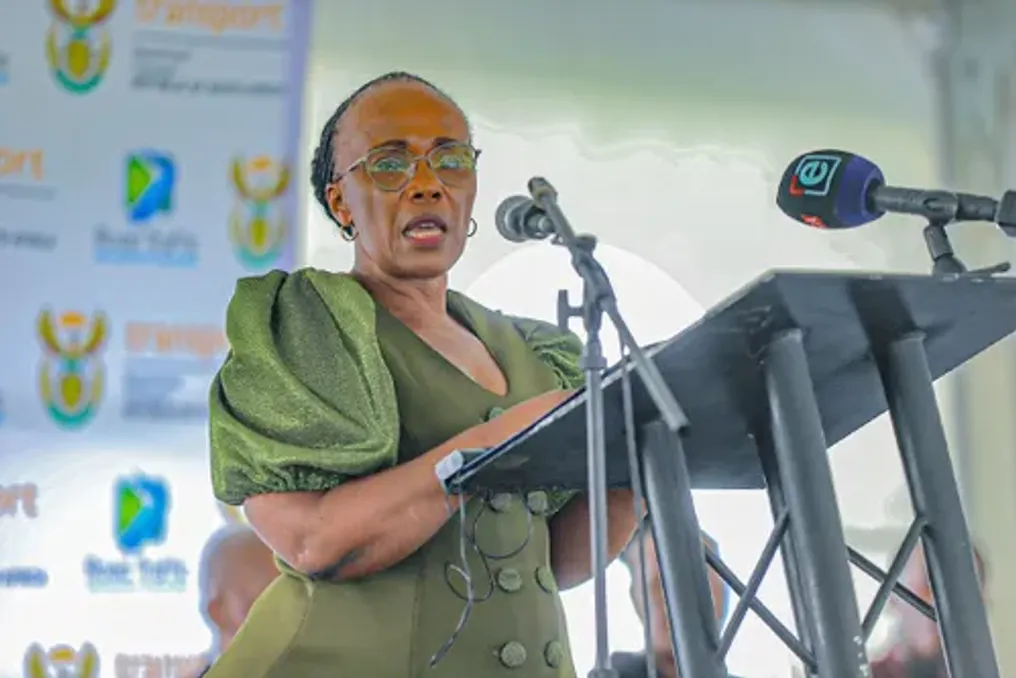
The Minister in the President for Women, Youth and Persons with Disabilities, Sindisive Chikunga, emphasized the need for urgent measures to combat the crisis of gender-based violence and femicide in South Africa.
According to the first national study on the prevalence of gender-based violence and femicide conducted by the Council for Scientific and Humanistic Research, at least 7.3 million women in South Africa aged 18 and older have experienced physical violence in their lifetime.
These figures were presented by Chikunga on Monday during the inaugural meeting of the newly established National Council on Gender-Based Violence and Femicide in Pretoria.
Chikunga also reported that out of 50,511 cases registered by the South African Police Service in the first quarter of the 2026/27 financial year, 30,736 cases resulted in arrests or referral to the National Prosecuting Authority (NPA).
These numbers underscore the scale of the crisis facing the recently activated council, which was created to coordinate and strengthen the country's response to gender-based violence and femicide (GBVF).
Chikunga noted: 'This is not just statistics. These are South African women, daughters, sisters, and girls. Above all, they are South African citizens whose constitutional rights have been violated.'
Transitioning from Commitments to Action
The Council was established in accordance with the National Council on Gender-Based Violence and Femicide Act No. 9 of 2024 and is intended to be a permanent, multi-sectoral mechanism for coordinating the national response to GBVF.
Its responsibilities include monitoring the implementation of the National Strategic Plan on GBVF, advising the government on political and legislative reforms, facilitating inter-sectoral cooperation, overseeing progress toward national goals, and strengthening preventive measures and survivor-centered interventions.
Chikunga stated that the establishment of the council marks the beginning of a long-overdue process of transforming the country's commitments regarding GBVF into coordinated action. She added: 'Our first meeting today is mandated by the National Council on Gender-Based Violence and Femicide Act No. 9 of 2024. By conducting this morning, we have effectively launched the long-awaited process.'
The latest police data comes against the backdrop of South Africa facing evidence of widespread violence against women. Chikunga referred to the first National Level GBVF study in South Africa by the Council for Scientific and Humanistic Research, which showed that approximately 7.3 million women aged 18 and older have experienced physical violence in their lives.
The study also revealed that over 2.15 million women have experienced sexual violence, while approximately 3.2 million reported experiencing physical violence from an intimate partner. Furthermore, it was found that women with disabilities face an especially high risk of sexual violence: the prevalence of sexual violence by an intimate partner was 14.6% compared to 7.2% among women without disabilities.
The Council's Role in Ensuring Community Safety
One of the council's priority tasks will be to determine the resources needed to address the GBVF issue at the national level. Chikunga reported that the council will develop a comprehensive cost-benefit assessment system to identify resource gaps and create justification for national investment.
She stressed: 'No mandate can succeed without resources. Therefore, one of the most important duties and priorities of the Council is to determine how much it will truly cost South Africa to fight gender-based violence and femicide.'
The council will also focus on finalizing a shareholder agreement, which Chikunga described as an accountability mechanism to define goals and measure the council's effectiveness. She believes that ultimately, the council should be judged by its ability to protect survivors, enhance accountability, and help make communities safer.
Chikunga concluded: 'The Council belongs not only to the government but to the nation.' She added that the success of the council will depend on continuous partnership between the government, civil society, labor, business, religious communities, traditional leaders, and every resident of South Africa striving to build a society based on equality, dignity, and freedom.