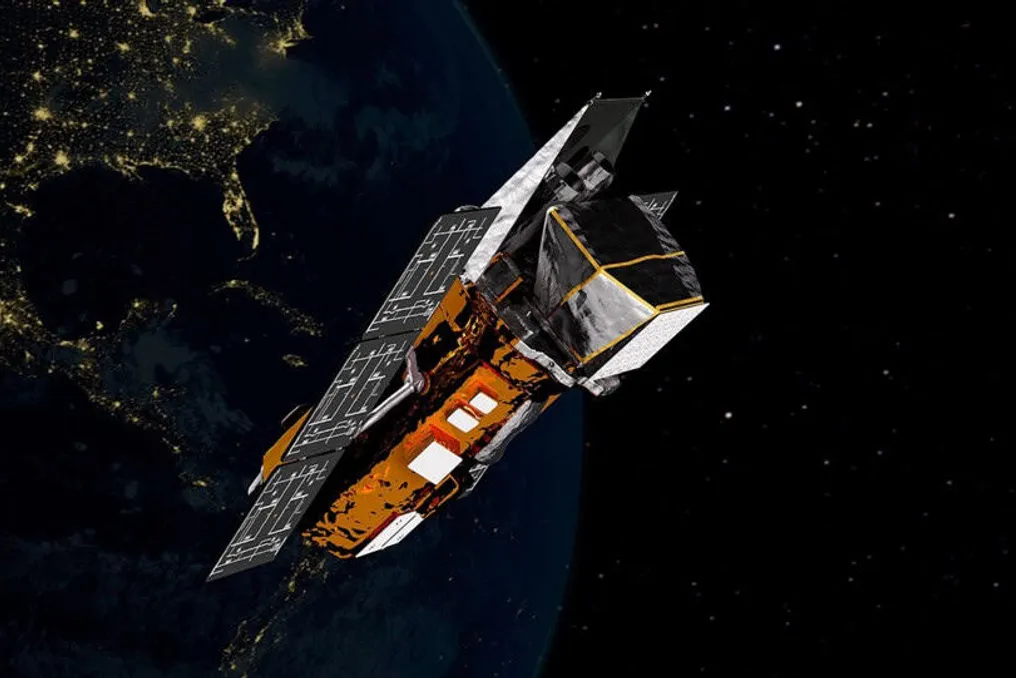
NASA has decided to abandon efforts to save the Neil Gehrels Swift observatory from atmospheric reentry but opted to reactivate two of its three telescopes for final observations. The rescue attempt was halted due to issues presented by the LINK spacecraft, provided by Katalyst Space.
Launched in 2004, Swift dedicated over two decades to monitoring intense cosmic events, such as gamma-ray bursts, supernovae, and X-ray flares. The observatory remains active and will operate until the final moments of its mission.
Orbiting Earth at low altitude without its own propulsion system, Swift is gradually losing altitude due to atmospheric drag. In recent years, this descent has accelerated significantly, driven by increased solar activity, which peaked in 2024, increasing atmospheric drag beyond NASA's expectations.
To try and reverse this process, the agency contracted Katalyst Space in September 2025 to develop a spacecraft capable of reaching the observatory and raising its orbit. During the preparation for this operation, Swift's three telescopes were shut down, and the spacecraft itself altered its orientation to minimize drag and prolong its time in orbit.
More information about the project
The plan progressed when Katalyst launched LINK on July 3, 2026. However, by the end of July, the company reported problems with the spacecraft, specifically with the reaction wheels and the cold gas propulsion system. This caused LINK to begin spinning uncontrollably, compromising both altitude control and communications.
Due to the inability to resolve these issues, NASA announced in early August that it would not proceed with the attempt to raise Swift's orbit. With the rescue discarded, the priority shifted to maximizing the remaining time dedicated to scientific research. This week, the X-ray and ultraviolet/optical telescopes were reactivated, and the Burst Alert Telescope is expected to resume operation soon.
This operational change implies that Swift will need to move away from its current position used to reduce atmospheric drag, which will accelerate its fall. NASA's latest projection indicates that the observatory will be below 300 kilometers in altitude within the next one or two months.
Reentry is expected to occur by the end of 2026. Although most of the observatory is expected to be destroyed by atmospheric heat, some components may survive and fall into the ocean. The risk to the population is classified as low, given that only one person has been officially registered as having been hit by space debris to date.
After 22 years in space, Swift will not have a last-minute rescue; its farewell will be marked by the continuation of observing the Universe as long as possible.