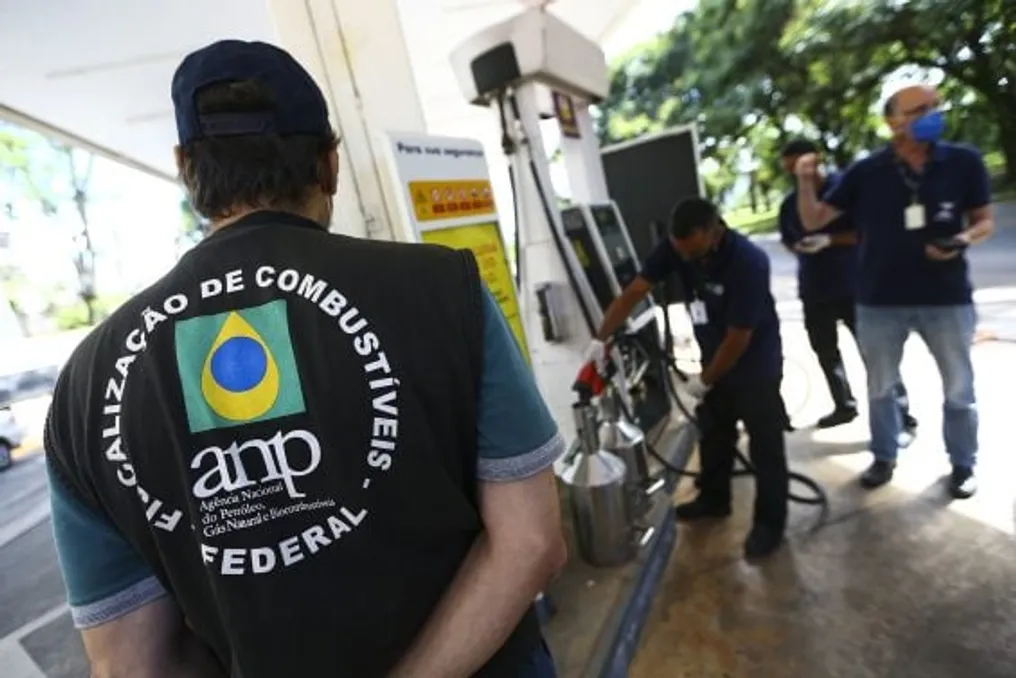
Six fuel stations were sealed in the city of São Paulo on Friday (the 28th) by a special task force comprising the Federal Revenue Service (Receita Federal), Sefaz-SP, ANP, Civil Police, as well as state and federal prosecutors. Operation 'Hidden Bomb' also invalidated 1,283 CNPJs and 228 state registrations related to this sector nationwide.
The invalidation of these records has serious consequences: it blocks company bank accounts and prevents the issuance of electronic invoices. Without such invoices, gas stations cannot purchase fuel from distributors. About 60 employees participated in the sealing in Greater São Paulo with support from the Citizen Protection Police Department.
The operation targeted an identified vulnerability that the sector itself is well aware of. Since 2019, ANP has revoked operating permits for over 10,000 gas stations in Brazil. The loss of a permit was supposed to cease operations, but the companies' CNPJs remained active with the Federal Revenue Service. Because of this, many continued purchasing, reselling, issuing invoices, and competing for customers alongside those who pay taxes.
In practice, Operation 'Hidden Bomb' led to the synchronization of two registries that never exchanged data. In São Paulo, adding the 228 registrations from this phase to the 682 already suspended by Sefaz-SP, the state reached a total of 910 blocked state registrations for gas stations.
This action is a continuation of Operation 'Hidden Carbon,' which took place exactly one year ago on the 28th and uncovered PCC infiltration into the national fuel supply chain. According to the investigating authorities, the dispersion of the sector, which comprises over 130,000 agents, facilitated the use of companies to conceal illicit funds.
Before refueling, you can check for free whether a gas station has a valid permit. The ANP's Consulta Posto Web function, available on the agency's website and app, allows searching for the seller, issuing a company certificate, and verifying document authenticity.
For the Institute of Legal Fuel (ICL), the integrated task force model is the right path, but currently incomplete. The organization's president, Emerson Kapaz, stated in a declaration that 'it is not enough just to seal a company or cancel a permit if loopholes exist,' emphasizing that only the integration of fiscal, cadastral, and regulatory information stops the recurrence of violations.
ICL calls on Congress to accelerate the approval of bills 109, 399, and 1482, which the sector believes are necessary to transform spot enforcement into permanent policy.