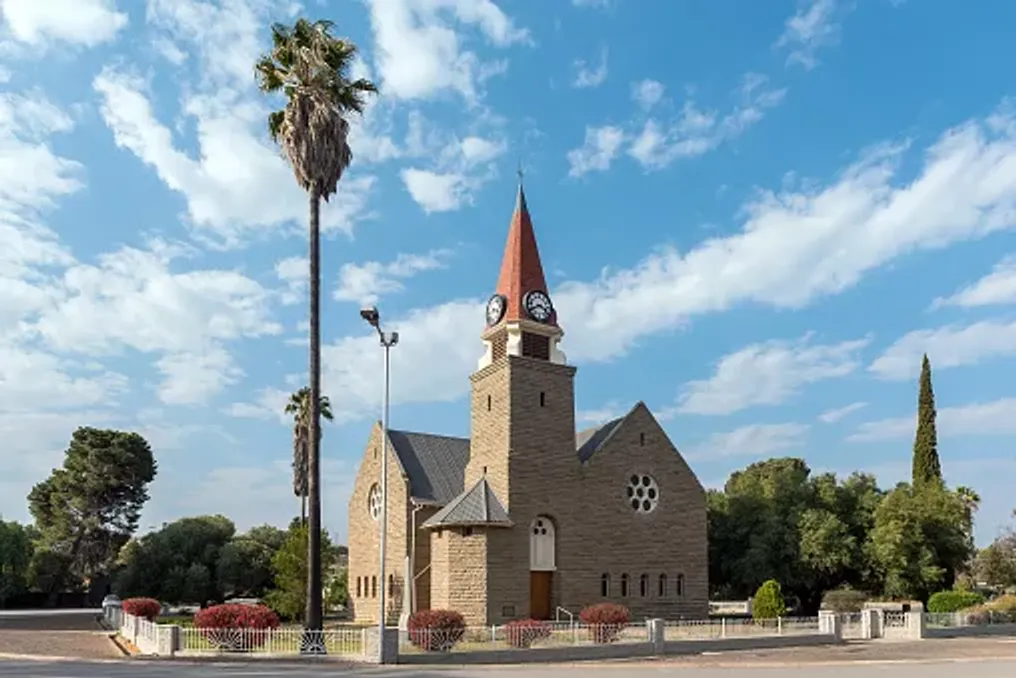
The Great Karoo is a place conducive to slowing down the pace of life. Its open plains, rocky hills, and small settlements create an atmosphere far removed from daily hustle. Over a period exceeding 48 hours, one can travel through Victoria West, Beaufort West, Fraserburg, and Loxton, enjoying local cuisine, historical buildings, fossils, and quiet country roads. Along the way, you can discover stories spanning millions of years, old theaters, sheep farms, and endless skies.
From the N1 route, the Karoo might appear as a long stretch of dry scrubland with distant mountains. However, by choosing a slower route, many more attractions are revealed. This trip is for those who enjoy taking their time, stopping to eat at a farm, exploring a small town museum, or simply pausing to admire the landscape. At night, the clear skies of the Karoo offer another reason to take it easy.
Victoria West is a suitable starting point. Founded in 1843, this small town is situated between the Upper Karoo ranges and is full of reminders of its 19th-century past. Its location at the intersection of roads N12, N10, and R63 makes it a convenient base for exploring the surroundings. It is worth starting a walk in the old part of the town, where Victorian-era buildings are located on Church Street. The Victoria West Museum deserves attention for its collection of local history, archaeology, and fossils, including ancient fish fossils from the distant past of the Karoo.
Further on, you can find one of the city's most unusual landmarks—the Apollo Theatre. This Art Deco cinema dates back to 1928 and is recognized as a heritage site. Victoria West is not a place to build a route around a long list of restaurants; instead, you should look for local cafes or eateries and make lunch part of the experience. Since the Karoo is a sheep-farming region, it is better to seek out regional dishes and produce here rather than expecting a typical urban gastronomic scene. The focus is on lamb, homemade bread, preserves, and simple farm food.
Leaving Victoria West towards Beaufort West gradually reveals the classic landscapes of the Karoo. Sheep farms stretch toward low hills, plains are adorned with windmills, and the vast sky becomes increasingly noticeable. The landscape itself is one of the main attractions, so do not view this section merely as transit between towns. If possible, stop safely, photograph the changing light, and watch for birds and wildlife.
The greatest story of Beaufort West began long before the city existed. The surrounding Karoo holds international significance due to its fossils. The first reptilian fossil near Beaufort was found in 1827, after which the area became one of the world's richest sites for fossil collection. Visiting the Karoo National Park allows travelers to connect the passing landscape with this outstanding geological history. The park features a Fossil Trail that explains the local paleontology and geology. This short trail is particularly useful as it makes the abstract history of fossils in the Karoo tangible: visitors can see evidence of ancient creatures and environments preserved in the rocks.
Upon returning to the town, spend time exploring Beaufort West on foot. The historic center is an eclectic mix of Victorian, Georgian, Edwardian, Cape Dutch, Neo-Gothic, and other architectural styles. The Old Town Hall, Missionary Church, and several historic houses form part of the city's heritage. The museum complex adds another layer to this history, including artifacts related to Christian Barnard, a surgeon from Beaufort West who performed the world's first human heart transplant in 1967. For dinner, a Karoo-style dish is an obvious choice; options include the 4 Sheep Restaurant Deli and Convenience Store, and Karushi offers another local eatery.
Conclude the first day where the landscape remains visible after dark. Staying in or near the Karoo National Park turns the night into part of the experience. The park offers daytime and nighttime tours, while the entire Karoo is known for its low level of light pollution. If you stay in town, simply step outside after dinner. On a clear night, the Milky Way can transform what seemed like a desolate landscape during the day into something entirely different.
The second day takes you deeper into the Upper Karoo, where distances increase and settlements become smaller. Fraserburg is one of the best-preserved towns in the Karoo region, possessing historical buildings and a special connection to the area's geological past. The municipality calls it one of the most authentic remaining Karoo towns, offering hiking trails, off-road routes, and exceptionally clear night skies. The journey itself is part of the attraction. On the surrounding gravel roads, farms can be quite far apart, highlighting how sparsely populated this region of South Africa is.
The most remarkable thing about Fraserburg is not a building, but a set of tracks preserved in stone. On the Hansfontein paleosurface, fossilized tracks and other imprints show what occurred in the region over 250 million years ago, during the Permian period. The site includes tracks associated with therapsids—mammal-like animals that lived before dinosaurs. The discovery was made in 1968 after a farmer noticed unusual tracks exposed by water from a breached dam. This led to the recognition of an exceptional record of ancient life, including animal tracks, fish prints, and traces left by smaller creatures. Access to sites on private farms must be arranged in advance, making the local museum or tourist office a useful first stop.
The Upper Karoo has another unique link between landscape and human ingenuity: the beehive huts. These structures, built from local stone, are shaped like honeycomb cells and use layers of stone that gradually project inward to form a roof without traditional wooden beams. They are linked to early Trekboer communities who settled in this arid landscape where wood was scarce. Examples remain around Fraserburg and Loxton, including on private farms. Some can be visited by prior arrangement, making it an experience that needs to be organized before the trip, rather than just a sight to drop by.
These huts are more than photogenic curiosities. They demonstrate how people adapted architecture to the materials and conditions of the Karoo. From Fraserburg, continue towards Loxton, where the pace slows even further. Founded in 1899, Loxton developed around a community of sheep farmers in the surrounding area. Its streets feature restored Karoo cottages, old verandas, window frames, and characteristic corrugated iron roofs. The town is particularly pleasant for walking. Instead of looking for one main attraction, wander the streets and pay attention to the details: old water infrastructure, stone buildings, gardens, and the church in the town center.
One of Loxton's more unusual modern attractions is the Riverine Rabbit Thought Trail, a large geoglyph designed as a walking route at the village entrance. The 1097-meter route takes about 25 minutes to walk and uses the shape of the riverine rabbit as its design. It combines art, local landscape, and awareness of the endangered Karoo species. This is a fitting final activity, as it encourages visitors to do what the entire trip encouraged: slow down and pay attention to the environment.
Loxton is small, so do not come expecting a long list of dining options. Instead, plan your visit around any local cafe or restaurant currently operating, and let the meal become part of the slower rhythm. Local tourism information also emphasizes the local Karoo vegetation and its connection to the taste of local lamb meat.
The appeal of this route lies not in one spectacular attraction, but in how various stories intertwine. Victoria West presents heritage, architecture, and fossils in a compact town. Beaufort West connects the Karoo to paleontology, nature conservation, and the remarkable story of Christian Barnard. Fraserburg immerses in the prehistoric past of the region, with fossil tracks dating back over 250 million years. Loxton brings the journey back to architecture, sheep farming, local cuisine, and the rhythms of a tiny rural community. Together, they offer a different way to experience the Great Karoo. You are not just driving through a desolate landscape; you are traveling across an ancient seabed, through historic farmland, and past communities that have learned to live with distance, drought, and vast skies.