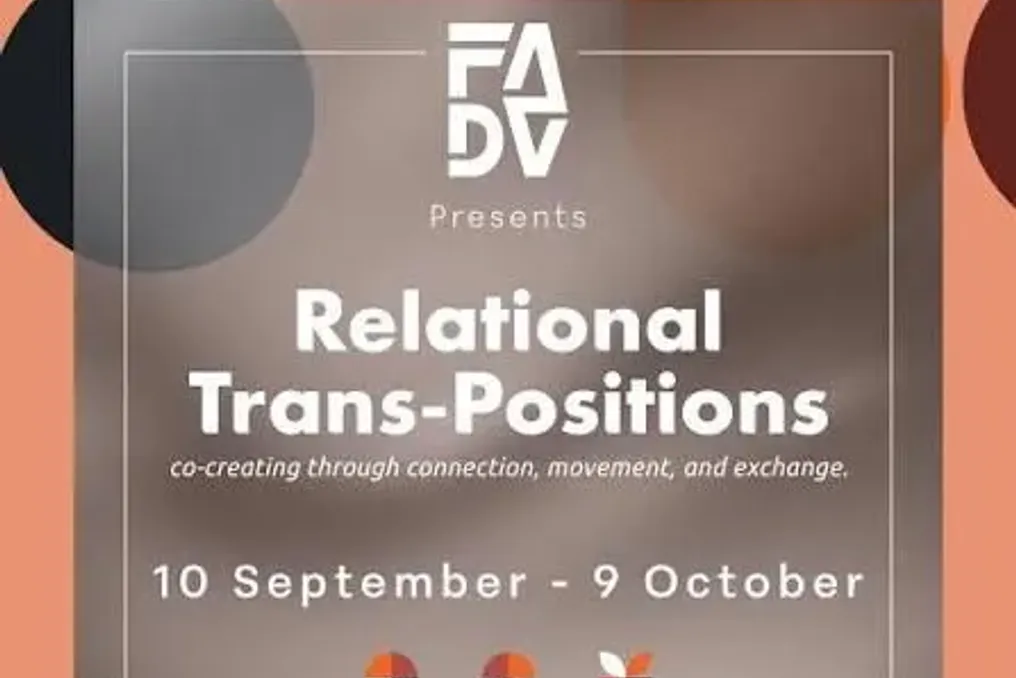
The Rational Trans-Positions exhibition brings together artists and scientists to study how connection, movement, and exchange shape our perception and experience of the world around us. This exhibition is taking place at the FADA Gallery of the University of Johannesburg from September 10th to October 9th.
Art does not always require simple explanation; sometimes a painting, photograph, sculpture, or installation can evoke a feeling before the viewer understands what they are looking at. This is the idea underpinning the new exhibition at the Faculty of Art, Design and Architecture (FADA) Gallery of the University of Johannesburg, which has gathered 11 artists and academics to explore the mutual influence of people, ideas, and experiences.
The exhibition, titled Relational Trans-Positions, opens on September 10th in the FADA Gallery on the UJ’s Bunting Road campus and runs until October 9th. The exhibition curator, Dr. Farida Nazir, presented works by artists such as Krista van Zyl, Gavin Crustin, John Shirley, Leon Kriege, Leora Farber, Martin Bolton, Neil Lowe, Oupa Sibeko, Tobias Barnard, Xylan de Jager, and Zinhle Zulu.
The main idea of the exhibition is quite simple: how do our relationships, environment, memories, and life experiences change the way we see the world? Artists approach this question differently, using various forms of creative expression. Their works touch upon themes such as identity, the human body, nature, technology, memory, and the transformation of everyday materials.
Some pieces focus on the relationship between people and their habitat, while others examine how technology and changing circumstances affect our life experiences. This diversity makes the exhibition accessible to those who do not consider themselves regular gallery visitors. Viewers are not required to know the 'right' way to interpret the works; instead, the exhibition encourages them to look, ask questions, and form their own understanding of what they see.
According to Nazir, this open approach is an important part of the exhibition. She noted: 'Instead of offering fixed conclusions, the works celebrate transformation, demonstrating how meaning develops through interaction and connection.'
The exhibition also highlights diverse methods of research that artists can employ. Instead of relying solely on written academic papers, artists can use images, objects, materials, movement, and personal experience to study and convey an idea to the audience. The 11 participating artists bring their unique experiences and creative approaches to the exhibition, meaning visitors will see a wide range of styles and ideas, rather than one single artistic viewpoint.
For the public interested in contemporary art but hesitant about galleries, Relational Trans-Positions offers an opportunity to relax and engage with the works on their own terms. Furthermore, visitors will not just be viewing the art from a distance. The exhibition's public program includes events designed to help the audience engage with the artists' work and the ideas behind it.
Young creatives can attend the FADA4Kids Youth Activation on September 12th from 11:00 AM to 3:00 PM, where they can experiment with creative activities and develop their own ideas. On September 23rd, there will be a Curators' Panel Discussion from 5:00 PM to 6:30 PM, giving guests a chance to learn more about the exhibition's creation process and the significance of the chosen themes. On October 3rd from 11:00 AM to 1:00 PM, visitors can join an Artist-Led Walk, allowing for a more detailed examination of the works and hearing about the thoughts behind them.
Ultimately, Relational Trans-Positions goes beyond simply displaying artworks; it invites visitors to contemplate how they are connected to other people, their environment, and the experiences that have shaped them. No art education is required to participate in the exhibition—it is enough to be ready to look, think, and perhaps see something familiar in a completely new way.