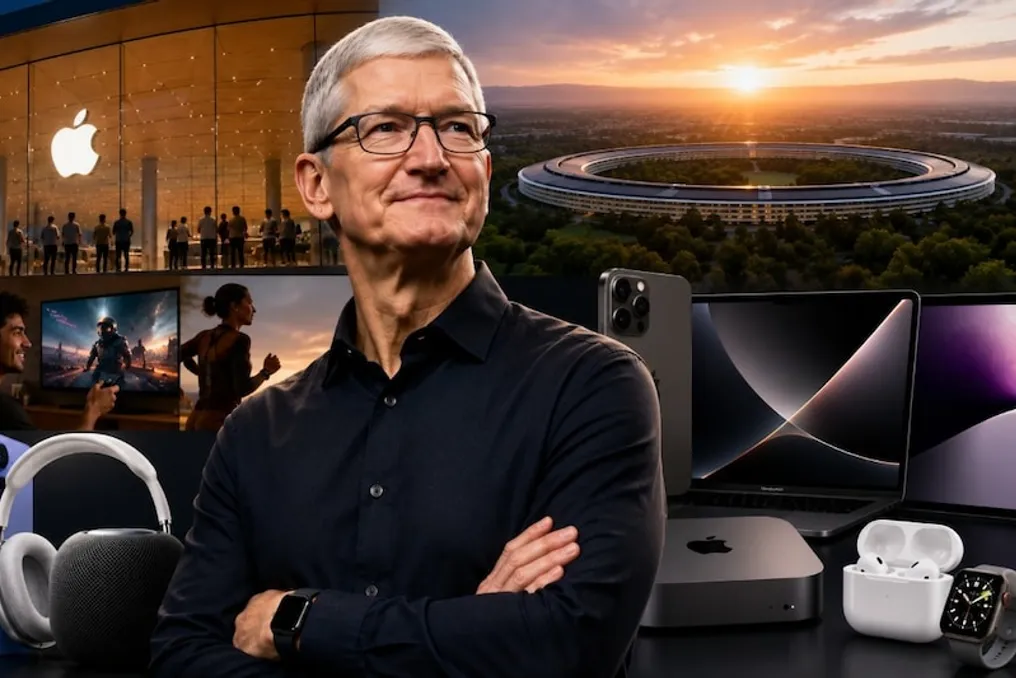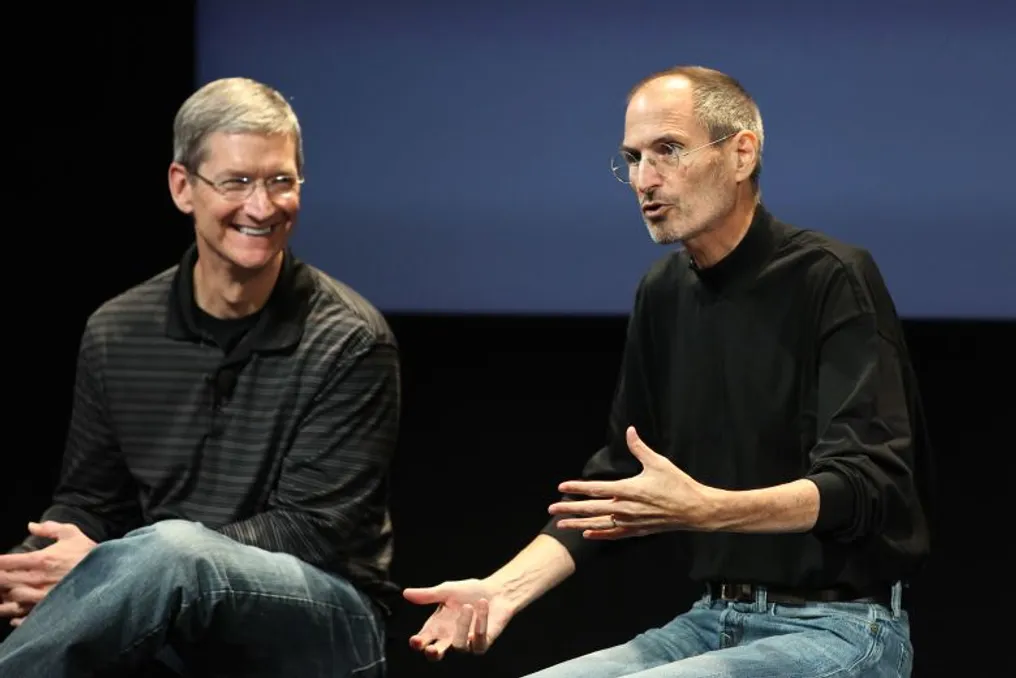
When Tim Cook took over as CEO of Apple in August 2011, he faced the enormous shadow of his predecessor, Steve Jobs, whom many considered one of the greatest innovators in the world.
Fifteen years later, Cook propelled the company to incredible heights by forging his own path. His successor, hardware chief John Ternus, will face a completely different challenge on September 1st. Cook is known for making the iPhone an integral part of daily life, whether it's buying coffee, listening to music, going to the gym, or paying with a credit card. This was made possible by the web services and accessories that Cook developed over the last decade.
Apple's stock has grown by more than 2000% during his tenure. Furthermore, the company briefly reached a market capitalization of $5 trillion in July, becoming the second company in history to achieve this milestone.
David Yoffie, a professor at Harvard Business School who wrote a case study on Apple and Tim Cook, noted: 'Cook managed to scale the iPhone to a level no one expected would be possible within that timeframe.'
However, achieving such success depended not only on making sound product decisions. It also required the ability to manage political relations in the US and China, which is critically important for Apple's operations and its massive iPhone empire, especially during periods of tension between the two nations.
According to Gene Munster, managing partner at the investment technology firm Deepwater Asset Management, who has been tracking Apple since 2004, Cook is not just a CEO but a 'statesman.'
Cook joined the CEO role with experience in operations and supply chain management. Experts argue that it was his calm approach, quick decision-making, and talent for negotiation that allowed the iPhone machine to function smoothly despite geopolitical difficulties.
Ron Johnson, who headed Apple's retail operations from 2000 to 2011, described Cook—then the company's COO—as 'intellectual' and 'strategic' during weekly meetings with Jobs and Apple's senior management.
Johnson told CNN: 'He was perhaps the most thoughtful member of the executive committee. He always listened first, and spoke when he had something to add.'
Under his leadership, Apple made a decision that helped it avoid high tariffs from the Trump administration. When the company faced pressure to build phones in America, it instead pledged to invest $600 billion in expanding its US operations, including manufacturing critical iPhone components domestically.
Even during his first term, Trump stated that Cook was one of the few leaders who called him personally. Jeffrey Sonnenfeld, an associate professor of leadership studies at Yale School of Management and former White House advisor, stated: 'Among the CEOs Trump began to respect, Tim Cook would be very high on the list.'
Cook pushed the company toward diversifying some production away from China while maintaining appeal to Chinese consumers and leadership, which Munster called a rare achievement.
Munster commented: 'I don't know how that is done. I don't know if that dynamic makes sense.'
Nevertheless, the Covid pandemic and Trump's tariffs demonstrated that Apple's reliance on China could become a problem. This is just one of the complexities that Ternus inherits.
There are also strained relations with regulators in Europe, Apple's second-largest market; the company has had to make changes to the operation of the App Store in the region. Apple's updated version of Siri will not be launched in Europe due to European Union regulations.
Furthermore, there is the issue of artificial intelligence. The company is increasingly facing pressure to catch up with competitors, especially after its latest major product, the Vision Pro, did not meet expectations. Meanwhile, the ongoing shortage of memory chips due to the AI race has forced Apple and other companies to raise product prices.
However, Cook advised Ternus during one of his final conference calls as CEO: focus on creating products that 'enrich' customers' lives. In April, he said: 'If you keep focusing on that and making decisions around it, it will lead to great business. And we can create more products and do it again.'