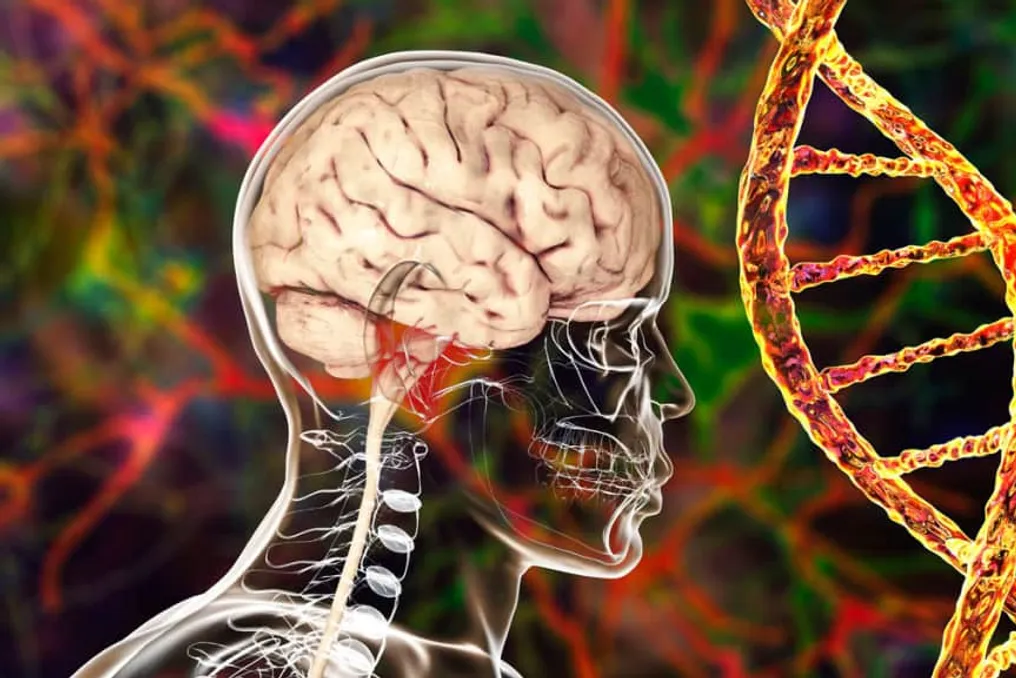
A study conducted in a Brazilian superlaboratory focused on proteins involved in prion diseases, following the diagnosis of Creutzfeldt-Jakob Disease (CJD) of Lito Sousa drawing attention to national research. Scientists used the Sirius equipment, located in Campinas (SP), to monitor the behavioral changes of these molecules.
This work, published in Science Advances in 2023, investigated an initial phase of the pathological process. It is important to note that the research has no direct link to Lito's case, nor does it aim to develop treatments, but rather to understand what occurs before brain damage appears.
The prion protein, called PrPC, is a molecule naturally present in neurons. In cases of prion diseases, this protein can undergo structural modifications, inducing other similar proteins to follow the same path, which results in harmful accumulations in the nervous system, primarily affecting the brain.
A crucial clue for researchers lies in so-called condensates, which are areas where proteins concentrate. Initially, these condensates exhibit characteristics of a liquid droplet and maintain mobility. However, under certain circumstances, this state can be altered.
Scientists observed these condensates in the presence of copper, an element also found in neurons, and under these conditions, the droplets remained fluid. Aline Ribeiro Passos, a researcher at the National Center for Nuclear Energy and Materials (CNPEM), explained to g1 that while the droplets are liquid, no pathological structure is observed; however, they can transition through an intermediate gelatinous stage before reaching a solid state.
Subsequently, the experiment was modified by adding hydrogen peroxide, simulating an oxidative stress scenario, at which point the behavior of the structures underwent significant changes.
Part of the tests was conducted at Cateretê, one of the Sirius research facilities. To generate the synchrotron light necessary for the analyses, electrons are accelerated to speeds close to the speed of light in a 500-meter tunnel. At Cateretê, researchers employed the XPCS X-ray technique, which allowed them to analyze aspects beyond the size and shape of the droplets, also revealing the movement of internal proteins.
Researcher Aline detailed that, since proteins are tiny structures with complex organization, the formed condensates are micrometric droplets. The objective was to determine the physical state of the protein within this droplet, requiring high spatial and temporal resolution, provided by equipment such as Sirius.
Although CJD belongs to the group of prion diseases, the laboratory findings cannot be directly applied to a patient. The study did not prove that copper or hydrogen peroxide are causative agents of the disease, nor did it result in the development of a drug.
While fundamental research continues, Lito's family is seeking experimental options in the United States. The Ministry of Health tried to assist the influencer in participating in studies, but one of the sought-after studies stopped recruiting volunteers. Another possibility mentioned is the PRiSM study, associated with researchers from Harvard and MIT.
In Brazil, the work continues. Researchers from the Federal University of Rio de Janeiro (UFRJ) have new experiments scheduled for the end of September at Sirius, using the SAXS technique on the Sapucaia light line. The scientists' hope lies in investigating a phase prior to treatment: precisely discovering how these proteins transform, because without this answer, many aspects of prion and other neurodegenerative diseases remain unknown.