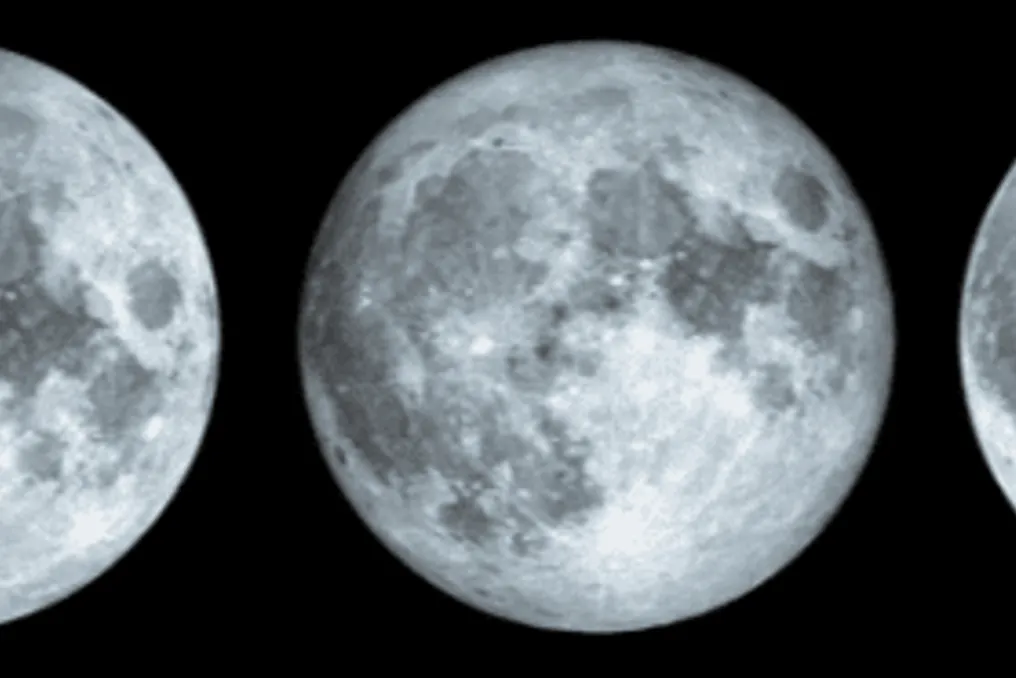
On August 31, 2026, the Moon is in the full moon phase and is visible at 85%. The complete calendar of lunar phases for August 2026 has been provided by the National Meteorological Institute (Inmet).
The lunar phases in August 2026 began on August 5 with the onset of the waning Moon at 23:22 Brazilian time. This was followed by the New Moon on August 12 at 14:37. The waxing Moon appeared on August 19 at 23:46. The cycle concludes with the Full Moon on Friday, August 28, at 1:19.
Lunation, or the lunar cycle, is the period between new moons, which has an average duration of 29.5 days. During this period, the Moon goes through four main phases: new moon, waxing, full moon, and waning. Each of these phases lasts approximately seven days.
There are also so-called 'intermediate phases': the waxing quarter and waxing gibbous, which are observed between the new moon and the full moon; as well as the waning gibbous and waning quarter between the full moon and the new moon.
Description of Lunar Phases
During the New Moon, the satellite is located between the Earth and the Sun. This results in the illuminated side of the Moon facing the Sun, while the dark side faces us. Because of this, the Moon is not visible in the night sky. This phase marks the beginning of a new lunar cycle and is associated with rebirth and new opportunities.
After the New Moon comes the Waxing Moon phase. Gradually, a small illuminated strip begins to appear in the sky, which increases every night. Initially, only a thin ray of light is visible, but as the days pass, the illuminated part grows until half of the Moon becomes visible, which is called the Waxing Quarter. This phase symbolizes growth, development, and building new paths.
During the Full Moon phase, the Earth is located between the Sun and the Moon. This allows the side of the Moon facing us to receive full light, making it completely visible and bright in the sky. This is a period of maximum light intensity, when the Moon rises exactly at sunset. The full moon is associated with completeness, the culmination of processes, and peak energy.
After the Full Moon, the Moon's light gradually begins to fade. Every night, we see less and less illuminated surface. When only half is visible, the Waning Quarter occurs, which is the opposite of the Waxing Quarter. The Moon continues to lose brightness until it reaches the New Moon again, restarting the cycle. The waning phase symbolizes reflection, completion, and preparation for new beginnings.
Today, the Moon is in the Full Moon phase.