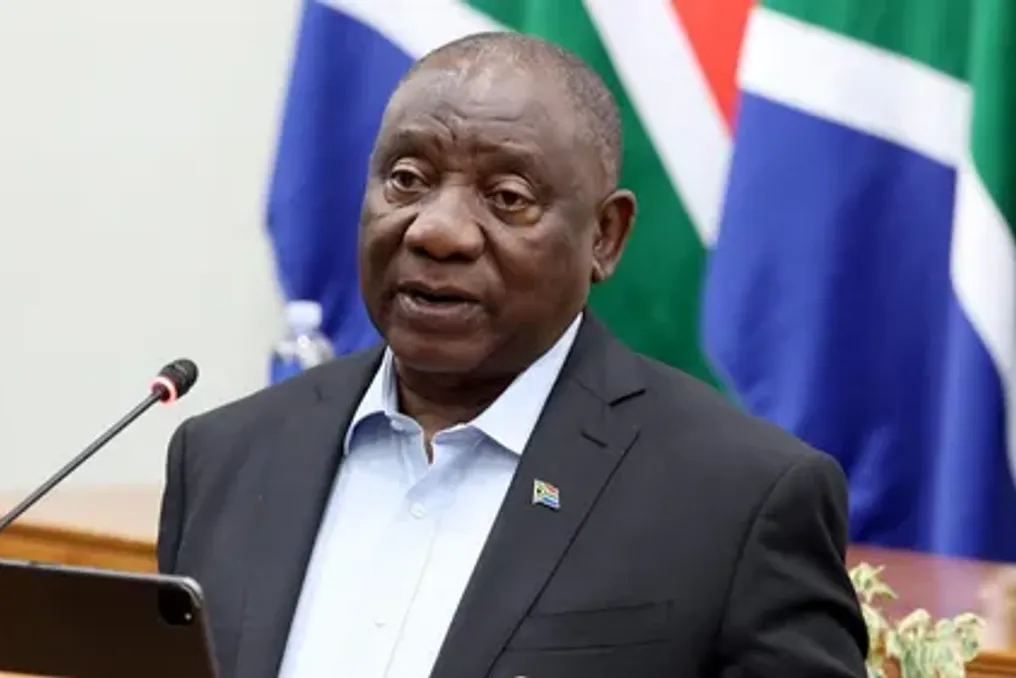
President Ramaphosa stated that South Africa must now focus on lowering electricity costs after making significant progress in resolving power outages (load shedding).
In his weekly address to the nation, Ramaphosa emphasized that the country cannot become complacent regarding the improvement of Eskom's operations and must complete reforms aimed at creating a reliable, affordable, and cleaner energy supply system. He noted that the state's task is not merely to produce sufficient energy, but to ensure its reliability, affordability, and environmental sustainability.
Energy reform to boost competition
The President pointed out that the cost of electricity has risen substantially over the last two decades, placing additional pressure on households and complicating business operations and investment. Consequently, the government is undertaking a fundamental transformation of the energy sector's structure.
A new Electricity Pricing Policy has been published, designed to ensure tariff transparency, prevent the shifting of inefficiencies onto consumers, expand access for low-income groups, and stimulate competition in electricity generation. Furthermore, the National Energy Regulator of South Africa (NERSA) is finalizing rules for a competitive wholesale electricity market.
Ramaphosa believes that such competition can enhance efficiency, attract investment, and exert downward pressure on prices. South Africa's natural resources, such as solar and wind energy, also offer opportunities for producing cheaper and cleaner electricity, which will support industrial growth and job creation.
Transmission operator must remain state-owned
A key element of the reform is the establishment of an independent Transmission System Operator (TSO), which will remain state-owned. Ramaphosa announced that the TSO will independently manage the national electricity grid and the energy market, ensuring equal conditions for competition between Eskom and other power producers. The President stressed that the TSO will act as an arbiter among all producers.
This operator will also help mobilize investments for expanding the transmission network and connecting new generation projects to the main grid. Ramaphosa specified that the Eskom Restructuring Task Team, established earlier this year, is responsible for implementing these transformations.
Eskom will remain a state-owned company
Ramaphosa specifically emphasized that the goal of the reforms is not the privatization of Eskom. He stated that Eskom will retain its status as a state-owned entity and must enter the renewable energy market to compete effectively with new generators. The national transmission network is a strategic national asset that will also remain state-owned and serve the public interest.
The President noted that there is no need to choose between a strong Eskom and other competitors; both can exist. The reforms aim to shift South Africa's system from a model where one company bears almost all the responsibility for electricity generation to a model where multiple producers can invest and compete.
Workers will not suffer losses
Ramaphosa assured that jobs will not be lost as a result of establishing the TSO. The government commits to consulting with organized labor throughout the restructuring process. Previously, Ramaphosa met with the Eskom board of directors and the National Miners' Union, insisting that Eskom and the TSO would remain state structures, and workers' interests would be protected.
The reforms will be implemented carefully and responsibly, with planned further engagement with all stakeholders in the Eskom ecosystem.
The end beneficiary must be the South African consumer
According to Ramaphosa, the goal of the reforms is to create an electricity supply system that benefits both households and businesses while supporting economic growth. He stressed that the ultimate recipient of the benefits must be the South African consumer base. Households should gain access to more affordable electricity, and businesses should have reliable and competitively priced power for investment, expansion, and job creation.
The President noted that South Africa has already demonstrated the potential for decisive reforms through improved Eskom performance. He recalled that many previously believed outages would continue indefinitely, but thanks to decisive action, investment, and the work of thousands of people in the energy sector, the trajectory has changed. Now, it is necessary to complete the initiated work to ensure every resident of South Africa has abundant, affordable, and reliable electricity supply.